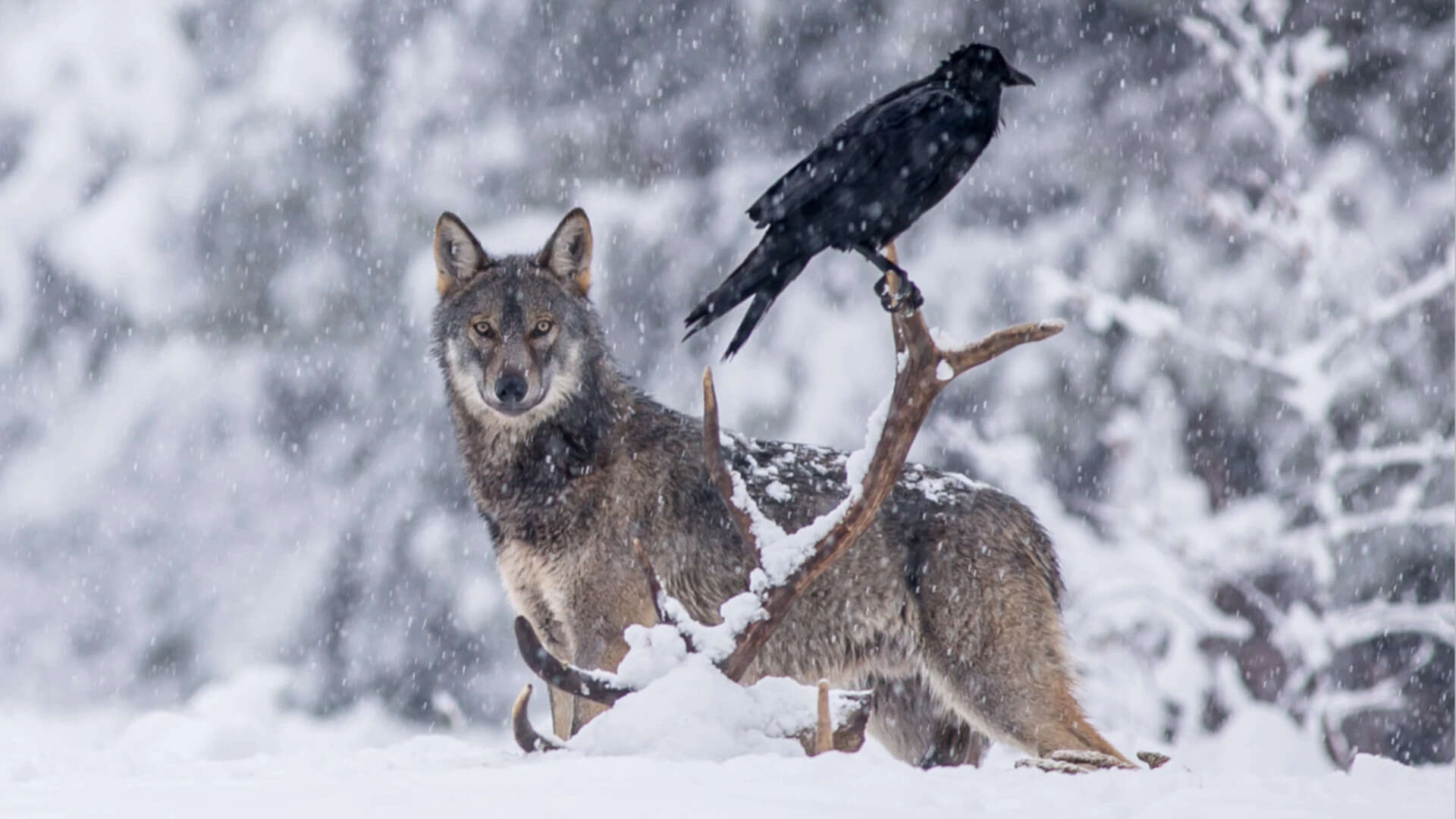
A 2.5-year GPS tracking study in Yellowstone National Park finds that ravens do not simply follow wolves to obtain food, as previously assumed. Instead, the birds use their own spatial memory to target areas where wolves are most likely to leave fresh carcasses. Researchers report that ravens repeatedly navigate to known hunting zones and kill sites, including when wolves are not directly present. The study’s findings indicate that ravens build and use mental maps of successful feeding locations, allowing them to travel substantial distances and then move directly toward sites associated with food availability.
The research also describes how ravens show a stronger association with wolf kills than with carcasses left by other predators, such as cougars. Overall, the study reframes raven foraging behavior as a planning and memory-driven strategy rather than passive opportunism. By combining multi-year GPS data with observations of where ravens go and when, scientists conclude that ravens demonstrate advanced navigation and knowledge of the landscape tied to predator activity and carrion availability.