


Multiple outlets report that the Trump administration has launched “Trump Accounts,” a new tax-advantaged savings and investment program for children. CBS News and other coverage say the accounts are available online for eligible children with Social Security numbers who are under age 18. The government provides a one-time $1,000 seed contribution for children born between January 1, 2025 and December 31, 2028, and families can add additional money each year. The Hill and The Guardian report that parents, along with employers, can contribute up to an annual cap of $5,000 per child account, with employers also able to contribute on an employee’s behalf. Eligible investments generally involve diversified stock index funds managed by major financial firms, with rules intended to limit fees and allow tax-deferred growth. MarketWatch reports that Treasury has already deposited substantial totals into the accounts since launch. Several analyses and explainers note questions and implementation details that families may face, including how contributions and the accounts interact with education aid or state taxes, and how withdrawals work. Separate reporting also includes debate over administrative capacity and whether staff cuts could affect outreach and enrollment, though the White House disputes that any workforce bottleneck is limiting signups.
Trump launches “Trump Accounts” for newborns with $1,000 government deposit
Multiple outlets report that the Trump administration has launched “Trump Accounts,” a new tax-advantaged savings and investment program for children. CBS News and other coverage say the accounts are...
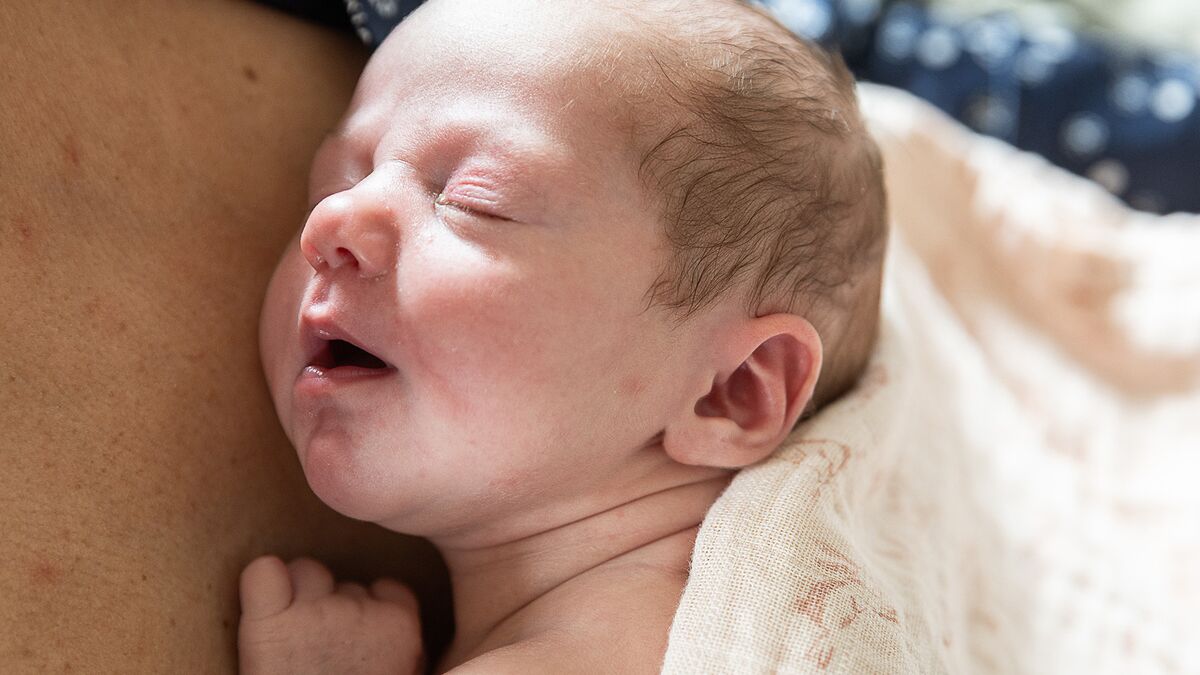
- The program is called “Trump Accounts,” and it opens federal savings/investment accounts for eligible children under 18 with Social Security numbers.
- Children born between Jan. 1, 2025, and Dec. 31, 2028 receive a one-time $1,000 government contribution.
- Parents can contribute money to the accounts, with an annual per-account contribution limit reported as $5,000; employers may also contribute on an employee’s behalf.
- The accounts invest in diversified stock index funds (with limits on fees/expenses reported by financial explainers).
- Treasury reports depositing significant funds into the accounts since they launched earlier this month.
Trump Accounts Are Now Open: What Parents And Grandparents Need To Know Before Contributing Authored by Adam H. Douglas via The Epoch Times, As of July 4, 2026, money can officially flow into Trump accounts, the new child savings vehicle created by last year's tax law. rblfmr/shutterstock Millions of families have already signed up, and millions more are asking the same practical questions: does my child qualify, how do I claim the $1,000, and is this better than the 529 plan we already have? Most coverage explanations answer these questions in tax-professional language. Here are the essentials in plain terms, including one state-level catch that could surprise you at tax time. Quick Answer: Who Qualifies for a Trump Account? Any child who is a U.S. citizen with a valid Social Security number can have a Trump account, as long as it is opened before the year they turn 18. The one-time $1,000 federal seed contribution is narrower: it goes only to eligible children born between January 1, 2025, and December 31, 2028. Parents or guardians claim it by submitting IRS Form 4547, which can be filed through the Trump Accounts app, at trumpaccounts.gov, through an IRS Individual Online Account, or when filing taxes. Once the Treasury confirms the account is active, it deposits the $1,000. What Your Child Gets, by Birth Year The seed money depends entirely on when your child was born. Dozens of companies, including several major banks and technology firms, have pledged to match the federal $1,000 for employees' children. If you or your child's other parent works for a large employer, it is worth asking human resources before assuming the seed money is all your child will receive. The Contribution Rules in Plain Terms Once the account exists, here is how money goes in: The combined cap is $5,000 per year. Parents, grandparents, and anyone else contribute after-tax dollars, and all of it counts toward one shared limit per child. The cap adjusts for inflation after 2027. Employers get special treatment. An employer can put in up to $2,500 per year for a worker's child. That amount counts toward the $5,000 cap but is excluded from the employee's taxable income. Some money does not count against the cap. Contributions from qualifying charities, states, tribes, and local governments sit outside the $5,000 limit, as does the federal seed itself. Contributions stop the year before the year your child turns 18. For grandparents, the practical takeaway is coordination. Because the cap is shared, a grandparent writing a $5,000 check uses up the entire year's room for everyone. How the Account Actually Works A Trump account is best understood as a special kind of IRA with training wheels. The money is invested in a low-cost index fund tracking the S&P 500, so the balance rises and falls with the stock market. Earnings grow tax-deferred at the federal level, and the funds are locked until the child turns 18, with only limited exceptions. On January 1 of the year the child turns 18, the account essentially converts to a traditional IRA in the child's name. That last detail matters: Withdrawals in adulthood are generally taxed as ordinary income, the same as any traditional IRA. The State Tax Catch Almost Nobody Explains Here is the wrinkle buried in most coverage explanations. Federal tax deferral does not automatically mean state tax deferral. State tax codes must conform to the new federal rules, but some states have not done so. California is the most prominent example: Unless state law changes, annual earnings inside a Trump account could be taxable on your California return each year, even while federal taxes wait until withdrawal. That does not make the account worthless in a nonconforming state. The $1,000 seed is still free money, and federal deferral still helps. But it changes the math on large voluntary contributions and creates a recordkeeping chore. Before contributing beyond the seed, check your state's current treatment with your state tax authority or a tax professional, because conformity decisions are still moving in several states. Trump Account vs. 529: The Short Version If you already fund a 529 plan, the two are not interchangeable. A 529 offers tax-free withdrawals for qualified education expenses, and many states add a deduction for contributions - a Trump account offers neither. A Trump account has no education restriction - at 18 it becomes retirement-oriented IRA money, giving your child a decades-long compounding head start. The sensible sequence for most families: claim the free seed money if your child qualifies, keep education savings in the 529, and treat additional Trump account contributions as a separate, long-horizon decision. FAQs About Trump Account Eligibility Is the $1,000 Seed Contribution Automatic? No. Eligible children born between 2025 and 2028 do not receive the money by default. A parent or guardian must first open the account and elect the contribution by submitting IRS Form 4547, whether through the Trump Accounts app, trumpaccounts.gov, an IRS Individual Online Account, or a tax return. After the Treasury confirms with the account trustee that the account is active, it deposits the $1,000. No account, no seed money. Can Grandparents Contribute to a Trump Account? Yes. Grandparents, other relatives, and even friends can contribute, but everything counts toward the single $5,000 combined annual cap per child, alongside contributions from parents and employers. Contributions are made with after-tax dollars and are not deductible. Families should coordinate before year-end so a well-meaning gift does not crowd out an employer match, which carries the added benefit of being excluded from the employee's taxable income. What if My Child Was Born Before 2025? Your child can still have a Trump account, opened any time before the year they turn 18, and family or employer money can go in under the normal rules. They simply will not receive the federal $1,000. Children born from 2016 through 2024 may qualify for a $250 Dell Foundation deposit if they live in a ZIP code where the median income is $150,000 or less, which covers most of the country. Will My State Tax the Earnings Each Year? Possibly, depending on where you live. The accounts are tax-deferred under federal law, and states must conform to that treatment, but some, including California, may tax annual earnings at the state level unless their laws change. In a nonconforming state you could owe state tax on gains yearly while federal tax waits. Check your state's current position before making large contributions, since several legislatures are still deciding. Tyler Durden Mon, 07/27/2026 - 09:00
1 month agoHere’s how to take advantage of Trump’s eponymous tax-advantaged investment account for U.S. citizens under 18.
1 month agoAround $1.5 billion has been deposited into the accounts since their launch earlier this month, the Treasury Department said.
1 month agoPresident Donald Trump says Trump Accounts could hoist children out of poverty and give more Americans the chance to benefit from investments in the stock market. But some parents say they’re still waiting for the money to arrive.Trump on Wednesday plans to speak at a Georgia high school to promote the investment accounts, which offer $1,000 in seed money to every child born during his second term. The accounts went live July 4, two days before Trump rang the opening bells for both the New York Stock Exchange and NASDAQ from the Oval Office.The tax-advantaged accounts, created last year through Trump’s signature One Big Beautiful Bill, can be opened for any child under the age of 18. The Treasury Department boasts 6.5 million sign-ups for Trump Accounts, with 1.5 million of those eligible for the $1,000 seed funding for babies born from 2025 through 2028.Boosters of the program say it’s a chance to give more Americans a stake in the stock market. They hope it will stem the rising popularity of democratic socialists, who seek to raise taxes on corporations and the wealthy to ease the cost of things like food and healthcare for low-income and middle-class Americans.After the Trump Accounts are set up, parents, relatives, friends and employers can contribute to them. Some billionaires have also pledged philanthropic contributions. The money is turned over to private firms that invest it in index funds, a type of mutual fund that tracks the performance of the stock market. The money can’t be accessed until the child turns 18, and only then for specific purposes, such as going to school, opening a business or buying a home.For babies born since Trump took office last year, $1,000 from the U.S. Treasury is supposed to kick off the accounts. While some parents report receiving the money, others said in interviews and on social media they’re still waiting for the accounts to receive $1,000.Masaki and Kristina McLellan, new parents from Bergen County, New Jersey, said in an interview they were wary of signing up for the accounts because they worried it was a promotional stunt for the president. But the $1,000 incentive persuaded the couple, whose daughter Maya was born in late March, to start an account anyway.Masaki McLellan said he applied for the account July 6. At first, the application was rejected, but the account was activated after he spent an hour on the Trump Account hotline. He was told he’d see the money in the account in 10 days. Now, he says, he’s been told it will take up to four weeks.Kristina McLellan said she was disappointed it was taking so long to fund her daughter’s account. But the infant has multiple other investments already compounding for her. Maya’s parents have already started a 529 college savings plan and a custodial brokerage account for her. The Trump Account is the third investment account in the little girl’s name.“We definitely want to give her options for her future and make sure she can choose what she wants to do,” said McClellan, a studio director for a local news station, who returns from maternity leave next week.The Treasury Department said the lag between opening an account and receiving the seed funding constitutes “standard processing time, like receiving a tax refund” and that the overwhelming majority of parents are only waiting one to two days. But the department likes to give parents a conservative estimate for how long it might take for the money to be transferred, such as the estimate of up to four weeks given to the McLellans.“Trump Accounts level the playing field by allowing every parent to invest in their children’s future, not just wealthy families with trust funds,” the department said. “With roughly 1 million sign-ups per month before launch, Trump Accounts have become the most popular and successful government-backed savings product in U.S. history.”Trump’s stop in Georgia comes as he and fellow Republicans face pressure in the midterm elections for their handling of the economy. Only 33% of U.S. adults approve of Trump’s economic leadership, among the lower ratings of his second term, according to a June survey by The Associated Press-NORC Center for Public Affairs Research. Trump pledged to lower costs, but his tariffs and the war in Iran have instead helped to increase prices.Trump Accounts are similar to “baby bonds,” championed by Democratic-led cities and states meant to shrink the wealth gap between low- and high-income children. But unlike most baby bonds, which generally target kids from disadvantaged backgrounds, Trump Accounts are available to families of all incomes.The program has faced criticism from those who say it does nothing to help families in a child’s first years of life, when children are most likely to experience poverty, homelessness and hunger. And the bill that created the program, the president’s signature One Big Beautiful Bill, also slashed funding for programs that are disproportionately used by children, including Medicaid and the Supplemental Nutrition Assistance Program. Associated Press writer Adriana Morga contributed to this report. The Associated Press’ education coverage receives financial support from multiple private foundations. AP is solely responsible for all content. Find AP’s standards for working with philanthropies, a list of supporters and funded coverage areas at AP.org. —Moriah Balingit, AP Education Writer
1 month agoHow much money parents can invest in their kids is one of the biggest factors in upward mobility. The inability of many families to provide their children a financial leg up has helped drive income inequality in the United States. There is now a partial solution, offered by the last person I’d have expected to address America’s income inequality problem: Donald Trump. Trump child investment accounts (officially known as 530A IRAs), started accepting contributions as of July 4, and are designed to provide American children a head start on financial security. As part of this initiative, the administration is providing a $1,000 no-strings-attached contribution to the Trump Account of every child born between January 1, 2025 and December 31, 2028. As with any government initiative, there are potential pitfalls to go along with the good intentions behind these child investment accounts. Understanding how these accounts work and what snags you might encounter can help you make the best decisions for protecting your kid’s financial security. Here’s what you need to know. How do Trump Accounts work? These child accounts are set up as investment vehicles that allow families, employers, governments, and charities the opportunity to contribute money toward children’s future financial needs. Opening an account Any parent of a child younger than 18 can open one of these accounts for their child. You will need to sign in or create an IRS account, then complete and submit Form 4547 to elect your child. The process should take no more than 10 minutes; you will need an ID.me account, your child’s Social Security number, and their date of birth and address. There is also a mobile app, available on both the App Store and Google Play, that can streamline the process of opening and funding an account. Claiming your seed deposit Babies born between the start of 2025 and the end of 2028 are eligible for a $1,000 seed deposit from the federal government. Additionally, thanks to a charitable contribution from Michael and Susan Dell, children age 10 and younger may be eligible for a $250 seed deposit. Eligibility for the $250 contribution is restricted to the first 25 million youngsters who live in zip codes where the median family income is $150,000 or less. You can check your child’s eligibility here. To claim that seed deposit, you need to open an account and file Form 4547. That will trigger the Department of the Treasury’s transfer into your child’s account. There is no information available online about how long the process takes, but the official website claims that you can track the progress of the $1,000 seed money via the mobile app. Contributions and investments Families can contribute up to $5,000 annually per account until the child reaches age 18. Additionally, employers may contribute up to $2,500 per employee to Trump accounts on an employee’s behalf, and that money is excluded from the employee’s taxable wages. However, the employer’s contribution counts towards the account’s $5,000 annual contribution limit. Federal, state, and local governments, as well as charities may also contribute to these accounts without paying taxes. These contributions will not count toward the $5,000 annual limit. The easiest way to contribute to your child’s account is through the mobile app. It allows you to connect your bank account or brokerage account and instantly transfer funds, as well as set up recurring contributions. It’s unclear if there are additional online methods of making contributions. Investments in one of these accounts are limited to diversified index funds of U.S. stocks (such as the S&P 500). The eligible investments must cap their fees and expenses at 0.1%. Although the information online is not entirely clear, presumably the accounts provide you a list of acceptable investments. The money grows tax-deferred in the account until it is withdrawn. Withdrawals The account is in your child’s name, but you have control of it until January 1 of the year your child turns 18. At that point, the account automatically transitions to a traditional IRA with your child as the account owner. No withdrawals can be made whatsoever until your child reaches age 18. After that point, IRA withdrawal rules apply. Broadly speaking, that means your child will owe a 10% early withdrawal penalty and ordinary income tax on any withdrawals prior to age 59½, other than withdrawals for qualified education expenses or for a down payment on a house. What I like about these accounts I’ve written before about my financial paranoia, and government programs aren’t exempt from my hairy eyeball. But there’s much to admire in the launch of these accounts, even if I’m leery about the hyperbolic promises we’re hearing. Specifically, here’s what I like: The seed money: If I had invested $1,000 in the S&P 500 in August 2008, set it to reinvest the dividends, and otherwise left it untouched, it would currently be worth $8,082.87. That’s hardly the millions of dollars the president is promising, but it’s equal to the median amount Americans had in their banking accounts for the most recent Federal Reserve’s Survey of Consumer Finances. This $1,000 gift to newborns could make a big difference, even if families can’t afford to contribute anything more between now and age 18. The ubiquity: If you type in the search terms “Trump accounts,” “newborn $1,000,” or “Trump free money” (among many others), detailed instructions from the federal government, major banks and brokerages, newspapers of record, financial experts, YouTubers—and even Fast Company—will show up on your favorite search engine. Investing can be an alphabet soup of incomprehensibility if you haven’t been introduced to it, so an account that is available to every single American citizen under 18 offers a special opportunity for investment education that makes this former teacher proud. Why I have some concerns The devil is always in the details, and there’s some disconcerting ambiguity about some potentially significant implications. The FAFSA effect: The Department of Education hasn’t commented on how these accounts will be treated on the Free Application for Federal Student Aid (FAFSA). If these accounts are treated as a student asset, then it could reduce your child’s need-based eligibility by 20% of the account’s value. We will just have to wait and see how the department treats these accounts. The handover to newly minted adults: 18-year-olds may legally be grownups, but they are barely functional. (I’m speaking as a former 18-year-old.) Giving them the keys to a financial account seems like a recipe for disaster and poor decision-making. The potential tax headaches: Here in my home state of Wisconsin, the growth on investments in a Trump account is taxable by the state. That’s also true in California, Hawaii, Kentucky, Massachusetts, Pennsylvania, and South Carolina, while several other states are still working out the legislation. Since these are state taxes rather than federal, institutions aren’t required to file 1099 forms—making this the kind of tax season problem that makes accountants cry into pints of Ben & Jerry’s. What’s giving me the ick about these accounts Trump accounts could potentially do a lot of good for families. But no government policy ever survived implementation without hiccups, unanticipated consequences, and the revelation of hidden agendas. Here’s what worries me about these accounts: The name: This president is historically unpopular. While placing his name on this initiative could theoretically help bolster his image by tying it to a popular government program, it seems more likely that people might avoid taking advantage of the child investment accounts rather than associate themselves with his name. The privacy concerns: The entire infrastructure of these accounts is centered on downloading the mobile app, which feels a little off. Traditionally, government programs offer every possible method of communication and processing—up to and including fax machine and carrier pigeon—especially when launching a new initiative. The lack of clarity on other methods of contributing money to the accounts raises my hackles a bit. The widening income gap: Although these accounts are available to everyone (except any child who doesn’t have two parents with Social Security numbers), they offer wealthy families another investment opportunity. Though the seed money will be a nice gift to all families, only the rich will have the means to add to it, year after year, to build on the initial investment. Money for nothing and the app’s for free The new child investment accounts are a good idea—though like any investment opportunity, they will probably reinforce the very income inequality they are theoretically designed to fight. Creating an account that all American children are eligible to open, with some caveats, means there is more educational content about introductory investing available everywhere. This is an excellent opportunity for Americans to learn more about investing. Additionally, the $1,000 seed money for every baby born between 2025 and 2028 is a gift that could offer some important future financial security for millions of American families. But if you are interested in opening a Trump account for your child, take care. The account could affect your child’s state taxes and financial aid eligibility. And you will need to prepare your kid for the responsibility of controlling the account at age 18. Lastly, be cautious about your privacy and security with the Trump Account mobile app. While there is no specific reason to distrust this app, it still may be worthwhile to use web-based tools for managing your account.
1 month agoThe government is kicking in $1,000 for babies born in calendar years 2025 through 2028.
1 month ago
Nepal Army begins tunnel rescue at Trishuli hydropower site for missing workers
Rescuers in Nepal are using drilling and tunneling equipment to reach workers missing after catastrophic floods that hit...
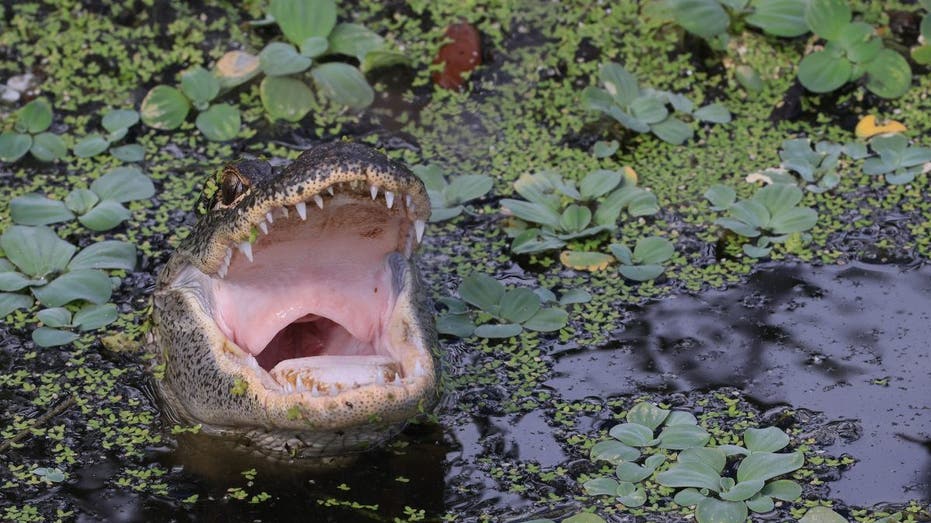
Triathlete Jonathan Bruney survives Savannah River alligator attack during training swim
Triathlete Jonathan Bruney survives an alligator attack during a training swim in the Savannah River near Augusta as he...

Writer plays “be the prime minister” game that tests policy choices under media scrutiny
A writer reports playing a new computer game that lets players role-play as a prime minister and confront a series of po...