


Iran’s ambassador to China tells a forum in Beijing that Iran will impose new service fees on ships transiting the Strait of Hormuz, while offering “special” consideration to countries he describes as friendly to Iran. Abdolreza Rahmani Fazli says Iran is working with Oman on “new arrangements” for passage through the waterway, which Iran says falls within its territorial waters. He argues the planned charges are service and administration fees for security, vessel supervision and environmental impacts, not a “toll,” and he frames the approach as compatible with Iran’s legal position. The comments come amid an ongoing uncertainty over future arrangements after an initial US-Iran memorandum that allows commercial shipping to transit the strait free of charge for 60 days. Multiple outlets report that Washington has objected to Iran’s proposed fees. Sources also note that the strait is a major route for global crude and liquefied natural gas shipments and that earlier conflict-related disruptions have heightened tensions around maritime access. The ambassador’s remarks indicate that any fee framework may include different levels or categories for particular states, including China.
Iran says it will charge Hormuz service fees, with special treatment for “friendly” countries
Iran’s ambassador to China tells a forum in Beijing that Iran will impose new service fees on ships transiting the Strait of Hormuz, while offering “special” consideration to countries he describes as...
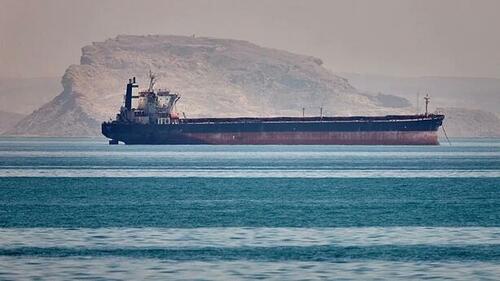
- Iran’s ambassador to China says vessels transiting the Strait of Hormuz will face new service fees.
- He says Iran is working with Oman on new arrangements for the waterway’s management.
- He describes the charges as service fees for security, supervision and environmental consequences, not a “toll.”
- He says Iran will provide “special” consideration or treatment for countries it calls “friendly,” including China.
- The remarks occur as a prior US-Iran deal allows free transit for 60 days, and Washington has objected to Iran’s fee proposal.
Iran To Grant China, 'Friendly' Countries 'Special Consideration' On Hormuz Fees Via The Cradle Iran's ambassador to China stated on Saturday that the Islamic Republic would impose service fees on vessels transiting the Strait of Hormuz, but that China and other "friendly" countries would be granted "special considerations." During a speech at the World Peace Forum in Beijing on Saturday, Iranian Ambassador Abdolreza Rahmani Fazli affirmed that Iran was working in "collaboration and cooperation" with Oman on "new arrangements" for the strait. via Associated Press Ships passing through Hormuz, through which one-fifth of the world's oil exports moved before the US-Israeli war on Iran, must travel along Iranian territory to the north and Omani territory to the south. "As a country where the Hormuz is part of its territorial waters, we will definitely charge service fees," Fazli said. However, the fee would not be a "toll," he added, as tolls are considered illegal under international maritime law. Instead, the fees would be for security and administration. "These new arrangements will be concerning guaranteeing the security of passage through the Straits of Hormuz, supervision of the passage of the vessels … and also guaranteeing and dealing with the environmental consequences of the massive number of ships," he stated. Iran's NourNews agency quoted the ambassador as saying that "special considerations" would be applied to China and other friendly nations when determining the level and type of service fees charged for their vessels. Beijing began importing large amounts of Iranian crude in the early 1990s as China industrialized and sought new energy sources to shift away from coal. Beijing's purchases typically account for roughly 90 percent of Iran's oil exports, providing tens of billions of dollars in annual revenue that support Iran's government and military. To bypass US economic sanctions, much of the oil is transported using trans-shipment hubs and a shadow tanker fleet to obscure its origins. The Strait of Hormuz was closed by Iran after the US and Israel launched an unprovoked war on the Islamic Republic on February 28. In April, as energy prices soared, the US responded by imposing a naval blockade on Iran's southern ports to attempt to halt Iranian oil exports. The Memorandum of Understanding (MoU) signed by Iran and the United States on June 15 to halt hostilities stipulated that commercial ships would be allowed to transit through the Strait of Hormuz free of charge for 60 days. Fazli added that new arrangements regarding Hormuz would be made in cooperation with Oman. Last month, Oman proposed that ships transit the strait via a new southern route close to its coast and a new northern route along Iran's coast, while the central route through the strait is de-mined. Omani officials worked with the UN's International Maritime Organization (IMO) to develop the plans. However, Iran rejected plans for the southern route, which would have been overseen by the US, saying it would violate Clause 5 of the MoU. On Thursday, Iranian forces attacked a Singaporean ship attempting to pass through the southern Omani route, causing the IMO to abandon the effort. The last 24 hours in the Strait of Hormuz are a doozy. At the start of the clip, you will see many of the vessels that were going through the Oman route take the Iran route instead. Now there's something I should probably point out. In the last week or so, US escorts through… pic.twitter.com/rK1iKRtrYm — HFI Research (@HFI_Research) July 5, 2026 On Friday, Iranian Parliament Speaker Mohammad Bagher Ghalibaf announced Iran and Oman had reached an agreement on the joint management and regulation of traffic in the Strait of Hormuz. Tehran has repeatedly vowed that the strait will not return to its pre-war status despite an illegal US blockade on its ports and attempts to undermine Iranian control of the waterway. "Hormuz is defined under Iran's command, not CENTCOM," Iranian Deputy Foreign Minister and top negotiator Kazem Gharibabadi said in a statement on July 2nd. Tyler Durden Sun, 07/05/2026 - 19:50
1 month agoDespite US objections, ambassador insists new fees to be charged to vessels transiting Strait of Hormuz.
1 month agoIranian Ambassador Abdolreza Rahmani Fazli told the World Peace Forum in Beijing that his country was working in “collaboration and cooperation” with Oman on “new arrangements” for the vital waterway
1 month agoThe initial peace deal stated that ships would transit the strait free of charge for 60 days, but it remains unclear what will be in place after that period.
1 month agoIran's envoy to China says friendly nations to get ‘special’ Hormuz fee treatment Iran’s ambassador to China has said that new fees would be charged to ships transiting the Strait of Hormuz, an idea rejected by Washington, while assuring that “friendly” nations would receive special treatment. The initial deal struck between Iran and the United States to end their war stipulated that commercial ships would transit the strait free of charge for 60 days, but it remains unclear what will be in place after that period. Iranian Ambassador Abdolreza Rahmani Fazli told the World Peace Forum in Beijing that his country was working in “collaboration and cooperation” with Oman on “new arrangements” for the vital waterway. “As a country where the Hormuz is part of its territorial waters, we will definitely charge service fees,” Azli said in translated remarks, while insisting such fees would not be a “toll.” “These new arrangements will be concerning guaranteeing the security of passage through the Straits of Hormuz, supervision of the passage of the vessels... and also guaranteeing and dealing with the environmental consequences of the massive number of ships,” he said. “We will definitely consider special treatment for the countries that were friendly to us and specially stood by us during the hard times,” he added. The strait normally carries one-fifth of the world’s crude oil and liquefied natural gas, but it was all but closed by Iran during the Middle East war, sending energy prices soaring. (AFP) Vessels are seen anchored in Bandar Abbas along the Strait of Hormuz in a picture obtained on 18 June 2026 (AFP/Isna)
1 month agoIran's ambassador to China insisted Saturday that new fees would be charged to ships transiting the Strait of Hormuz -- an idea rejected by Washington -- while assuring that "friendly" nations would receive special treatment. The post Iran envoy says friendly nations to get ‘special’ Hormuz fee treatment appeared first on Vanguard News.
1 month ago
FDA approves Revolution Medicines’ targeted once-daily pill for advanced pancreatic cancer
The U.S. Food and Drug Administration approves Revolution Medicines’ Rasonque (daraxonrasib), a once-daily targeted oral...

Jacob Fearnley helps Britons close in on US Open main draw spot
British player Jacob Fearnley is among the group of Britons who are one win away from qualifying for the US Open men’s s...

UK man undergoes world’s first live AI-assisted brain surgery to remove tumour
A UK patient, Rhys Hibbert, undergoes what is described as the world’s first live AI-assisted brain surgery, during whic...