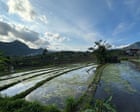
Farmers in Bali say water that once flowed regularly to rice terraces is increasingly scarce, especially during the dry season. In interviews, growers describe their plots turning dry while neighbouring areas receive less water than in the past. They point to changes in water availability and to environmental factors such as shrinking forest cover and drying springs.
Several reports attribute the growing shortfall to water being redirected toward tourism. Farmers describe companies and tourism-related sites taking water and channeling it to hotels and other visitor infrastructure, reducing the amount available through local irrigation networks. Some farmers say their own fields still receive water because they sit higher in the irrigation system, while lower-lying terraces increasingly struggle to maintain supply.
The reporting frames the issue as a strain on longstanding community water arrangements that rely on local infrastructure and shared distribution. The overall picture across sources is that reduced water for agriculture is linked to both environmental decline and commercial demand, with tourism cited as a major driver of diversion in farmers’ accounts.