
NASA’s Nancy Grace Roman Space Telescope is expected to help scientists find and study supermassive black holes far back in cosmic history. Researchers say observations of distant black holes—seen as they were in the early universe—are crucial for understanding how supermassive black holes at the centers of galaxies form and grow over time. According to the reporting, the Roman telescope will target these early, “ancient” black holes at very large distances, including ones that existed up to about 11 billion years ago. The scientific goal is to detect black holes whose extreme gravity can disrupt nearby stars, producing observable signatures that allow astronomers to identify and characterize the systems. NASA and other outlets frame the work as part of research using Roman’s planned capabilities once it is operational. The telescope’s launch is described as scheduled for Aug. 30, 2026, and the studies presented suggest Roman will be able to reach the relevant distances and detect the targets needed to probe early black-hole growth. The research focuses on improving understanding of the evolution of supermassive black holes across time, using Roman observations of distant galaxies and black-hole activity.
NASA’s Roman Telescope to Detect Ancient Supermassive Black Holes
NASA’s Nancy Grace Roman Space Telescope is expected to help scientists find and study supermassive black holes far back in cosmic history. Researchers say observations of distant black holes—seen as...

- NASA’s Nancy Grace Roman Space Telescope is expected to detect distant, early supermassive black holes.
- The research aims to understand how supermassive black holes at galaxy centers form and grow over time.
- The targeted black holes existed up to about 11 billion years ago (early in the universe’s history).
- The telescope is on track to launch on Aug. 30, 2026.
- The studies describe Roman’s ability to observe black-hole activity associated with stars being disrupted by extreme gravity.
How do black holes at the centers of galaxies form and grow over time? To answer this question, scientists need to detect and study supermassive black holes at great distances that existed much earlier in the universe's history. New research suggests NASA's Nancy Grace Roman Space Telescope, which is on track to launch Aug. 30, 2026, will be able to detect these distant, ancient black holes that existed up to 11 billion years ago.
2 hours agoLee esta nota de prensa en español aquí. How do black holes at the center of galaxies form and grow over time? To answer this question, scientists need to detect and study supermassive black holes at great distances, which existed much earlier in the universe’s history. New research suggests NASA’s Nancy Grace Roman Space Telescope, which […]
8 hours ago
Fenerbahce sign Mason Greenwood from Marseille on four-year deal
Fenerbahce sign Mason Greenwood from Marseille on a four-year contract, according to multiple outlets. The move brings t...

Federal court to hear state AG request to pause Paramount–Warner Bros. Discovery merger
A group of state attorneys general asks a federal court to temporarily halt Paramount’s proposed merger with Warner Bros...
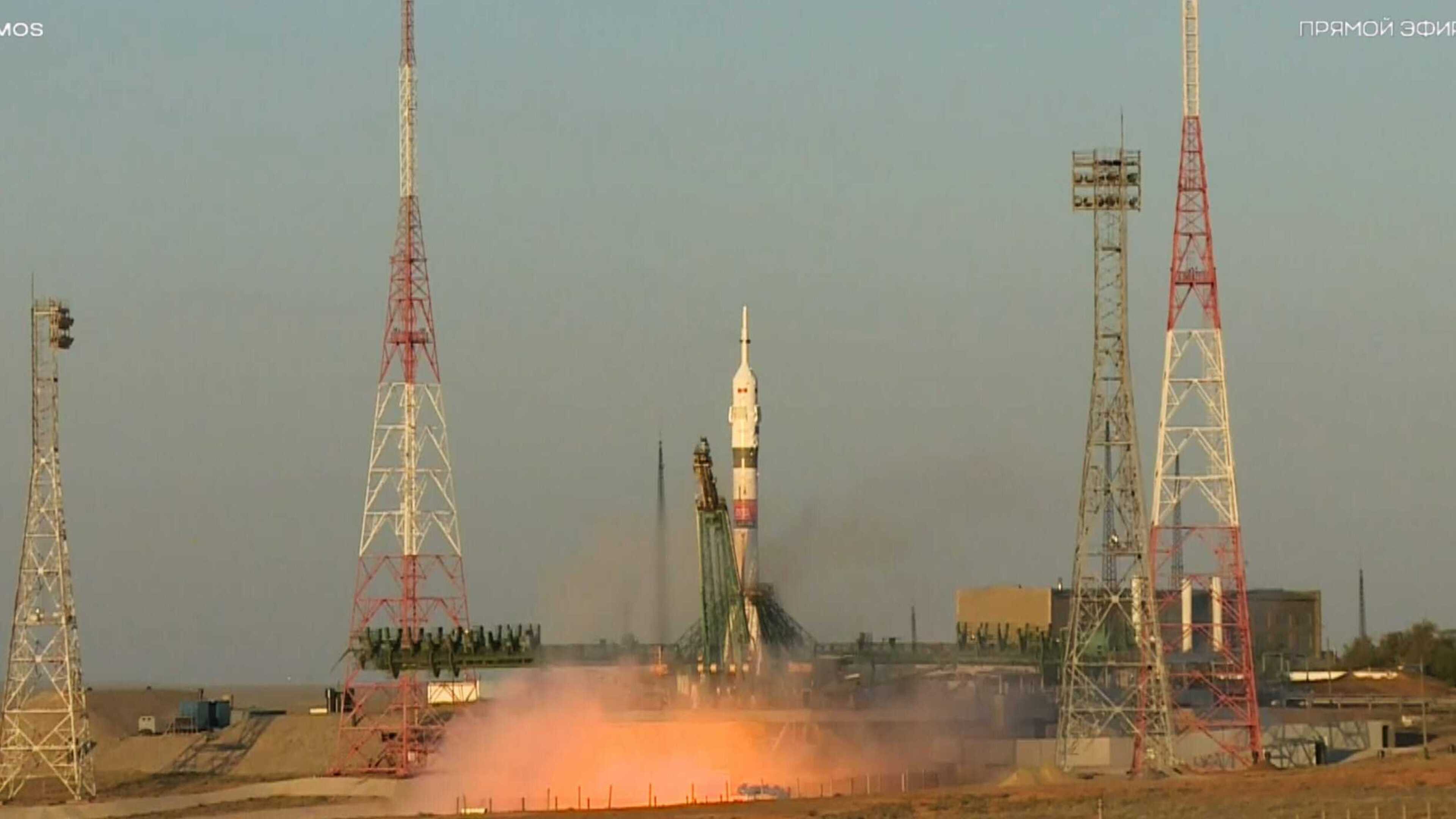
US-Russian crew launches to International Space Station for eight-month mission
A U.S.-Russian crew launches to the International Space Station (ISS) for an eight-month stay, multiple outlets report....