


Economist Shane Wright examines the significance of the federal budget delivered by Treasurer Jim Chalmers, focusing on the package of tax measures described as a central feature of the budget. Across outlets, the analysis frames the question in terms of intergenerational impact—whether changes now will meaningfully influence incomes, living standards, and broader economic outcomes for people who will be young today and in the future. The pieces emphasise that the budget’s prominence rests largely on its proposed tax settings and that these measures are intended to shift revenue and, potentially, the distribution of costs and benefits across different household and income groups. While the articles reference the “bold” nature of the tax changes, they do not provide a single agreed narrative about immediate results; instead, they assess the extent to which the policy design translates into longer-term effects. Overall, the coverage presents the budget tax reforms as the key variable in determining likely consequences over time, rather than treating spending or other policy components as the primary driver of intergenerational outcomes.
Analysis discusses how Jim Chalmers’ budget tax changes may affect future generations
Economist Shane Wright examines the significance of the federal budget delivered by Treasurer Jim Chalmers, focusing on the package of tax measures described as a central feature of the budget. Across...
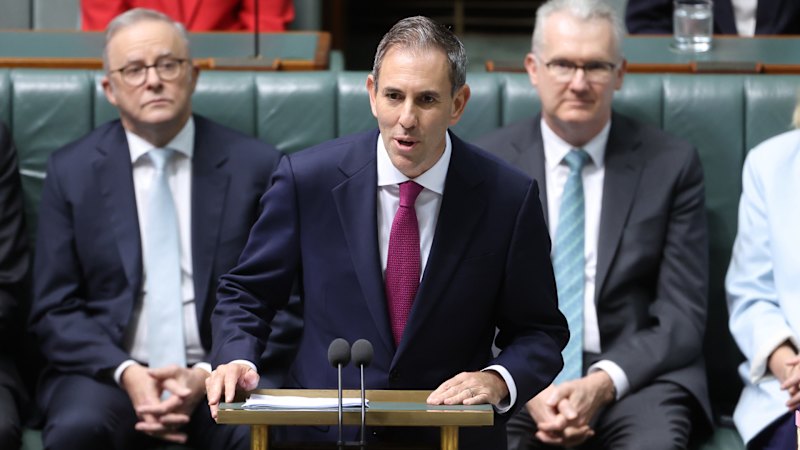
- All three articles are analysis pieces by senior economics correspondent Shane Wright.
- The analysis focuses on federal budget measures introduced by Treasurer Jim Chalmers.
- The budget’s centrepiece is described as major tax changes.
- The central question is how these tax changes could affect future generations.
- Coverage is presented as an assessment of long-term significance rather than a straightforward summary of short-term impacts.
Senior economics correspondent Shane Wright analyses whether the bold tax changes that are the centrepiece of Jim Chalmers' budget will affect the next generation.
3 months agoSenior economics correspondent Shane Wright analyses whether the bold tax changes that are the centrepiece of Jim Chalmers' budget will affect the next generation.
3 months agoSenior economics correspondent Shane Wright analyses whether the bold tax changes that are the centrepiece of Jim Chalmers' budget will affect the next generation.
3 months ago
US banks form BankChain Alliance to develop nationwide blockchain network by 2027
US banking groups plan to create a shared nationwide blockchain network known as the “BankChain Alliance,” with a target...

WHO and partners report rising Ebola cases and deaths in DR Congo, with Uganda confirmations
An Ebola outbreak continues to spread in the eastern Democratic Republic of the Congo (DRC), with international agencies...

US moves to target Palestine Action in counterterrorism effort focused on ‘far-left’ groups
The US is taking steps to target Palestine Action as part of a counterterrorism effort aimed at groups described as “far...