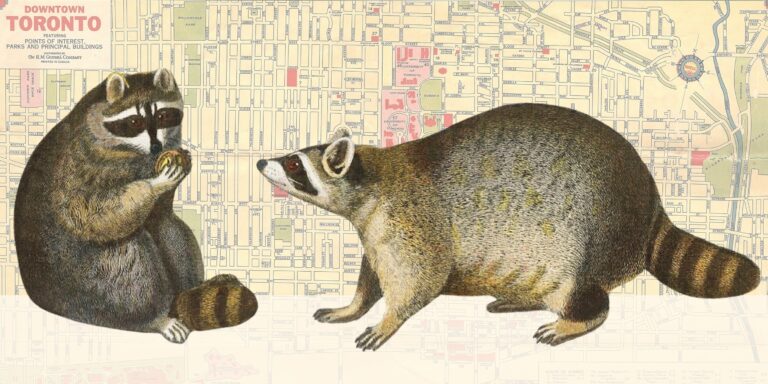
Multiple sources focus on how Toronto’s raccoon population is reshaping everyday urban life and public perceptions of wildlife. Writers describe raccoons as highly adaptable animals that are common in the city’s neighborhoods, turning parks, streets, and other gray urban spaces into settings where humans and wildlife repeatedly overlap. The articles explain that raccoons are not just a curiosity but a recognizable part of the urban ecosystem, often seen foraging around residential areas and other human activity.
The pieces also emphasize the animals’ behavior and intelligence, portraying them as capable of learning from their surroundings and navigating city conditions. One source notes Toronto’s reputation for abundant raccoons and frames the animals as evidence of how urban environments can support wildlife thriving alongside people. While the coverage is largely descriptive and cultural rather than investigative, it collectively underscores the raccoon’s presence across Toronto and the growing interest in understanding their habits. The overall message is that Toronto’s raccoons are well established, visible, and increasingly discussed as a defining feature of local urban nature.