
Multiple reports describe how naked mole-rat queens prevent other colony females from reproducing by emitting a specific volatile chemical. An international team led by Dr. Gary Lewin at the Max Delbrück Center in Berlin identifies the queen-produced compound as isopropyl myristate. The compound is present in the queen’s odor and is detectable by other, non-queen females within the colony. Sources report that exposure to this scent produces temporary infertility in rival females. Nature also reports that the chemical affects reproductive hormone production in other females, including changes in prolactin and progesterone, which contributes to reproductive suppression. One Nature article describes the queen’s odor as a single chemical signal that alters hormone levels in other females, while another emphasizes that the compound mediates reproductive suppression to help maintain the eusocial hierarchy. Together, the findings indicate that queens use a self-produced chemical signal to control colony reproduction, allowing only the queen to reproduce while other females are hormonally shifted away from fertility.
Naked mole-rat queen scent suppresses rivals’ reproduction through a hormone-altering chemical
Multiple reports describe how naked mole-rat queens prevent other colony females from reproducing by emitting a specific volatile chemical. An international team led by Dr. Gary Lewin at the Max Delbr...

- Naked mole-rat queens produce a volatile odorant called isopropyl myristate.
- Other, non-queen females detect the queen’s chemical and temporarily become infertile.
- The queen’s scent alters reproductive hormone production in rival females.
- Reported hormone changes include shifts in prolactin and progesterone.
- The mechanism helps maintain the colony’s eusocial reproductive hierarchy.
An international team led by Dr. Gary Lewin, group leader of the Molecular Physiology of Somatosensory Perception lab at the Max Delbrück Center in Berlin, has discovered that the queens of naked mole-rat colonies release a volatile compound called isopropyl myristate, which induces temporary infertility in all other females in the colony.
3 hours agoNature, Published online: 15 July 2026; doi:10.1038/d41586-026-02168-2The scent of a single chemical, made only by the queen, alters hormone production in other females.
18 hours agoNature, Published online: 15 July 2026; doi:10.1038/s41586-026-10772-5Naked mole-rat (Heterocephalus glaber) queens produce isopropyl myristate, a low-volatility ester that high-ranking animals detect and avoid, which alters prolactin and progesterone in other females to suppress reproduction and preserve eusocial hierarchy.
18 hours ago
Aviation pioneer Wally Funk, oldest woman in space, dies at 87
Wally Funk, an American aviation pioneer and trailblazing astronaut trainee, has died at 87 in Texas. Multiple outlets r...
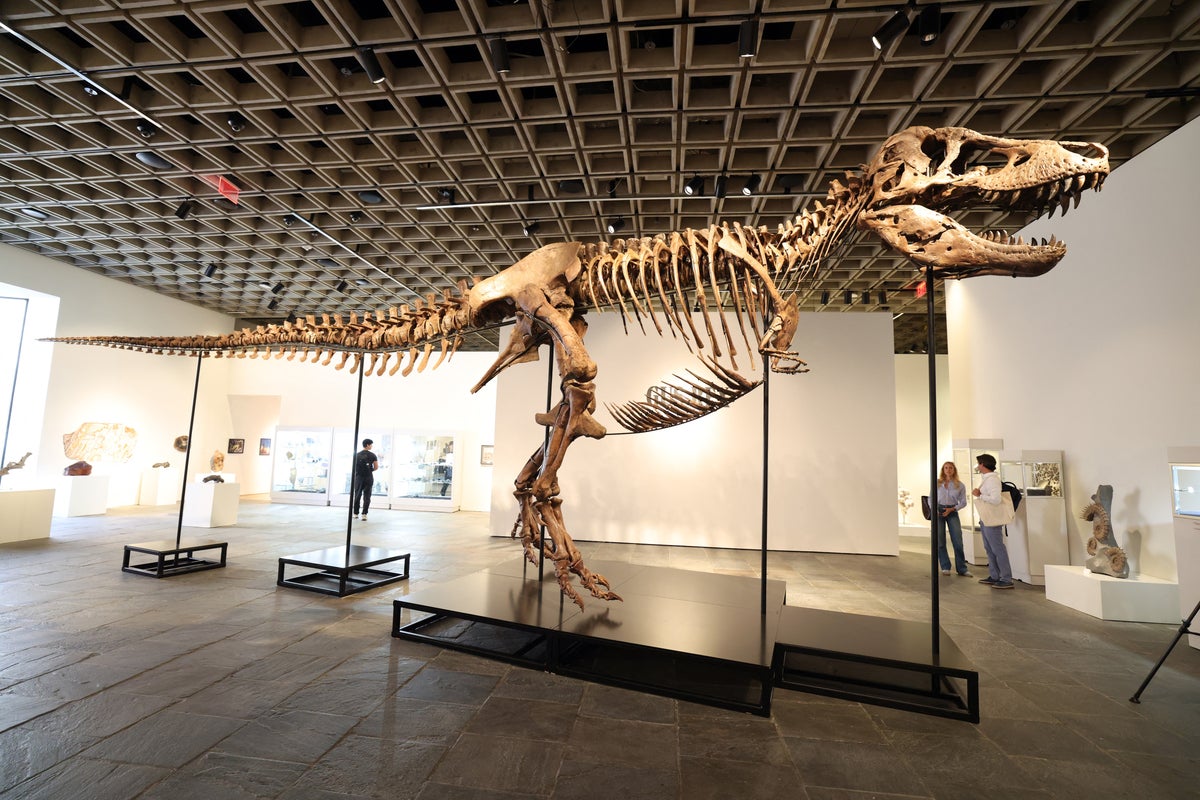
T. rex Fossil Sells for About $50.1 Million, Becoming Top-Ever Auction Dinosaur
A T. rex fossil sells for about $50.1 million at auction, making it the most expensive dinosaur fossil ever sold at auct...

China’s “Green Great Wall” slows desertification, but scientists warn progress is fragile
China’s decades-long “Green Great Wall” campaign is credited with slowing the expansion of desert areas in northern Chin...