
NASA reports that its Perseverance rover has identified evidence that a thick, layered rock sequence on the rim of Jezero Crater formed through repeated asteroid impacts. The deposit, described by the science team as the “Broom Point member,” is about 245 feet (75 meters) thick and consists of stacked bedrock layers. Based on the rover’s observations, the formation is likely more than 3.9 billion years old, which would place it among the oldest terrain examined by a Mars rover. The layered structure is interpreted as a record of multiple impact events that built up the rock stack over time. NASA’s findings emphasize the significance of dating and interpreting this ancient crater-rim material, which helps scientists reconstruct Mars’ early impact environment and geological history. The Phys.org report relays the same core results: the thickness and layered nature of the rock unit, its association with asteroid impacts, and the likely age exceeding 3.9 billion years. Overall, the accounts describe Perseverance measurements that support an ancient, impact-driven origin for the Broom Point member at Jezero Crater.
Perseverance finds layered rocks on Jezero Crater rim linked to ancient asteroid impacts
NASA reports that its Perseverance rover has identified evidence that a thick, layered rock sequence on the rim of Jezero Crater formed through repeated asteroid impacts. The deposit, described by the...

- Perseverance examines a rock unit on the rim of Jezero Crater called the “Broom Point member.”
- The unit is about 245 feet (75 meters) thick and shows layered bedrock.
- The layers are interpreted as being formed by repeated asteroid (impact) events.
- The Broom Point member is likely older than 3.9 billion years.
- The sequence is described as among the oldest terrain studied by a Mars rover.
NASA's Perseverance Mars rover has uncovered evidence that a 245-foot-thick (75-meter-thick) stack of ancient rock on the rim of Jezero Crater was built by repeated asteroid impacts. Referred to as the "Broom Point member" by the rover's science team, this sequence of layered bedrock is likely more than 3.9 billion years old, making it among the oldest terrain ever examined by a Mars rover.
4 hours agoNASA’s Perseverance Mars rover has uncovered evidence that a 245-foot-thick (75-meter-thick) stack of ancient rock on the rim of Jezero Crater was built by repeated asteroid impacts. Referred to as the “Broom Point member” by the rover’s science team, this sequence of layered bedrock is likely more than 3.9 billion years old, making it among […]
6 hours ago
“Raspberry sugar” erythrulose detected in dust and gas near Milky Way’s center
Astronomers detect erythrulose, a naturally occurring sugar also found in raspberries, in a large cloud of dust and gas...

Federal High Court orders final forfeiture of 48 properties linked to Abubakar Malami
A Federal High Court sitting in Abuja orders the final forfeiture of 48 properties linked to former Attorney-General of...
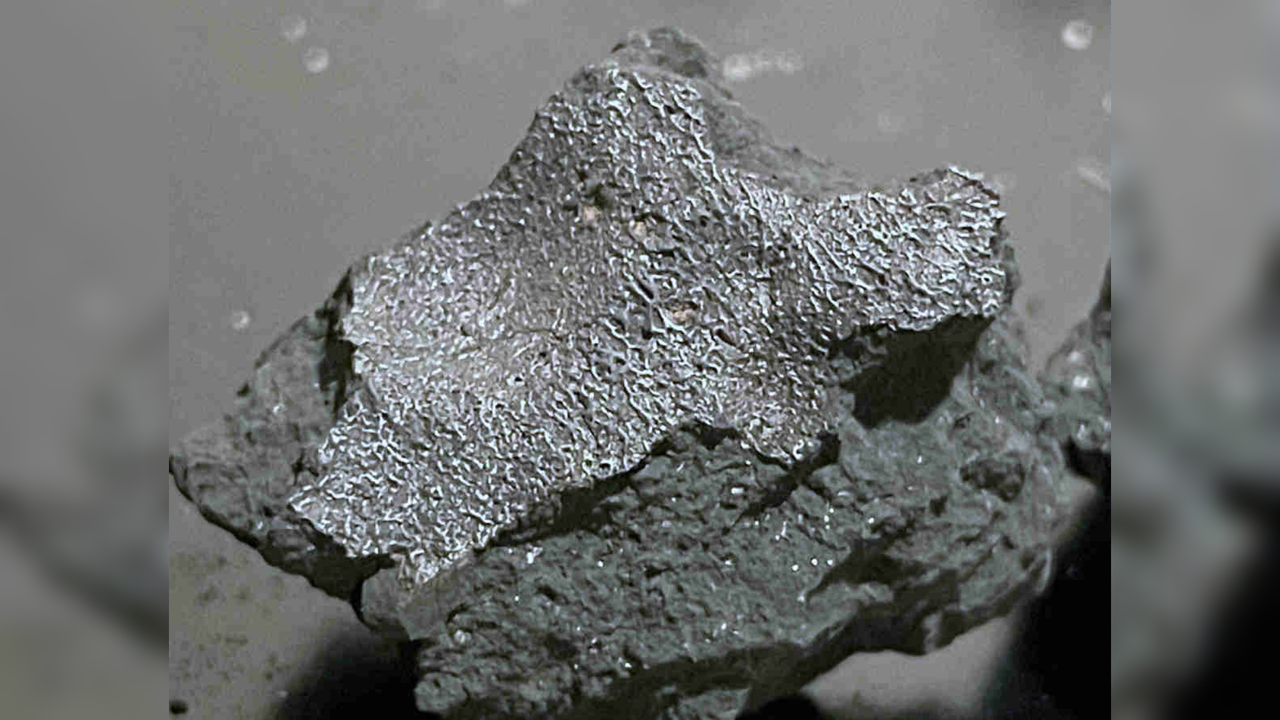
Meteorite crash in New Jersey house may provide clues to origins of life
A meteorite that crashes through a house in New Jersey is expected to help scientists study early conditions in the sola...