


Archaeologists report an unexpected discovery inside a roughly 1,600-year-old Roman-era Egyptian mummy: a fragment of Homer’s Iliad. According to the accounts, the text fragment is not found placed alongside the body, but instead is inserted within the mummy’s abdomen. The findings raise questions about how and why such a literary piece would end up within a burial. The sources frame the discovery as more than a simple curiosity, pointing to the broader circulation and reception of Greek classics in the Roman world. In that context, works like the Iliad are understood to have been read, copied, and valued beyond their original cultural setting. However, the reporting emphasizes location and context rather than offering a single definitive explanation for the fragment’s purpose. While the sources agree on what was found and where it was found, they do not fully settle whether the fragment’s presence reflects ritual practice, personal association, or other burial customs.
Roman-era Egyptian mummy contains fragment of Homer’s Iliad
Archaeologists report an unexpected discovery inside a roughly 1,600-year-old Roman-era Egyptian mummy: a fragment of Homer’s Iliad. According to the accounts, the text fragment is not found placed al...
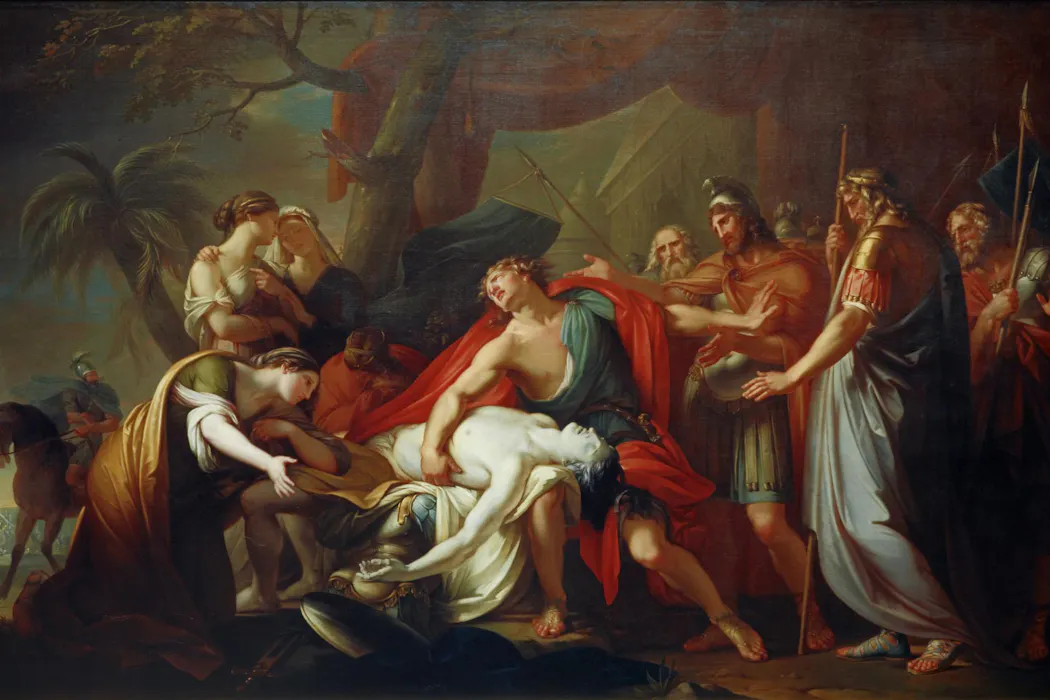
- A fragment of Homer’s Iliad is found inside a Roman-era Egyptian mummy.
- The mummy is dated to about 1,600 years old.
- The fragment is located within the mummy’s abdomen.
- The fragment is not placed beside the body.
- The discovery is interpreted in the context of how Greek classics circulated in the Roman world.
Archaeologists have found something unexpected inside a 1,600-year-old Roman-era Egyptian mummy: a fragment of Homer's Iliad. It wasn't placed beside the body, but inside the mummy's abdomen. But the real surprise isn't just where the fragment was found. It's how it got there. To understand, we must go back—to the Iliad itself, and to what it became in the Roman world.
3 months agoThe fragment wasn’t placed besides the body, but stuffed inside it.
3 months ago
Dillon Gabriel delivers strong Browns preseason performance against Patriots
Dillon Gabriel, the Browns’ third-string quarterback, puts together a notably efficient preseason game against the New E...

Judge blocks Pentagon’s Anthropic blacklist over alleged supply-chain risk
A U.S. judge blocks the Pentagon from blacklisting Anthropic, according to reporting from CNBC and Channel NewsAsia. The...

NYT Connections: Hint and answer roundups published for multiple June–August 2026 puzzles
The New York Times word game Connections releases daily puzzle content, and multiple outlets publish the corresponding h...