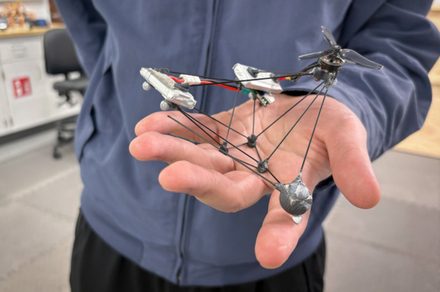
Engineers at Northwestern University develop a drone design that uses rapid spinning to make the aircraft much less visible to the human eye. According to reports, the drone spins at high speed so that observers perceive it as a blurred motion effect rather than a clear object. One outlet says the approach reduces visibility by about ten times compared with conventional drones, while another describes the drone as nearly vanishing in flight due to the same motion-blur visual illusion.
Both accounts link the concept to potential practical uses where minimizing disturbance matters. The technology is presented as a way to improve wildlife surveys by making aircraft less noticeable to animals, and it could also support infrastructure inspections with reduced impact on sites below. One report also notes that the technique may eventually be adapted for consumer drones, potentially enabling less intrusive aerial photography.
The sources describe a hardware and design method—spinning and the resulting blur—rather than a specific sensing breakthrough, and they present the work as an avenue for changing how drones are deployed in observational and inspection settings.