


Multiple reports describe continued, limited movement of oil tankers through the Strait of Hormuz as tensions remain high. On Wednesday, shipping-tracking data and media reports indicate a Chinese-linked VLCC, identified as Yuan Hua Hu (Cosco, chartered by Unipec/Sinopec), transits and then proceeds south through the corridor near Iran’s Larak Island toward the Gulf of Oman. Earlier reports around the same period also describe other Chinese-linked vessels crossing the strait and, in some cases, switching off transponders during transit. Another Reuters-referenced report says three supertankers carrying a combined about 6 million barrels of Middle East crude exited the Strait of Hormuz after being stranded in the Persian Gulf for more than two months, with the cargoes split across three VLCCs bound for Asian refineries, including China and South Korea. Sources also report Iranian claims that coordination with the IRGC and Iranian management protocols allows some Chinese ships to pass, while the US maintains a separate enforcement posture and whether all planned ships can pass it is not confirmed. In the background, Trump and Xi’s state visit and statements about reopening the strait and opposing tolls are cited alongside ongoing shipping disruptions and uncertainty over how quickly normal flows could return.
Several Chinese-linked tankers transit or exit the Strait of Hormuz amid heightened tensions
Multiple reports describe continued, limited movement of oil tankers through the Strait of Hormuz as tensions remain high. On Wednesday, shipping-tracking data and media reports indicate a Chinese-lin...
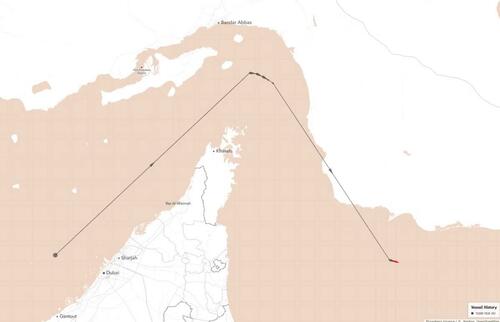
- A limited number of large oil tankers cross or exit the Strait of Hormuz amid ongoing security disruptions.
- Ship-tracking reports identify the Chinese-linked VLCC Yuan Hua Hu as transiting and moving into the Gulf of Oman around Wednesday.
- Reuters-referenced data say three VLCCs exited carrying a combined about 6 million barrels of crude, destined for Asian refining hubs.
- Reports describe tanker transponders being switched off during parts of the transit, including for at least Yuan Hua Hu and other vessels.
- Iranian statements and reporting attribute passage to IRGC coordination and Iranian management protocols, while the US has separate enforcement concerns.
Tankers bound for Pakistan, China exit Strait of Hormuz A liquefied natural gas tanker bound for Pakistan and a supertanker carrying Iraqi crude oil destined for China have departed the Strait of Hormuz, according to shipping data, marking the latest movement of energy cargoes through the strategically important waterway. The crude oil tanker left the Gulf on Saturday after reportedly being delayed for nearly three months, while the LNG vessel was seen departing on Monday. The ships are among a limited number of large tankers to have exited the Gulf this month via routes designated by Iran. Last week, three supertankers carrying a combined six million barrels of crude oil also departed for China and South Korea.
3 months agoThree Supertankers Carrying 6 Million Barrels Exit Strait Of Hormuz Three commercial supertankers carrying a combined 6 million barrels of Middle East crude oil have successfully exited the Strait of Hormuz, according to Reuters. The vessels departed the strategic waterway on Wednesday, after being stranded inside the Persian Gulf for over two months, lending hope to an end to the closure of the strait. The crude cargoes were split evenly among three Very Large Crude Carriers (VLCCs) heading to Asian refining hubs. The first was Universal Winner, a South Korean-flagged supertanker carrying 2 million barrels of Kuwaiti crude oil. Shipping data on LSEG and Kpler showed that the vessel is currently en route to Ulsan, South Korea, to discharge at an SK Energy facility by June 9. The second VLCC was Yuan Gui Yang, a Chinese-flagged vessel hauling 2 million barrels of Iraqi Basrah crude. Chartered by Unipec (the trading arm of Sinopec), the supertanker is heading toward Guangdong province with an expected arrival on June 4. Finally there was Ocean Lily, a Hong Kong-flagged tanker loaded with 2 million barrels split evenly between Qatari al-Shaheen and Iraqi Basrah crude. Owned by Sinochem, the vessel is tracking toward Fujian province for a June 5 arrival. Combined, the trio have about 6 million barrels of crude on board — one of the biggest oil flows in a single 24 hour period in over a month. All three vessels switched off their digital transponders before exiting. Two have since transited the strait and were sighted near Oman while the status of the third is unclear. It also remains to be seen if they all can get past a seaparte US blockade. The supertanker heading to South Korea, the Universal Winner, is the first observed sailing by a VLCC to the Asian country since the war began. Iran's state TV underscored that the country now appears to be in sole control over who crosses the strait and who doesn't. “Today other countries like South Korea, taking their example from the Chinese, coordinated with the IRGC navy and arranged the passage of their ships through the Strait of Hormuz,” the TV correspondent says in report from near the strait. “Coordination increased today and it’s expected to increase further tomorrow” The correspondent said he witnessed five oil supertankers passing the strait with IRGC coordination, without giving further details Meanwhile, following the footsteps of China and South Korea, India is preparing to send its own vessels through the Strait of Hormuz to load up energy cargoes from suppliers in the Middle East, Bloomberg reported; it would be the first time since the Iran conflict began that the country will do so. State-owned Shipping Corp. of India is ready to go back to the Persian Gulf once it has approval from the Indian Navy and it has business from oil refiners, one of the people said. Shipping through Hormuz, which handles roughly a fifth of global oil flows, has been virtually halted since the Iran war began at the end of February, causing major disruptions and price shocks for countries like India, the world’s third-largest crude importer. It’s unclear whether Iran or the US, which are separately blockading the strait and surrounding waters amid the war, have given India a green light to send ships through the waterway. Their agreement will be critical for the plan to work. India’s External Affairs Minister Subrahmanyam Jaishankar met his Iranian counterpart Abbas Araghchi in New Delhi on the sidelines of a BRICS summit last week. Recent White House briefings indicated potential progress toward an agreement to de-escalate hostilities, giving energy markets hope for a more permanent reopening of the chokepoint. Details on permanent enforcement or full reopening conditions remain sparse despite reports of Washington and Tehran having allegedly engaged in productive conversations via mediators, often with contradictory statements. Few ships have so far managed to break through the Strait of Hormuz, with regional oil exports currently well below pre-war baselines. Energy analysts emphasize that even if the conflict ends immediately, a backlog of structural damages and shuttered upstream infrastructure means market normalization will likely take three to four months and high oil prices are likely to persist. Tyler Durden Wed, 05/20/2026 - 11:45
3 months agoTwo Chinese supertankers leave Strait of Hormuz after months-long delay Shipping data from the London Stock Exchange Group and Kpler showed that two Chinese supertankers carrying about 4 million barrels of crude oil from the Middle East departed the Strait of Hormuz on Wednesday after remaining in the Gulf for more than two months. The movement of the vessels comes amid continued disruptions and security concerns affecting shipping routes in the Gulf region following escalating tensions linked to the US-Israel war on Iran.
3 months agoTrump says Beijing opposes Iranian toll in Hormuz, as Chinese vessels exit waterway Chinese President Xi Jinping opposes Iran charging a toll in the Strait of Hormuz and is considering buying more oil from the US to replace lost volume from the Gulf, the White House said on Thursday, following a meeting between President Donald Trump and Xi. The statement came as Xi hosted Trump, senior US officials and business leaders for an elaborate state dinner on Thursday. The leaders of the world’s two largest economies appeared to put aside differences on hot spots such as Taiwan and Iran, at least in public, to focus on business deals. Trump told Fox News that Xi offered to help end the US-Israeli war on Iran, as he downplayed tensions over Chinese ties with Tehran. "He said he's not going to give military equipment… he said that strongly," Trump told Fox News host Sean Hannity, after the two leaders met. "He'd like to see the Hormuz Strait open, and said 'if I can be of any help whatsoever, I would like to help'," Trump added. Read more: Trump says Beijing opposes Iranian toll in Hormuz, as Chinese vessels exit waterway
3 months agoTrump says Beijing opposes Iranian toll in Hormuz, as Chinese vessels exit waterway Submitted by Sean Mathews on Thu, 05/14/2026 - 21:03 The White House said Beijing would buy more oil from the US to reduce its dependence on Gulf supplies The Epaminondas ship is seen during seizure by the Islamic Revolutionary Guard Corps in the Strait of Hormuz, in this image obtained by Reuters, on 24 April 2026 (Meysam Mirzadeh/Tasnim/West Asia News Agency) Off Chinese President Xi Jinping opposes Iran charging a toll in the Strait of Hormuz and is considering buying more oil from the US to replace lost volume from the Gulf, the White House said on Thursday, following a meeting between President Donald Trump and Xi. The statement came as Xi hosted Trump, senior US officials and business leaders for an elaborate state dinner on Thursday. The leaders of the world’s two largest economies appeared to put aside differences on hot spots such as Taiwan and Iran, at least in public, to focus on business deals. Trump told Fox News that Xi offered to help end the US-Israeli war on Iran, as he downplayed tensions over Chinese ties with Tehran. "He said he's not going to give military equipment… he said that strongly," Trump told Fox News host Sean Hannity, after the two leaders met. "He'd like to see the Hormuz Strait open, and said 'if I can be of any help whatsoever, I would like to help'," Trump added. Middle East Eye was the first to report that China provided air defence systems to Iran, following its June 2025 conflict with Israel and the US. On the cusp of the 2026 attack, China supplied Iran with kamikaze drones, MEE reported. The New York Times subsequently reported that shipments of Chinese shoulder-fired air defence systems to Iran took place in April. The Financial Times reported that Iran used sophisticated Chinese satellites to target US military bases in the Gulf. But analysts told MEE before Trump’s trip that Beijing had an interest in seeing the war on Iran come to an end. “China and the US are aligned in opposing Iran having a nuclear weapons and seeing the Strait of Hormuz reopened,” Ahmed Aboudouh, an associate fellow at Chatham House and head of the China Studies research unit at the Emirates Policy Center, told MEE for an earlier story. Iran is watching Iran appeared to be watching the meeting and how the biggest buyer of its oil, China, would respond to discussions with the US. China purchases around 90 percent of Iran’s oil exports. 'Anybody that buys that much oil has obviously got some kind of relationship with' Iran - US President Donald Trump "Look, anybody that buys that much oil has obviously got some kind of relationship with them [Iran]," Trump said, referring to Xi. The Islamic Revolutionary Guard Corps (IRGC) said on Thursday that its naval forces had allowed a number of Chinese ships to pass through the Strait of Hormuz. "It was ultimately concluded that a number of Chinese ships requested by this country would pass through this area after an agreement on Iran's strait management protocols," the IRGC said in a statement. "This passage began last night," they added. Iranian state television said "more than 30 ships" had been allowed to pass, although it was not clear if they were all Chinese. Even as the Chinese vessels crossed the waterway, Iran appeared to take aim at new vessels. A commercial vessel anchored off the coast of the UAE port of Fujairah was apparently seized by Iranian forces on Thursday, the UK Maritime Trading Organisation said. War on Iran News Post Date Override 0 Update Date Mon, 05/04/2020 - 21:19 Update Date Override 0
3 months agoIran Proclaims Safe, Toll-Free Passage For 30 Chinese Tankers Amid Xi-Trump Summit During President Trump's ongoing state visit to China, he and President Xi Jinping agreed that the Strait of Hormuz must be open for the free flow of energy. They along with their senior officials have expressed agreement that no country can be allowed to exact shipping tolls in the Strait of Hormuz. Following this, Thursday saw Iranian state media proclaim that some 30 Chinese vessels are being allowed safe passage by Iran. Bloomberg also freshly reports, "The vessels were allowed to pass the Strait of Hormuz with the coordination of the Iranian authorities and Islamic Revolutionary Guard Corps’ navy, state TV reports, citing an IRGC naval official." While it's as yet unknown or unclear whether the US Navy side of the de facto blockade will also let them pass, Reuters has also reported the following: Iran has begun allowing some Chinese vessels to transit through the Strait of Hormuz following an understanding over Iranian management protocols for the waterway, the semi-official Fars news agency said on Thursday, citing an informed source. via Reuters In particular the move also follows formal requests by China's foreign minister as well as Beijing's ambassador to Iran, with Tehran reportedly agreeing based on safeguarding the two allies' strategic partnership. Bloomberg cited the IRGC official as saying of the Iranian protocol for passage, "A new era in the Strait of Hormuz has started as many countries of the world and fleets have accepted that the best, quickest and simplest way for transiting this very important waterway is only though coordination with the IRGC’s naval forces." This was after Wednesday saw the key milestone of a Chinese supertanker carrying 2 million barrels of Iraqi crude having successfully passed through the Strait of Hormuz, after previously being stranded for more than two months. Also of note is that the Chinese Cosco Shipping tanker did not have to pay tolls. According to The Wall Street Journal: Lloyd’s List Intelligence data show the Yuan Hua Hu crossed the waterway through the corridor in the north controlled by the Islamic Revolutionary Guard Corps. Ship trackers said the vessel switched off its transponder while sailing from an anchorage in Dubai towards Larak, then came back online for a couple of hours before going dark again. Ships crossing through Larak pay an average of $2 million each, according to brokers. The Yuan Hua Hu is the third Chinese state-owned tanker to leave the Gulf since the start of the war. State Department spokesperson Tommy Pigott emphasized earlier this week that Washington and Beining "agreed that no country or organization can be allowed to charge tolls to pass through international waterways like the Strait of Hormuz." China imports the bulk of its energy from the Middle East, and while it has amassed substantial crude oil stockpiles that are helping it weather the worst of the crisis - anecdotally over 1.4 billion barrels - restoring normal flows from the Persian Gulf is important for one of the world’s top energy importers. Are Iran and China coordinating behind the scenes to seek to take negotiating leverage away from Trump? Chinese companies are in talks for major new arms sales to Iran, explicitly ignoring Trump's letter to Xi before his arrival. And in return, Iran just granted more than 10 Chinese ships, including oil tankers, passage through the Strait of Hormuz — preempting any U.S. attempt to… pic.twitter.com/k4H3vG0vgb — MeidasClips (@MeidasClips) May 13, 2026 Earlier in the war, reports emerged that Beijing had pressured Iranian officials to stop attacking vessels carrying crude oil and LNG via Hormuz. Judging from later events that involved Iranian strikes on vessels in the chokepoint, Tehran did not yield to the pressure. Tyler Durden Thu, 05/14/2026 - 08:45
3 months ago
ASUU suspends strike at Niger Delta University after Bayelsa State deal
The Academic Staff Union of Universities (ASUU) suspends its indefinite strike at Niger Delta University (NDU) after rea...

Dan Lawrence helps England build 357-run lead over Pakistan at rain-affected Lord’s
England extends its advantage over Pakistan on the third day of the second Test at Lord’s, reaching a 357-run lead after...

Patriots acquire RB Corey Kiner from Cardinals for 2028 seventh-round pick
The New England Patriots acquire running back Corey Kiner from the Arizona Cardinals in a trade. Yahoo Sports reports th...