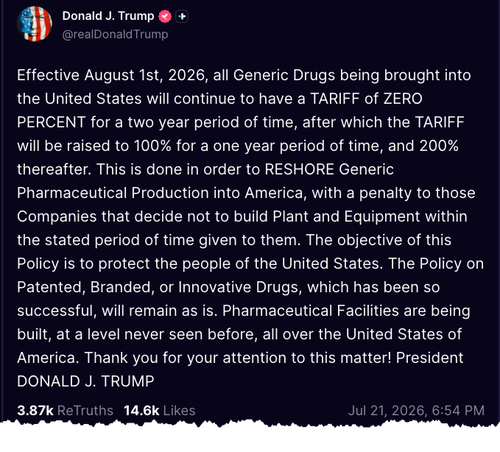
President Donald Trump threatens to impose steep tariffs on imported generic medicines unless manufacturers shift production to the United States. In a Truth Social post, he says imported generic drugs would face a 100% tariff beginning August 2028, increasing to 200% in August 2029. Multiple reports say Trump frames the policy as a way to “reshore” generic pharmaceutical production, with the aim of protecting U.S. supply and domestic manufacturing, while indicating that tariffs for patented, branded, and innovative drugs would remain unchanged.
However, experts and industry groups question whether the timeline is feasible and whether the policy is fully defined. The Association for Accessible Medicines says more details are needed, and notes that the U.S. government has not issued a formal executive order or complete implementation guidance. Analysts also warn that because generic drugs typically operate on thin margins, the tariff costs could be difficult to absorb and may be passed to consumers or lead to supply disruptions. Some outlets report that generic-drug makers and investors react with concern, including declines in related stocks and notes that prior tariff threats have not always resulted in reshoring.
For suppliers, especially in India, the changes could affect significant export revenue tied to the U.S. market, and several reports expect negotiations as firms assess the likelihood and impact of the tariff plan.