


The United States imposes an additional 12.5% tariff on Philippine exports after the U.S. government concludes that the Philippines has not effectively prohibited imports of goods made with forced labor. The change is announced by the Office of the United States Trade Representative (USTR), which has been investigating whether about 60 trading economies adopt and enforce safeguards to prevent forced-labor products from entering their markets. In the USTR’s assessment, the Philippines is found to have “failed to impose and effectively enforce a forced-labor import prohibition.” The tariff is described as a penalty approved by U.S. President Donald Trump against trading partners that Washington says have not met the required forced-labor protections. Philippine-focused reporting characterizes the measure as a new tariff applied to Philippine exports following the U.S. determination that Manila has not put in place the ban the U.S. says is necessary. The announcement is issued on a Friday (Manila time) and is based on the findings of the USTR’s ongoing review.
US imposes 12.5% tariff on Philippine exports over forced-labor safeguards
The United States imposes an additional 12.5% tariff on Philippine exports after the U.S. government concludes that the Philippines has not effectively prohibited imports of goods made with forced lab...
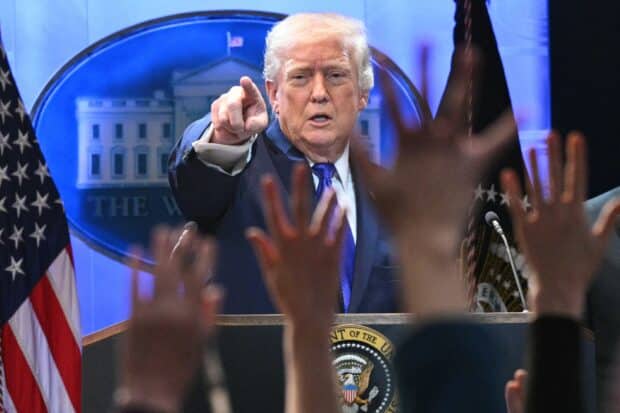
- The U.S. imposes an additional 12.5% tariff on Philippine exports.
- The decision follows USTR findings that the Philippines has not effectively enforced a forced-labor import prohibition.
- USTR investigates roughly 60 economies to assess forced-labor import safeguards.
- The announcement is made by the USTR and approved under President Donald Trump’s trade penalty framework.
- The measure is tied to U.S. allegations that goods made with forced labor can enter under current Philippine rules.
The United States has slapped a fresh 12.5% tariff on Philippine exports after concluding that Manila has yet to ban goods made with forced labor from entering its market.
3 hours agoMANILA, Philippines — The United States is imposing an additional 12.5-percent tariff on Philippine exports after President Donald Trump approved penalties on trading partners that Washington said failed to adopt adequate safeguards against goods made with forced labor. The decision was announced Friday (Manila time) by the Office of the United States Trade Representative (USTR), which had spent the past several months investigating 60 economies to determine whether they effectively prohibit the importation of goods produced through forced labor. In its findings, the USTR had said the “Philippines has failed to impose and effectively enforce a forced-labor import prohibition.” READ: US […]...Keep on reading: New tariff: Trump slaps PH exports with new 12.5% tariff
7 hours agoMANILA, Philippines — It’s official: the United States is imposing an additional 12.5-percent tariff on Philippine exports after President Donald Trump approved penalties on trading partners that Washington said failed to adopt adequate safeguards against goods made with forced labor. The decision was announced Friday (Manila time) by the Office of the United States Trade Representative (USTR), which had spent the past several months investigating 60 economies to determine whether they effectively prohibit the importation of goods produced through forced labor. In its findings, the USTR had said the “Philippines has failed to impose and effectively enforce a forced-labor import […]...Keep on reading: US slaps Philippine exports with new 12.5% tariff
9 hours ago
South Africa seeks private capital to address growing water crisis
South Africa is looking to bring in private investors to help address the country’s worsening water crisis. Bloomberg re...
Julian Leeser describes his son’s fears at antisemitism royal commission
Jewish Liberal MP Julian Leeser tells the antisemitism royal commission about the personal impact of the Bondi terror at...
Oil price surge drives renewed selloff in global bond markets
Global bond markets fall again as a resurgence in oil prices raises renewed concerns about inflation. Bloomberg and Fina...