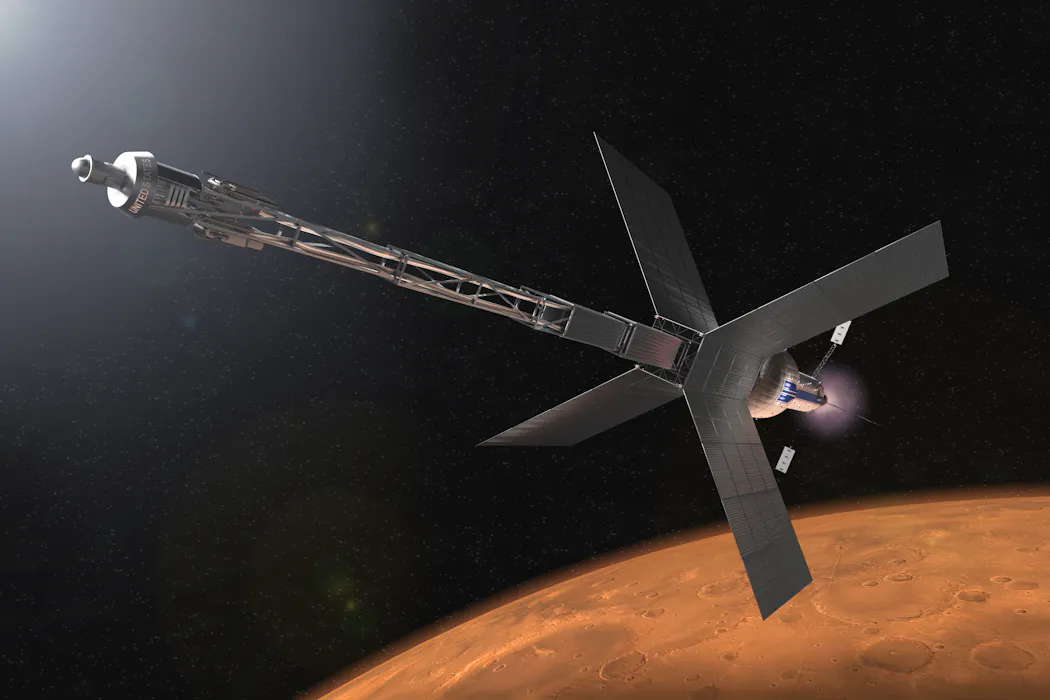
NASA is investing in nuclear-based propulsion concepts aimed at reducing how long spacecraft take to reach Mars. Multiple outlets report that nuclear engines and related nuclear power technologies could significantly shorten missions compared with conventional propulsion approaches. One estimate cited is that a trip currently taking more than six months could potentially be reduced to roughly three or four months, depending on the final system design and mission profile.
The effort is framed as part of broader planning for sending both people and cargo to Mars. Faster transit times can help reduce overall mission duration and associated risks, which is relevant for future crewed missions as well as for delivering supplies. While the coverage emphasizes the potential benefits and performance gains, it does not indicate that the technology is already ready for operational use on Mars missions. Instead, the reporting describes development and research into how nuclear power could be applied to propulsion and spaceflight to enable faster journeys.