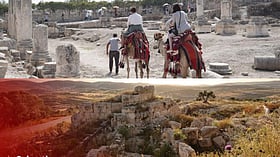
UNESCO’s World Heritage committee votes to add the archaeological site of Sebastia in the Israeli-occupied West Bank to both the World Heritage List and the List of World Heritage in Danger. The committee also places five castles in Lebanon’s Mount Amel region on the World Heritage List and, according to the nomination outcomes described by outlets, related listings. The decisions are made at the committee’s meeting in Busan, South Korea, with the nominations reviewed on an emergency basis.
Israel objects to the listings. Its Foreign Ministry urges UNESCO to reject the bids and describes the effort as a “weaponisation of cultural heritage.” Israel also says the Palestinian nomination campaign is political and disputes claims presented in the emergency nomination materials. Israel has previously withdrawn from UNESCO in 2019, citing concerns about bias and the organization’s treatment of the region’s history.
On Sebastia, scholars identify the site with ancient Samaria, associated with the biblical Kingdom of Israel, and the remains include archaeological layers spanning Iron Age, Roman, Byzantine and Islamic periods. UNESCO says Sebastia is connected to Christian and Islamic traditions about John the Baptist’s burial. For the Lebanese castles, UNESCO describes layered architectural influences across centuries, reflecting successive occupation and adaptation.