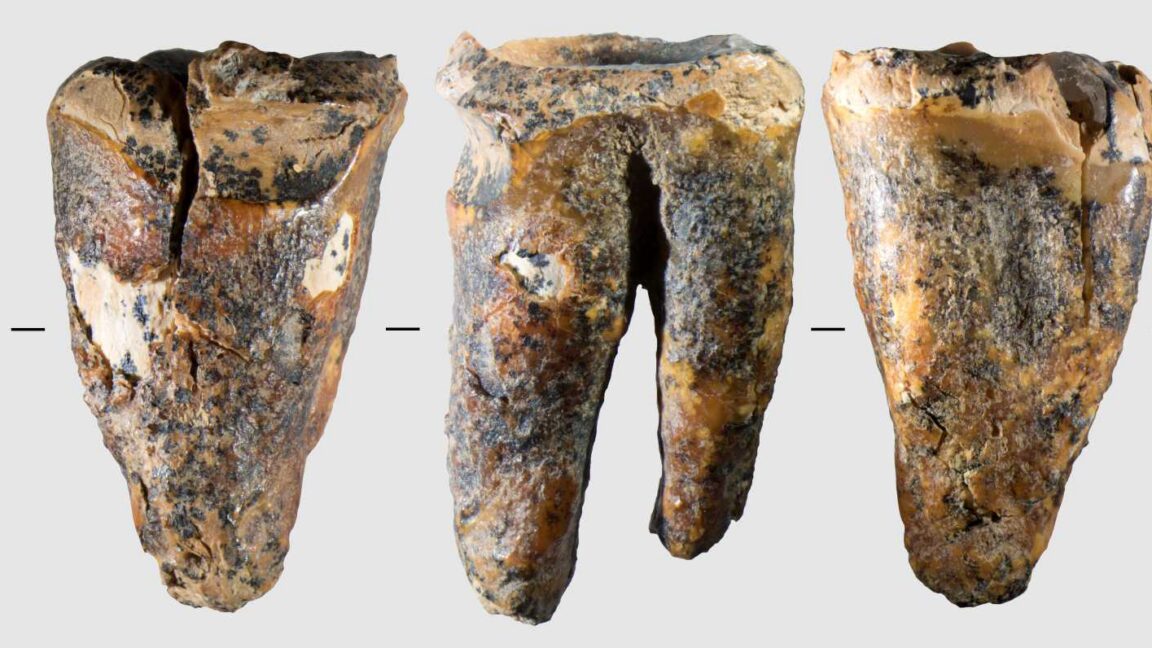
Researchers report evidence that Neanderthals performed the earliest known dental treatment. A single molar, estimated to be about 59,000 years old, was found in a cave in southern Siberia. Scientists describe a deep hole in the tooth that appears to have been created while the tooth was still in use, likely with a sharp, thin stone tool. The study argues that the cavity’s removal was intended to address tooth decay and an infection, based on the shape and location of the drilled area and the inferred precision of the toolwork.
Multiple outlets summarize the interpretation as the first recorded example of dentistry-like behavior: Neanderthals identify damaged tissue and have the motor skills to remove it. The research is tied to a study published May 13, 2026, in the open-access journal PLOS ONE by Alisa Zubova of the Peter the Great Museum of Anthropology and Ethnography (Russian Academy of Sciences) and colleagues. Reporting across sources emphasizes the combination of archaeological context (the Siberian find) and microscopic analysis suggesting deliberate drilling rather than natural damage.