


An analysis published by Real Clear Politics argues that three Democratic “working class” candidates—Zohran Mamdani, Graham Platner, and Abdul El-Sayed—do not draw support from the typical electorate implied by that branding. The piece says data associated with these candidates’ bases indicates that their support comes disproportionately from Democrats who are more highly educated and have higher incomes than is common among lower-income voters. The article frames this as a mismatch between campaign messaging and the demographic profile of voters who are most responsive to the candidates’ positioning. It does not dispute that the candidates describe themselves as aligned with working-class concerns, but it contends that the measurable support they receive skews toward more affluent, educated segments of the Democratic electorate. The conclusion is presented as a data-driven critique of the “working class” label as a political strategy rather than an assessment of policy outcomes. The report relies on the cited candidates’ audience and voter data to support its characterization of the group the branding reaches most effectively.
Analysis challenges Democrats’ branding of “working class” candidates
An analysis published by Real Clear Politics argues that three Democratic “working class” candidates—Zohran Mamdani, Graham Platner, and Abdul El-Sayed—do not draw support from the typical electorate...
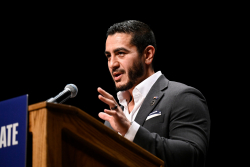
- Real Clear Politics analyzes three Democratic candidates: Zohran Mamdani, Graham Platner, and Abdul El-Sayed.
- The analysis argues these candidates’ strongest support comes from more educated Democrats.
- It says the candidates’ voter base skews toward higher-income Democrats.
- The piece frames the finding as a mismatch between “working class” branding and the demographics of supportive voters.
- The argument is based on data the outlet presents about each candidate’s support.
Data on Zohran Mamdani, Graham Platner and Abdul El-Sayed show their 'working class' base is really Democrats' most educated, highest-income voters.
4 hours agoData on Zohran Mamdani, Graham Platner and Abdul El-Sayed show their 'working class' base is really Democrats' most educated, highest-income voters.
17 hours ago
North Korea puts screens around Panmunjom building for apparent renovation
North Korea has installed screens around the Panmungak building in Panmunjom, the inter-Korean truce village, to block t...

Golding says leaked PNP voicenotes on NaRRA tactics are personal, not party policy
People’s National Party (PNP) President Mark Golding says leaked voicenotes circulating on social media do not represent...

VVS Laxman praises Vaibhav Sooryavanshi’s maturity after match-winning knock vs Zimbabwe
India interim coach VVS Laxman praises teenager Vaibhav Sooryavanshi after his standout performance in the third T20I ag...