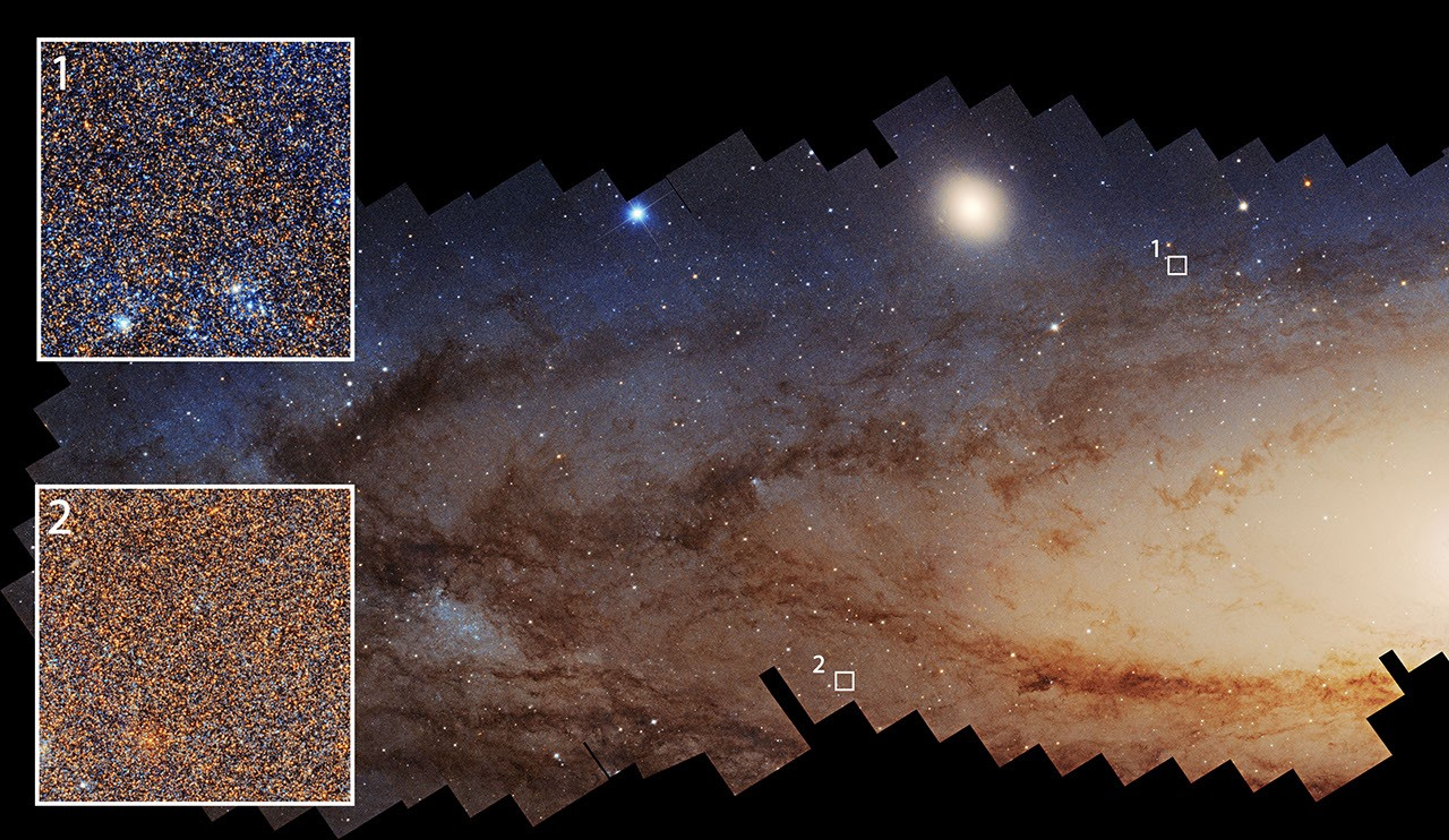
NASA’s Hubble Space Telescope observations show that the Andromeda galaxy’s star formation is gradually winding down. Multiple reports describe a new study that analyzes Hubble data to trace how quickly Andromeda has been forming new stars over time. The findings indicate a steady decline in star formation spanning roughly 500 million years. One account adds that the reduction becomes more pronounced in the most recent period studied, with a steeper drop over the last 40 million years.
Andromeda is a nearby spiral galaxy comparable in size to the Milky Way and lies about 2.5 million light-years from Earth. Because it is close enough for detailed observation, astronomers use Andromeda to better understand how galaxies evolve, including how their stellar populations change across cosmic time. The reports collectively emphasize that the study’s conclusions come from Hubble’s ability to characterize Andromeda’s stars and infer the galaxy’s star-forming history. Overall, the sources agree on the direction of change—declining star formation—and the broad timescales involved.