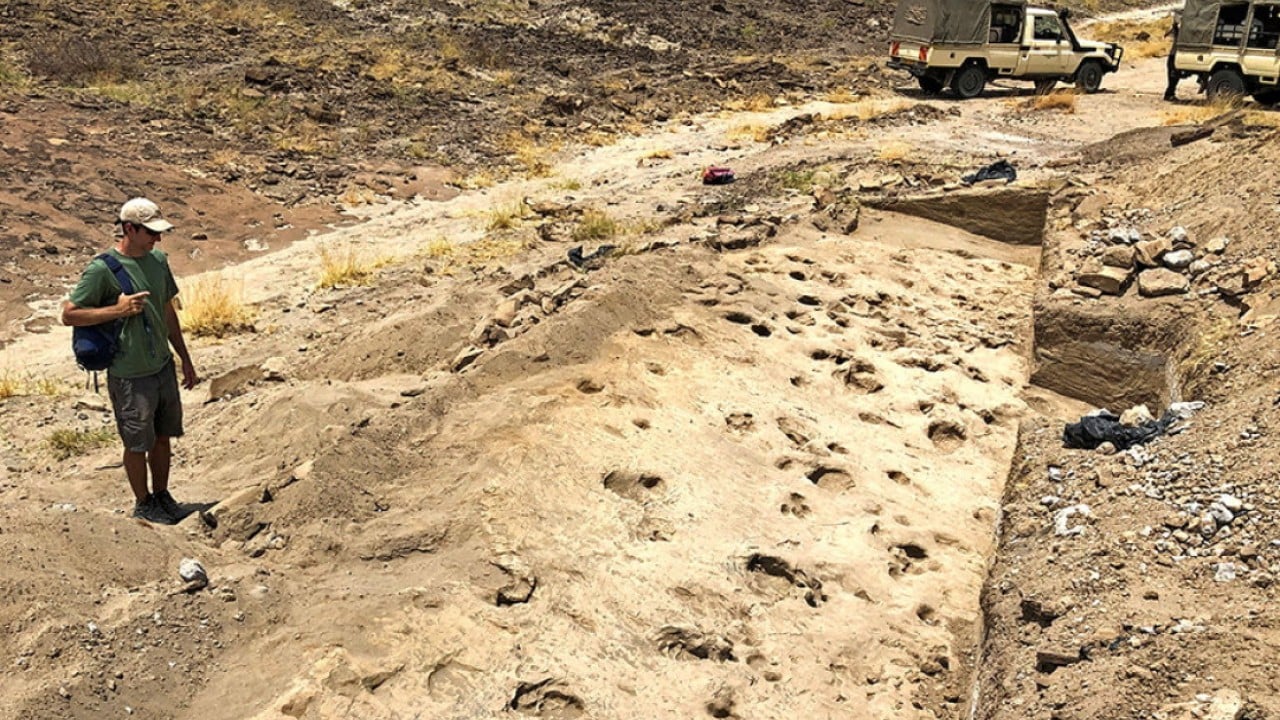
Researchers studying footprints preserved on a muddy lakeshore in northern Kenya report new evidence about Paranthropus boisei, an extinct human relative. The trackway comes from around 1.43 million years ago near Kenya’s Lake Turkana. Because P. boisei is largely known from skull and tooth fossils, the footprints are used to infer aspects of body size and behaviour that are otherwise difficult to reconstruct.
The findings describe 21 footprints attributed to eight individuals. By analyzing the shape and pattern of the tracks, the research team aims to characterize how the animals moved and what their presence at the lakeshore suggests about their activity. Paranthropus boisei is also noted in the reports for its extensive anatomical adaptations for eating tough vegetation, a trait inferred from fossil teeth and skull features. Taken together, the footprints complement existing fossil evidence by adding information about locomotion and group movement at a specific time and place. The researchers emphasize the value of the site for expanding the understanding of late members of the genus in the broader human evolutionary lineage.