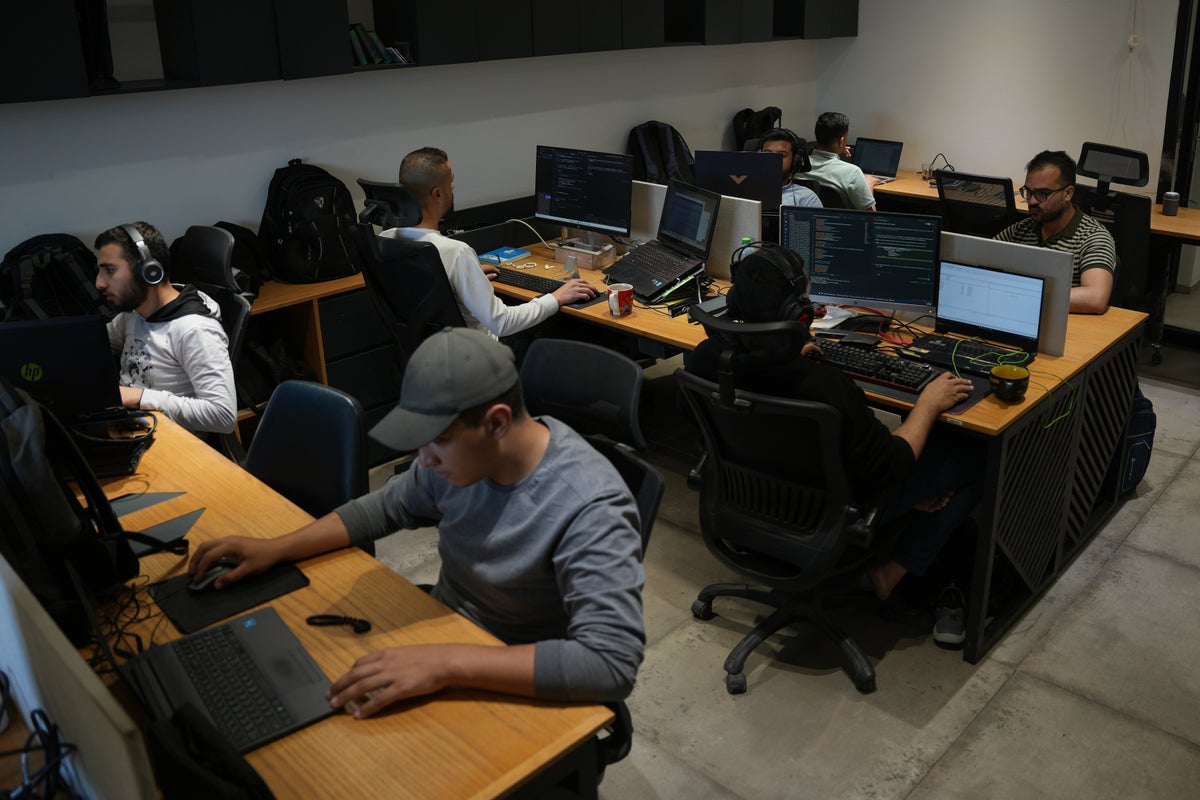
Across more than two years of war, a small group of remote digital workers in Gaza continues to provide services such as coding, graphic design and digital marketing to international clients. Multiple outlets describe how outages and instability—including frequent bombings, blackouts and banking restrictions—make it difficult to access electricity, communication tools and payments. Even when infrastructure fails, freelancers try to stay connected to global platforms by using whatever internet access they can obtain and by continuing client work during brief periods when systems are online.
The reporting also says that these jobs serve practical and personal functions for the workers. They rely on freelancing income as a financial lifeline while the wider economy is strained and formal banking channels are constrained. Some freelancers characterize working at a laptop as a way to focus and create distance from daily stress. While the accounts differ in emphasis—some foreground the operational challenges and others the psychological effect—they converge on the same picture: remote work persists in Gaza despite severe disruptions to power, mobility and banking.