


Satellites launched each year are increasing the congestion in near-Earth space, where active spacecraft coexist with older mission hardware and debris. Multiple outlets describe how this growing population of objects can interfere with ground-based astronomy observations and also poses risks if satellites or other items re-enter Earth’s atmosphere and reach the surface. The articles note that, beyond operational satellites, the orbital environment contains leftover material such as discarded rocket bodies and other items placed into orbit during previous missions. In response, the work highlighted by the reports focuses on tracking objects using radio antennas. By monitoring radio signals associated with satellites and related space infrastructure, researchers aim to improve awareness of what is in orbit and where it is located over time. This kind of tracking can support better assessment of orbital congestion and potential hazards, while also helping contextualize impacts on scientific observations from Earth. Overall, the sources present the radio-antenna approach as a means to monitor the expanding mix of active satellites and space debris in near-Earth space.
New radio-antenna method aims to track satellites and space debris
Satellites launched each year are increasing the congestion in near-Earth space, where active spacecraft coexist with older mission hardware and debris. Multiple outlets describe how this growing popu...

- Thousands of satellites are launched into orbit each year, increasing congestion in near-Earth space.
- Satellites and other objects can interfere with ground-based astronomy research.
- Space objects may pose damage risks if they re-enter Earth’s atmosphere and reach the surface.
- Near-Earth orbit includes not only active satellites but also old rocket bodies and other mission-related materials left in orbit.
- The reported approach uses radio antennas to track satellites and space debris.
Every year, thousands of satellites are launched into orbit around our planet. The result is an increasingly congested "space" above Earth populated by equipment that provides services to the surface. At the same time, these satellites affect ground-based astronomy and create the potential for damage when they eventually fall through Earth's atmosphere to the surface. In addition, near-Earth space hosts old rocket bodies and other materials (cameras, gloves, etc.) left in orbit by past missions.
3 hours agoEvery year, thousands and thousands of satellites get launched into orbit around our planet. The result is an increasingly congested "space" above Earth populated by equipment that provides services to the surface. At the same time, these satellites affect ground-based astronomy research and create potential for damage when they eventually fall through Earth's atmosphere to the ground. In addition, near-Earth space hosts old rocket bodies and other materials left in space by past missions.
18 hours ago
Ancient DNA from Inca mummies links smallpox introduction in the Americas to Europe
DNA extracted from two people’s remains preserved as mummies in Chile, dating to roughly 500 years ago, contains genetic...

16-year-old lifeguard Ryder Williams describes rescue of 10-year-old boy in Santa Cruz waves
Sixteen-year-old lifeguard Ryder Williams speaks about his first recorded ocean rescue in Santa Cruz, California, where...
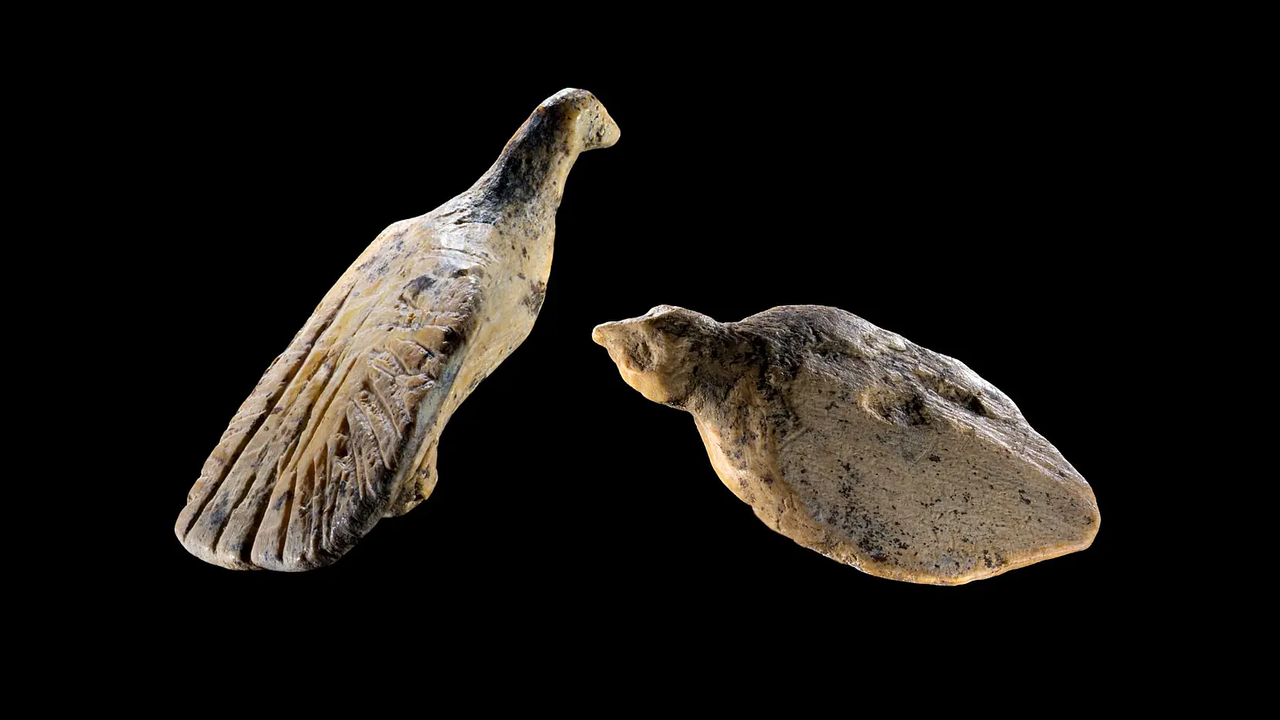
40,000-Year-Old Thumbnail-Sized Bird Figurines Carved From Mammoth Ivory Found in Germany
Archaeologists report the discovery of two very small bird figurines dating to about 40,000 years ago at Hohle Fels Cave...