


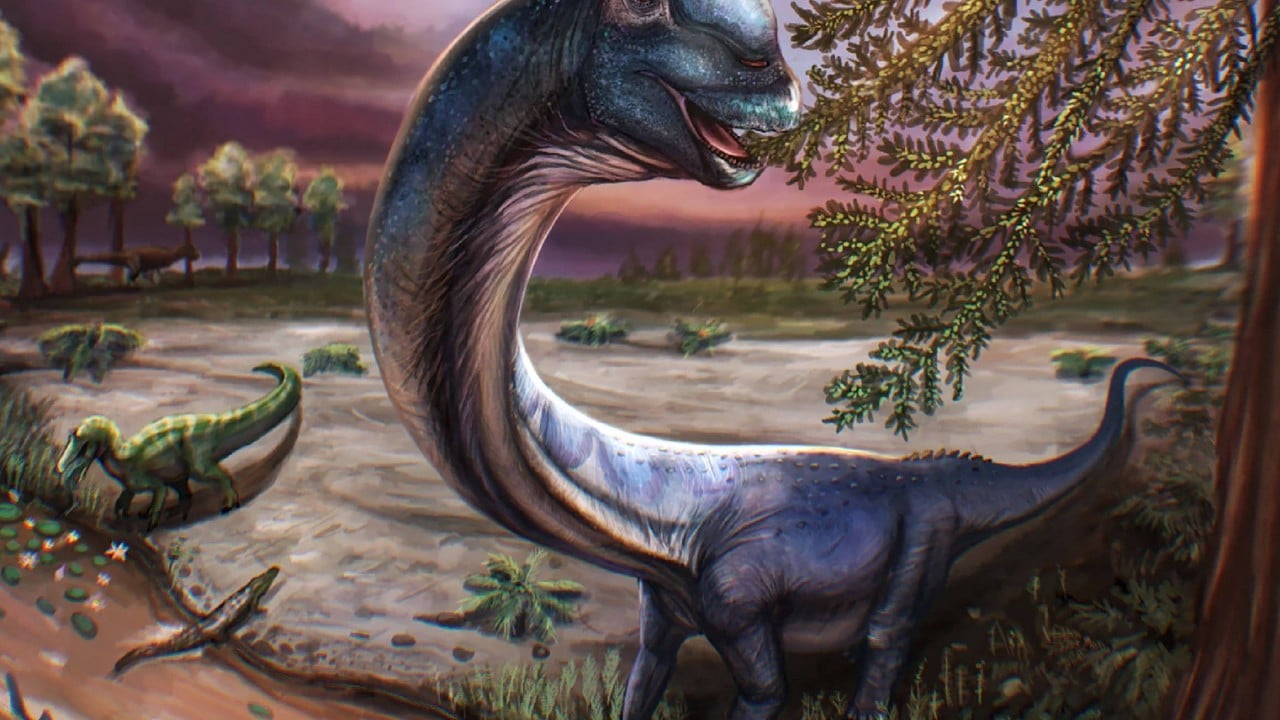
Scientists report the discovery of Nagatitan chaiyaphumensis, a giant sauropod dinosaur unearthed in Thailand. Multiple outlets describe it as a long-necked, long-tailed, plant-eating dinosaur with four sturdy, column-like legs and a small head, belonging to the sauropod lineage. Researchers say the fossil material was excavated in a warm, arid environment near what is now Thailand along a meandering river system, and they estimate the dinosaur lived during the Early Cretaceous. Reported age estimates vary slightly across coverage, with timelines centered around about 100–120 million years ago and one account citing roughly 113 million years ago.
The studies and reports characterize Nagatitan as the largest dinosaur known from Southeast Asia. The dinosaur is described as roughly 27 metres long, with weight estimates around 27 tonnes in some accounts. One source compares it in size to the well-known sauropod Diplodocus “Dippy,” while others emphasize its significance for understanding sauropod diversity and that relatively few sauropods have been identified from Southeast Asia. The work is said to be based on a study published in Scientific Reports.


