


Hamas says it will not disarm before Israel meets conditions tied to the October 2025 ceasefire and an Israeli withdrawal from areas it still controls in Gaza. In separate statements reported by regional outlets, senior Hamas officials say the movement will retain its weapons until Israel halts attacks, allows greater aid and goods into Gaza, and withdraws forces in accordance with the ceasefire terms. Hamas also rejects any Israeli role in disarmament, saying weapons would be managed by a Palestinian transitional body rather than surrendered to Israel or a non-Palestinian force. Middle East Eye reports that an unpublished 15-point Gaza disarmament framework referenced by US President Donald Trump places weapons under the control of a National Committee for Gaza, with Palestinians responsible for registering, licensing, and enforcing relevant rules. The framework ties each phase of disarmament to verified completion of prior obligations, including preconditions such as the entry of the National Committee and deployment of an International Stabilization Force. Trump’s administration describes the step as progress toward new governance and security, while Israel has not publicly acknowledged the plan. Dawn writes that Israel has not yet indicated it will withdraw, leaving the arrangement dependent on whether Israel keeps its commitments.
Hamas links Gaza disarmament to Israel’s withdrawal and US-backed ceasefire commitments
Hamas says it will not disarm before Israel meets conditions tied to the October 2025 ceasefire and an Israeli withdrawal from areas it still controls in Gaza. In separate statements reported by regio...
- Hamas says it will not proceed with disarmament before Israel withdraws from Gaza and meets its ceasefire-related obligations.
- Hamas says disarmament would be handled by a Palestinian National Committee/technocratic transitional body, not by Israel or a non-Palestinian force.
- A US-referenced framework described as a 15-point agreement outlines that Gaza weapons remain under Palestinian control and would not be transferred to Israel.
- The reported roadmap links progression between phases of disarmament to verified completion of prior obligations and includes specified preconditions that have not yet occurred.
- Israel has not publicly acknowledged the proposed disarmament framework; officials have previously indicated they do not plan to withdraw from Gaza.
PALESTINIAN resistance group Hamas recently made a major concession by agreeing to give up its weapons. It should be remembered that along with its political activities, the movement has an armed wing dedicated to the liberation of Palestine. The group’s weapons will be surrendered to the National Committee for the Administration of Gaza, the Palestinian technocratic body formed under US President Donald Trump’s Board of Peace. In essence, Hamas has thrown the gauntlet to Israel: it is ready to surrender its weapons, but will the Zionist state end its occupation of Gaza? This remains the million-dollar question. Mr Trump was upbeat about the development, saying that Israel was “very happy” about it. However, while there had been no official reaction from Tel Aviv at the time of writing, most Israeli politicians, including some in the cabinet, have decried the move, calling for the destruction of Hamas. It will be interesting to see whether Israel honours its end of the deal and vacates occupied Palestinian territory in Gaza. Going by past precedent, the Israelis are not known for keeping their word. Also, Israeli Prime Minister Benjamin Netanyahu faces an election in October, and there is widespread anti-Palestinian sentiment amongst the electorate. But the Israeli leader may not want to annoy the American president by appearing to sabotage Mr Trump’s Gaza peace plan. Lest we forget, Israel has murdered over 73,000 Palestinians — more than 21,000 of them children — since the Oct 7, 2023 attacks, and while its killing spree has lessened in intensity, it has not stopped completely since the ceasefire came into effect last year. Moreover, the humanitarian situation in Gaza remains appalling. It should be kept in mind that Hamas and other Palestinian groups have continued their armed struggle against Israel because the Zionist state has closed all avenues of peacefully resolving the Palestine question. Almost the entire Israeli political class is opposed to a Palestinian state, illegal settlements continue to proliferate, and Gaza — which even before the 2023 attacks was virtually under siege — lies in ruins. Meanwhile, Israeli provocations against Al Aqsa have not stopped. If this situation is to change, there must be a clear pathway for a Palestinian state, an end to Israeli brutalities against the Arab population, and complete withdrawal from all occupied territories. Knowing the current political climate in Israel, this is asking for the moon. However, Mr Trump, who sees himself as a ‘peacemaker’, and his BoP must press Israel to at least start the process by withdrawing from Gaza, and allowing unimpeded humanitarian assistance into the Strip. If Tel Aviv does not leave Gaza, it will show the world that it is not serious about peace, and is committed to the occupation of Palestine and to the extermination of the Palestinian people. Published in Dawn, August 3rd, 2026
3 hours agoHamas says it will 'disarm when Israel keeps its word' An unpublished Gaza disarmament agreement obtained by Middle East Eye would place Palestinian weapons under the control of a transitional Palestinian authority, rather than surrendering them to Israel or an international force. Hamas said on Friday that any agreement on the “complete disarmament” of Palestinian factions in Gaza depends on Washington and Israel honouring commitments made under last year’s ceasefire. The statement followed US President Donald Trump’s announcement that the US-led Board of Peace had secured an agreement to disarm Hamas and every other armed group in Gaza. MEE has obtained a copy of the 15-point agreement Trump alluded to but which Israel has yet to acknowledge publicly. Read more: Hamas says it will 'disarm when Israel keeps its word' Israeli tanks and troops deployed near the boundary with Gaza on 10 June (Jack Guez/AFP)
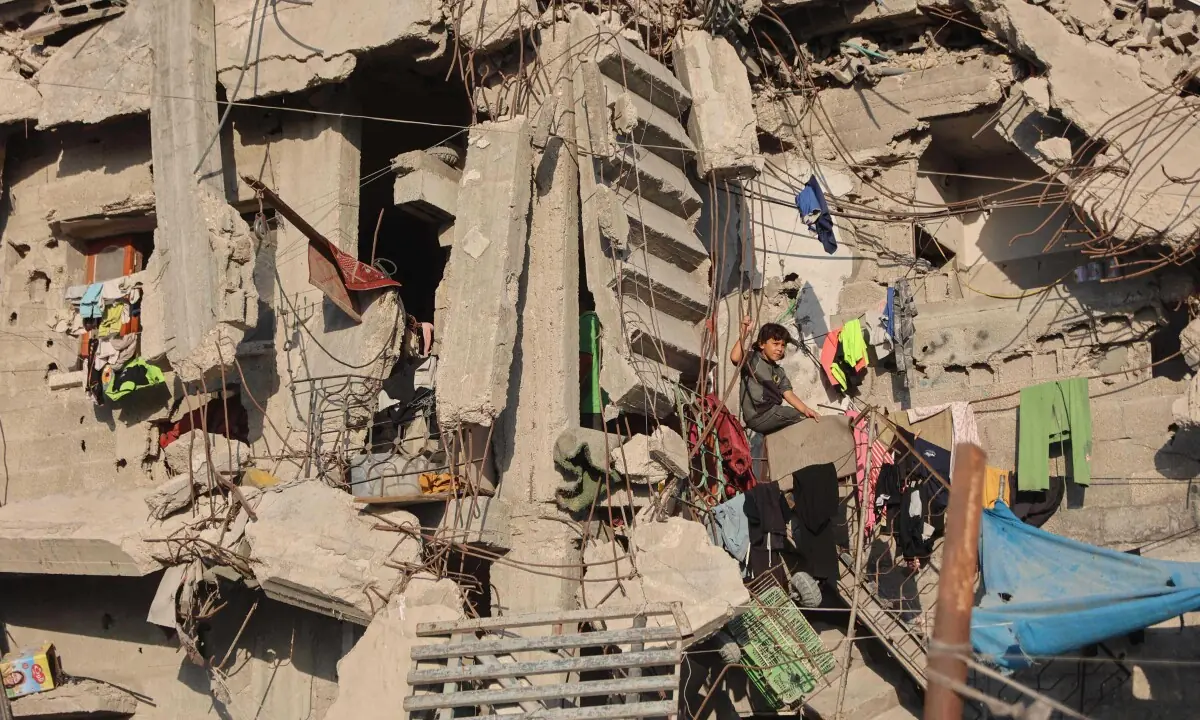
2 days agoHamas says it will 'disarm when Israel keeps its word' Submitted by Elis Gjevori on Fri, 07/31/2026 - 15:54 Unpublished agreement bars weapons transfers to Israel and gives Palestinians oversight over the disarmament process Israeli tanks and troops deployed near the boundary with Gaza on 10 June (Jack Guez/AFP) Off An unpublished Gaza disarmament agreement obtained by Middle East Eye would place Palestinian weapons under the control of a transitional Palestinian authority, rather than surrendering them to Israel or an international force. Hamas said on Friday that any agreement on the “complete disarmament” of Palestinian factions in Gaza depends on Washington and Israel honouring commitments made under last year’s ceasefire. The statement followed US President Donald Trump’s announcement that the US-led Board of Peace had secured an agreement to disarm Hamas and every other armed group in Gaza. MEE has obtained a copy of the 15-point agreement Trump alluded to but which Israel has yet to acknowledge publicly. The Israeli daily Haaretz quoted an Israeli “political source” as saying "there will be no Israeli withdrawal from the Yellow Line", which cuts the Gaza Strip in half. Trump presented the move as progress towards implementing his 20-point plan and establishing a new Palestinian administration. “This is a monumental step toward lasting PEACE and SECURITY,” Trump wrote on Truth Social on Thursday. A Palestinian street vendor stands at his stall in front of destroyed buildings in Gaza City on 27 July 2026 (Omar Al Qattaa/AFP) He said Israeli forces would withdraw “as disarmament is completed”, while the UN-mandated International Stabilization Force would work with a new Palestinian police force. Hamas official Ghazi Hamad told Reuters on Friday that the group would retain its weapons until Israel halted its attacks, allowed more aid and goods into Gaza, and withdrew its forces in accordance with the ceasefire agreement reached in October last year. So what’s in the agreement? According to the deal, Hamas and other Palestinian factions would not hand Gaza’s weapons to Israel. Instead, it places them under the control of a body called the National Committee. The document seen by MEE explicitly states that they will remain in Palestinian hands. "No weapons will be transferred or surrendered to Israel or any non-Palestinian parties," the text states, and by the end of the disarmament process, "the National Committee alone shall retain, store, or control weapons in Gaza." Islamic Jihad and Hamas fighters in the town of Beit Lahia in the northern Gaza Strip on 3 December 2025 (AFP) The agreement describes weapons collection as a domestic process: "The National Committee, as the transitional authority in Gaza, shall be the sole authority for registering weapons, issuing and revoking licenses, and enforcing the law" and "all factions, clans, and elements of Palestinian society in Gaza shall cooperate with the National Committee in this process." Coverage of the deal has framed Hamas as laying down its arms under pressure. The text avoids that framing. It presents the weapons inventory as a Palestinian-run process that outsiders will monitor but not conduct, with the factions themselves participating. Whether that arrangement survives implementation remains a separate question. Israel rarely abides by agreements it has made with Palestinian groups and others. Who controls the weapons? Notably, the deal only works if Israel moves first. Hamas has publicly said it will not implement any part of the roadmap unless Israel meets its obligations, including a full, phased withdrawal from the territory it still controls in Gaza. The document builds that condition into every stage, stating that "the transition from one phase to the next will be contingent upon the verified completion of the previous phase's obligations", with an international commission responsible for verification. A Palestinian mother mourns over the body of her child Mahmoud Sahwil, 14, who was killed during an Israeli strike on a police station in the Sheikh Radwan neighbourhood, as the body lies at the morgue at Shifa Hospital in Gaza City on 5 May (Omar Al-Qattaa/AFP) It also explicitly links the weapons inventory process "to a phased Israeli withdrawal from the areas it controls in Gaza". The process will begin only "following the completion of the remaining obligations under the Sharm El-Sheikh Protocol, the entry of the National Committee, and the deployment of the International Stabilization Force" - three preconditions, none of which have happened. The document gives the parties 14 days to finalise the timetable, "within 14 days, subject to extension by a decision of the International Verification Committee," which comprises the guarantor states, the Peace Council and the International Stabilization Force. Role of the International Stabilization Force Public messaging has presented the International Stabilization Force as the security guarantor of the transition. The text gives it a considerably narrower role: "The International Stabilization Force will not perform any policing duties or tasks related to Palestinian society, nor will it undertake any ceasefire enforcement or training of Palestinian police.” “It will also monitor all parties' compliance, the flow of humanitarian and essential needs into the Gaza Strip, and any non-policing tasks as requested by the National Committee,” it added. A Palestinian child stands on the rubble of a destroyed building near the al-Shati refugee camp, west of Gaza City, on 1 July (Omar Al-Qattaa/AFP) Instead, the agreement allows the force to "monitor all parties' compliance, the flow of humanitarian and essential needs into the Gaza Strip, and any non-policing tasks as requested by the National Committee" - a body that has yet to enter Gaza, seven months after its appointment. The agreement leaves internal security entirely under Palestinian control: "The National Committee will be responsible for handling internal security incidents." The role of the police and armed forces One consequential clause states that "The inventory/collection of militia weapons and their storage under the authority of the National Committee shall take place according to an agreed-upon timeline. Personnel from these militias shall not be absorbed into the security apparatuses or police.” Post-conflict disarmament processes elsewhere have often folded armed factions into formal security structures to manage demobilised fighters. Full text: 15-point draft peace plan between Hamas and Israel in Gaza Read More » This roadmap rules out that option entirely, leaving open the question of what will happen to the fighters after the committee has logged their weapons. The document takes a more forgiving approach towards existing police personnel, saying that those "who do not meet the required vetting standards will be offered alternative civil roles consistent with their previous expertise or will be retired in accordance with Palestinian law" and "none of these individuals will be deprived of their financial entitlements". No equivalent guarantee exists for militia fighters, only a vaguer promise elsewhere in the text of "reintegration and social support". No budget to rebuild Gaza The governance section contains a firm financial ceiling that has attracted little attention. The agreement tasks the National Committee with assessing "legitimate obligations towards suppliers, contractors, and other parties and address them, not exceeding a total of $400 million", with these measures "implemented gradually over a period of three years, in accordance with priorities determined by the National Committee". The document defers anything beyond that ceiling: "any unresolved financial rights, liabilities, or claims shall be addressed in the context of a broader national process later." It is a strikingly modest sum for an administration expected to oversee reconstruction and a reminder of how threadbare Gaza’s institutional finances remain before a single dollar of rebuilding money arrives. Israel's genocide in Gaza News Post Date Override 0 Update Date Mon, 05/04/2020 - 21:19 Update Date Override 0
2 days agoHamas says it will not disarm in Gaza before Israel withdrawal Submitted by MEE staff on Fri, 07/31/2026 - 09:28 The Palestinian movement said it would relinquish its weapons to allow for a technocratic administration to run the besieged territory Hamas fighters in Gaza in February 2025 (AFP) Off A senior Hamas official has said that the Palestinian movement will not take any steps toward disarmament before Israeli forces withdraw from Gaza. Ghazi Hamad told Al Jazeera that Israel would have no role in the disarmament process. Instead, it is set to be carried out by a Palestinian national committee. The armed group has largely abided by a ceasefire agreement that came into effect in October last year, as Israel continues a sustained bombing campaign in violation of the agreement, killing more than a thousand Palestinians and injuring many more. According to the AFP news agency, Hamas sources said that the Palestinian technocratic committee established by the Board of Peace to govern Gaza will be "the sole entity" overseeing the process of managing and storing the group's weapons. Earlier on Friday, the Board of Peace announced that Hamas officially agreed to a detailed framework for implementing the next phases of the Gaza ceasefire. "The agreement concludes months of intensive, good faith negotiations to advance President Donald J. Trump's vision for establishing new governance, security, humanitarian relief, reconstruction, and economic recovery in Gaza as set out in the Comprehensive Peace Plan and U.N. Security Council Resolution 2803," it said in a statement on X. The statement described the decision as a "historic breakthrough," adding that Hamas will be disarming, which will be followed by the Israeli army's withdrawal from Gaza. Today, the Board of Peace reached a HISTORIC agreement for the COMPLETE DISARMAMENT of Hamas and all other armed groups in Gaza. A monumental step toward lasting PEACE and SECURITY. pic.twitter.com/RYUKUdrwIJ — The White House (@WhiteHouse) July 30, 2026 Israeli officials have not commented on the matter, but Prime Minister Benjamin Netanyahu and his ministers have frequently declared that Israeli forces will not be leaving the besieged territory, where soldiers have been carrying out a genocidal war and ethnic cleansing campaign. In May, Netanyahu announced his intention for Israel to control 70 percent of Gaza. "We currently control 60 percent of the Gaza Strip, and my directives are to move toward controlling 70 percent," the Israeli premier said. Israel has killed more than 73,000 people in its genocide so far, with thousands more missing and presumed dead, and reduced the enclave that is home to close to two million people to rubble, with around 90 percent of the population displaced and most living in crowded tents without sanitation. Israel's genocide in Gaza News Post Date Override 0 Update Date Mon, 05/04/2020 - 21:19 Update Date Override 0
2 days ago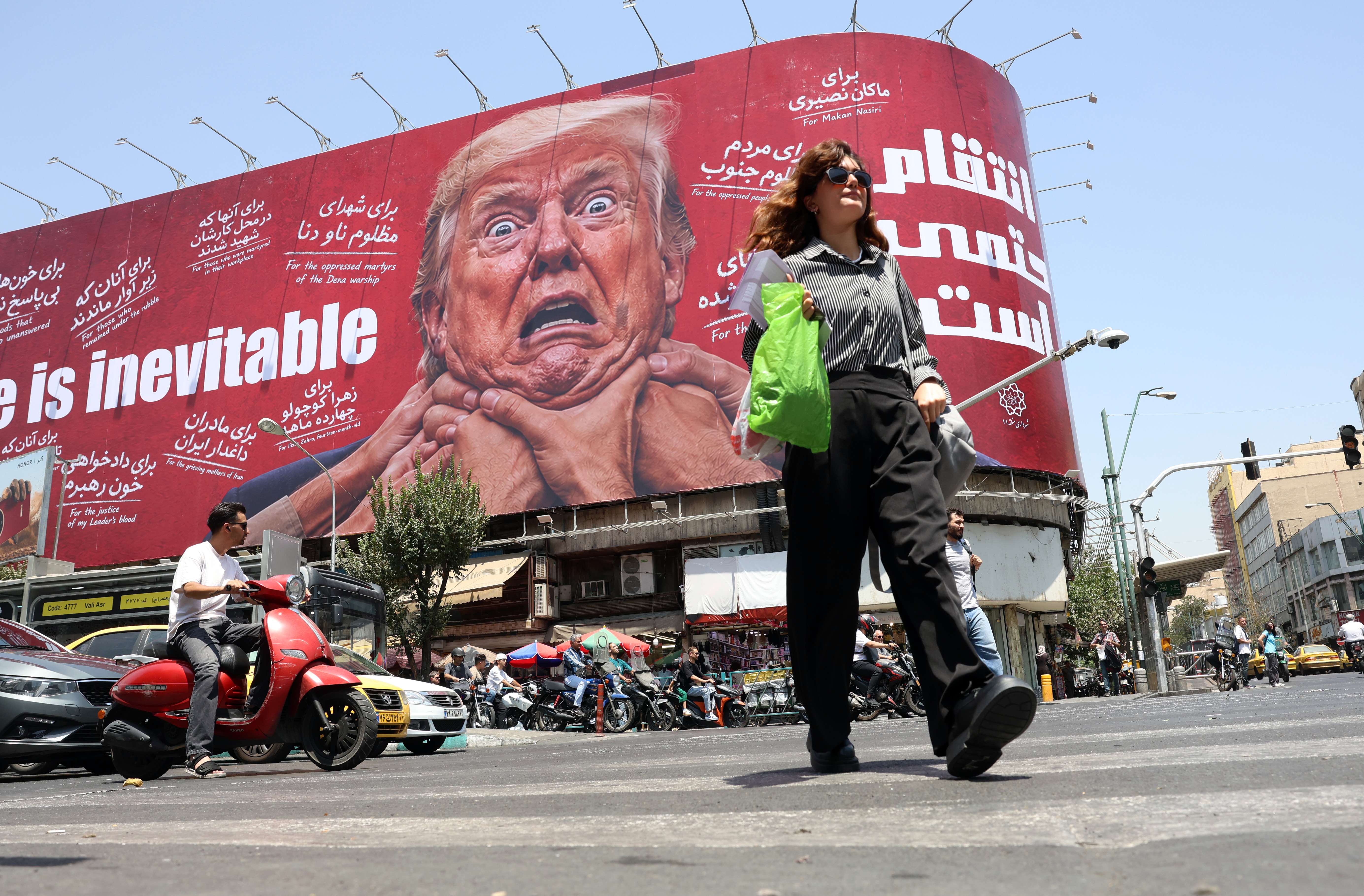
Trump says Iran talks begin Monday, declines deadline for an agreement
U.S. President Donald Trump says talks with Iran are set to take place on Monday. Multiple outlets, drawing on Reuters r...
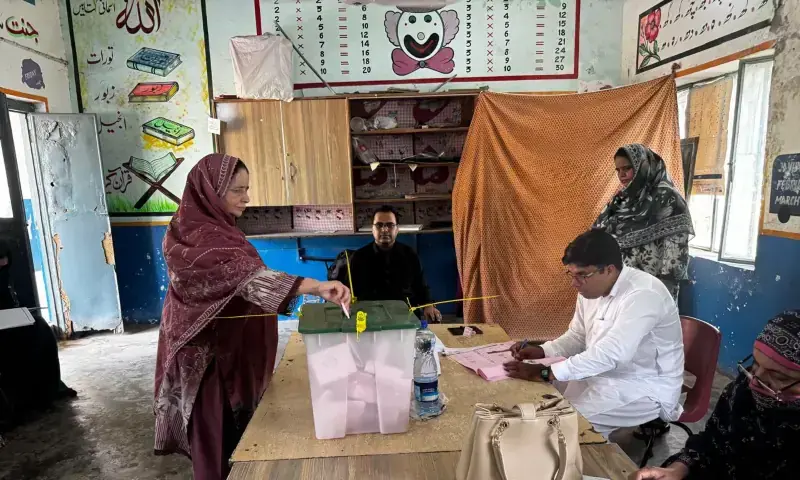
Second-phase AJK elections held in Muzaffarabad and refugee constituencies amid rigging claims
Polling for the second phase of elections to the Azad Jammu and Kashmir (AJK) Legislative Assembly takes place on Sunday...

Hot & Lucky wins Emancipation Cup as Jagdeo Racing Stables’ absence is cited
Hot & Lucky denies Jagdeo Racing Stables in the Emancipation Cup, according to Guyana and Kaieteur News reports. Veteran...