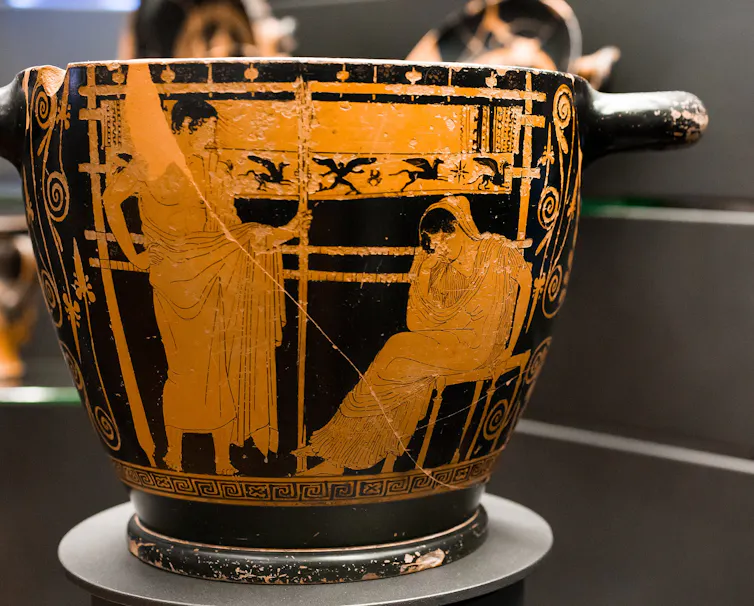
Several reviews and academic commentary argue that Christopher Nolan’s adaptation of Homer’s “The Odyssey” does not translate the complexity of Homer’s female characters effectively. They point to the original poem’s portrayals of women as psychologically nuanced and socially influential, noting that interpretations of Homer’s work have long emphasized the depth of its female figures. One source cites scholarship highlighting that Homer’s women display traits such as cunning and desire, and function with agency rather than remaining background figures.
The Conversation characterizes the adaptation as shifting emphasis away from those qualities. It says Nolan’s film reframes Homer’s women primarily as characters defined by suffering, sacrifice, and regret. The Independent likewise presents criticism grounded in the idea that Homer’s female characters are complex and compelling, and uses that context to evaluate the adaptation’s shortcomings.
Across the sources, the central shared point is that the movie’s depiction of Homer’s women diverges from the original poem’s more multifaceted portrayals, with reviewers asserting that the change affects how audiences understand their motivations and power.