


In July, Mumbai reports a sharp rise in several seasonal diseases alongside heavy monsoon rains, prompting the Brihanmumbai Municipal Corporation (BMC) to intensify surveillance and prevention efforts. BMC Public Health Department data cited across outlets show malaria cases more than doubled, rising from 655 in June to 1,380 in July (about a 111% increase). Leptospirosis also increases significantly, from 33 to 78 cases (about a 136% rise). Dengue cases rise from 266 to 466 (about 75%), while gastroenteritis increases from 603 to 851 (about 41%). Reports also indicate an increase in swine flu (H1N1) from 58 to 105 (about 81%), while chikungunya remains unchanged at seven cases in both months. COVID-19 cases increase from 27 to 58. In response, the BMC expands vector-control measures such as the “Zero Mosquito Breeding Campaign,” inspections of potential breeding sites, fogging in residential buildings and slum areas, and rodent-control actions linked to leptospirosis risk. The BMC urges residents to avoid water stagnation, maintain hygiene, use protective footwear in waterlogged areas, and seek medical care for symptoms such as fever, body ache, vomiting, or breathlessness.
Mumbai monsoon sees surge in malaria and leptospirosis; BMC ramps up surveillance
In July, Mumbai reports a sharp rise in several seasonal diseases alongside heavy monsoon rains, prompting the Brihanmumbai Municipal Corporation (BMC) to intensify surveillance and prevention efforts...
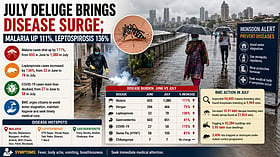
- BMC data show malaria cases rise from 655 (June) to 1,380 (July) in Mumbai.
- Leptospirosis increases from 33 (June) to 78 (July), according to BMC figures.
- Dengue and gastroenteritis also increase in July compared with June, alongside other monsoon-linked illnesses.
- BMC intensifies vector and disease-control measures, including expanded breeding-site inspections, fogging, and rodent-control activities.
- The BMC advises residents to prevent water stagnation, maintain hygiene, and seek medical care for fever and related symptoms.
Mumbai, August 3, 2026: July proved to be a harsh month for Mumbaikars as heavy monsoon rains were accompanied by a sharp rise in seasonal diseases. According to the BMC's Public Health Department, malaria cases shot up by 111 per cent from 655 in June to 1,380 in July, while leptospirosis cases increased by 136 per cent, rising from 33 to 78 during the same period.The sharp increase has prompted the civic body to intensify disease surveillance and appeal to citizens to take preventive measures.Sharp Rise In Seasonal DiseasesThe BMC data also showed a significant rise in other monsoon-related illnesses. Dengue cases increased by 75 per cent from 266 to 466, gastroenteritis cases rose by 41 per cent from 603 to 851, swine flu (H1N1) cases climbed by 81 per cent from 58 to 105, while COVID-19 cases more than doubled from 27 to 58. Chikungunya cases remained unchanged at seven during both months.The civic body said it has intensified its 'Zero Mosquito Breeding Campaign' across hospitals and health centres, with regular surveillance, anti-larval treatment and elimination of stagnant water to curb mosquito breeding and prevent the spread of vector-borne diseases.Civic Measures IntensifiedDuring July, the BMC inspected 54,605 potential malaria breeding sites, detecting Anopheles mosquito breeding at 5,969 locations. It also surveyed 10.91 lakh potential dengue breeding sites, where Aedes larvae were found at 21,924 locations. Fogging was carried out in 42,284 buildings and 5.95 lakh slum dwellings, while 3,406 rats were trapped or destroyed under the rodent control programme to reduce the risk of leptospirosis.The BMC has advised citizens to avoid water stagnation around their homes, maintain hygiene, wear protective footwear in waterlogged areas, and seek immediate medical attention if they develop symptoms such as fever, body ache, vomiting or breathlessness.Disease Hotspots IdentifiedThe BMC has also identified several disease hotspots across the city for intensified surveillance. Malaria cases are higher in Byculla, Madanpura, Mazgaon, Andheri, Amboli, BDD Chawls, Sion, Parel and Bhoiwada. Leptospirosis is concentrated in GTB Nagar, Shivaji Nagar, Saki Naka, Dharavi and T Ward, while gastroenteritis cases are rising in Kurla, Bandra, Andheri, Ghatkopar and Khar.Also Watch: Mumbai Dengue Alert: BMC Urges Residents To Prevent Mosquito Breeding As Cases Rise 27.8%; Know Symptoms, Precautions And TreatmentDisease Burden: June Vs JulyTo get details on exclusive and budget-friendly property deals in Mumbai & surrounding regions, do visit: https://budgetproperties.in/
3 hours ago
Tens of thousands enter Spain’s Ceuta in days, after border breach; deaths reported
Tens of thousands of migrants and asylum seekers enter Spain’s North African enclave of Ceuta after a large border breac...

Man arrested after nine-year-old girl dies after being found injured at Arbroath industrial estate
Police Scotland reports that a nine-year-old girl is found seriously injured at Elliot Industrial Estate in Arbroath, An...
Fix Arrives for Sydney Footbridge, but Later Stops Working Again
Multiple outlets report that a long-delayed repair for a problematic Sydney footbridge has failed after initially being...