


U.S. President Donald Trump and Chinese President Xi Jinping finish a two-day summit in Beijing, with both sides claiming progress in stabilizing bilateral relations while acknowledging major differences remain. Multiple outlets report the leaders hold a final round of discussions at Zhongnanhai and end the trip with statements that the relationship is improving, even as issues such as trade, Iran, and Taiwan continue to divide Washington and Beijing. Observers cited in one report describe the encounters as exchanges of pointed rhetoric rather than agreement-making, noting that no significant breakthrough emerges across several meetings between the two leaders. Coverage also highlights the contrast between public messaging of momentum and the persistent lack of concessions needed to resolve ongoing U.S.-China trade conflicts. Other reporting characterizes the outcome as modest and cautious, including references to limited, groundwork-oriented deals rather than comprehensive solutions. Several outlets describe the summit’s setting and ceremonial components, including walks and shared meals, as part of the engagement, while emphasizing that substantive disagreements are not resolved by the end of the talks. Overall, the sources converge on a picture of managed competition and incremental diplomacy rather than a major reset.
Trump and Xi conclude Beijing summit, citing limited progress amid unresolved disputes
U.S. President Donald Trump and Chinese President Xi Jinping finish a two-day summit in Beijing, with both sides claiming progress in stabilizing bilateral relations while acknowledging major differen...

- Trump and Xi conclude a Beijing summit after two days of meetings at and around Zhongnanhai.
- Both leaders say they made progress toward stabilizing US-China relations.
- Deep differences remain, including issues cited in coverage such as trade and Taiwan.
- Reporting describes the outcomes as modest or cautious, with no major breakthrough reached.
- Some accounts characterize the exchanges between the leaders as restrained or pointed despite claims of “respect” or improved relations.
Despite all the hype, earnest U.S.-China relations watchers may not have expected much from the Beijing summit. Despite six meetings with Chinese President Xi Jinping during U.S. President Donald Trump's three-day stay (May 13-15), no substantial breakthrough was made for the bilateral relationship. The impression Trump got from Xi is a major factor. In his Fox News interview on his second day, Xi said he wanted to be “China first,” like “America First.” In his interview, he said he could only be cordial to Xi as an invited guest. The summit therefore was full of jabs exchanged between the two leaders. Some landed well simply to satisfy themselves, as the two leaders only raised their fists at the close of the meeting, calling it “a moment of great respect.” The recent summit between the U.S. and China did little to address the ongoing trade conflicts that have strained relations between the two nations. The lack of progress can be attributed to both sides’ unwillingness to make significant concessions, particularly from Washington. China’s demands, which have emerged
3 months agoThe stakes were high and the deals were modest, but President Donald Trump may have left China last week having laid solid groundwork with Chinese leader Xi Jinping — though a number of issues could still sour ties.
3 months agoPresident Donald Trump departed China on May 15, 2026, after a two-day summit with Chinese leader Xi Jinping that was scrutinized from every angle for clues on where the relationship is heading. Trump hailed the trip as “incredible,” while Xi remarked that it marked a “new bilateral relationship.” Other observers were a little less enthusiastic, […] The post Trump-Xi summit’s cautious progress and subtle win-wins appeared first on Asia Times.
3 months agoOn Friday, the US president concluded talks with his counterpart from China, soaring away in Air Force One after two days of meetings and ceremonies. Our experts shed light on the outcomes. The post What did Trump and Xi accomplish? appeared first on Atlantic Council.
3 months agoUS President Donald Trump departed Beijing on Friday following a final meeting with Chinese President Xi Jinping. The leaders said they made progress in stabilising US-China relations, but deep differences remained after two days of meetings and meals. FRANCE 24's Yena Lee reports from Beijing, China.
3 months agoUS President Donald Trump departed Beijing on Friday following a final meeting with Chinese President Xi Jinping. The leaders said they made progress in stabilising US-China relations, but deep differences remained after two days of meetings and meals. On Friday they walked the grounds of Zhongnanhai, Xi's official residence, and had a working tea and lunch.
3 months ago
Mowbray Moslem Cemetery Board announces newly elected members after court-directed election
The Mowbray Moslem Cemetery Board announces 11 newly elected members. The election follows a process directed by a court...

Witness tells inquiry Transport Accident Commission support worsened her grief after child’s death
An inquiry hears evidence from Kerryn Airs, who says she witnessed the death of an eight-year-old child and that the Tra...
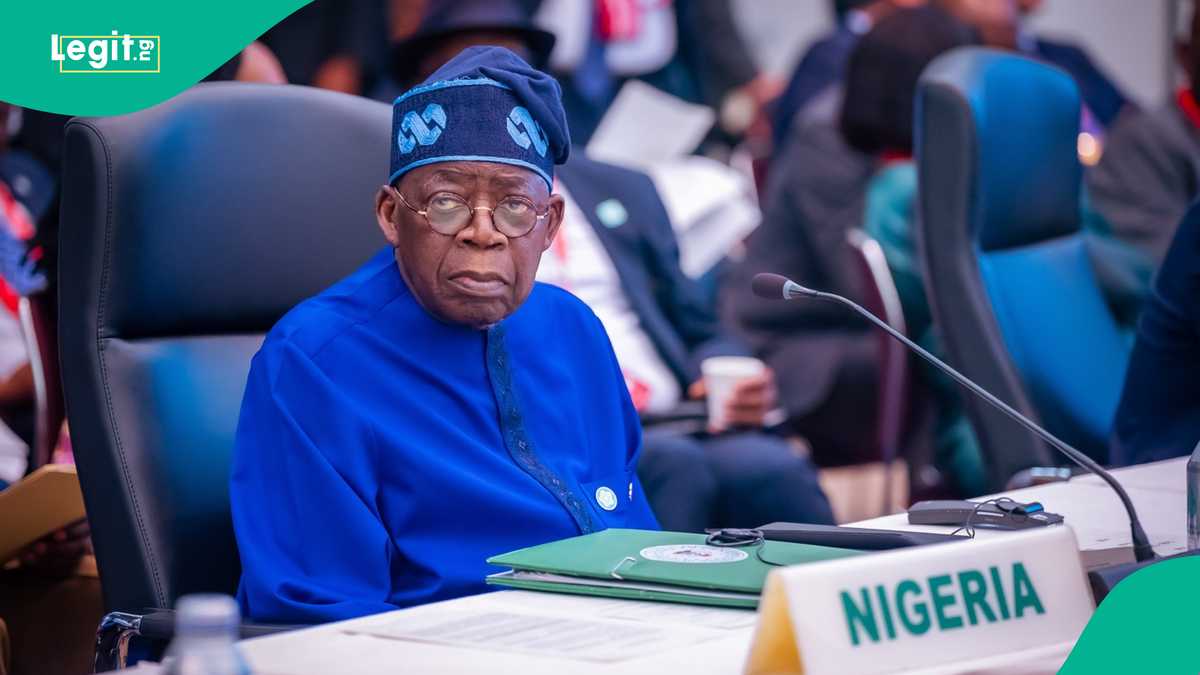
Tinubu orders 500 more CNG stations to expand to 1,000 nationwide
President Bola Tinubu orders the rollout of 500 additional compressed natural gas (CNG) refuelling stations, as part of...