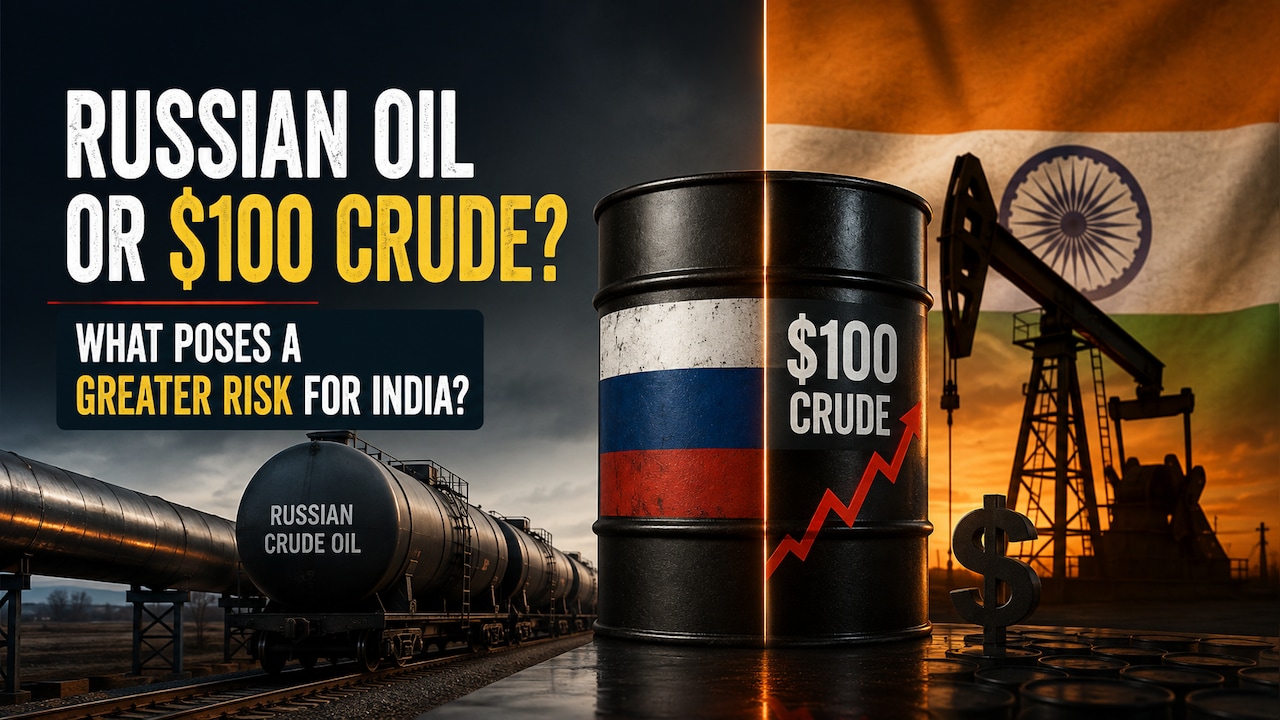
India faces two potential oil-price risks: losing access to discounted Russian crude or a broader rise in global oil prices. Multiple reports cite research indicating that the discount India receives on Russian crude has narrowed to roughly $2–$3 per barrel, reducing the immediate financial benefit and the potential impact if supplies become constrained.
At the same time, analysts argue that a sustained increase in global crude prices would be more damaging. One expert estimate says that for India, every $10 rise in the average price of its crude import basket adds about $15 billion to the annual oil import bill. That scenario—such as crude averaging around $100 per barrel—could worsen the trade deficit, strain the rupee, and raise inflation through higher fuel and input costs.
The coverage frames the issue differently. NDTV focuses on the narrowed Russian discount and the quantified effect of higher crude prices on India’s import costs. Free Press Journal emphasizes India’s ability to manage reduced Russian volumes through diversified sourcing and inventories, while still highlighting that a prolonged global price spike would have wider macroeconomic consequences.