


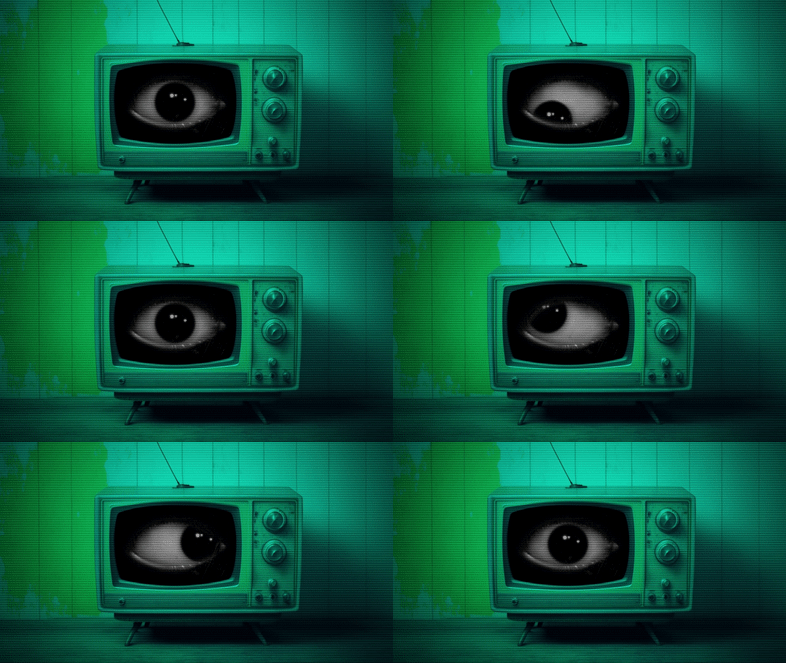
Smart TVs and connected TV services collect information about what viewers watch and how they use their devices, turning viewing activity into advertising data. Multiple outlets report that the shift is driven by the fact that manufacturers and related platforms increasingly monetize television through data rather than only through hardware sales.
The articles describe a process in which the TV or its software captures elements of viewing activity, analyses that information, and uses it to support targeted advertising and marketing. While the outlets focus on the same broad mechanism, their reporting emphasizes different implications for consumers, including privacy concerns and the extent to which such tracking can occur during everyday viewing.
Taken together, the sources outline how smart TV ecosystems can operate continuously in the background, with data collected in near real time. They frame the practice as part of a wider advertising model used across digital platforms, where aggregated viewing patterns can be sold or leveraged by advertisers. The common thread across outlets is that the commercial incentives behind connected TVs increasingly rely on collecting and using viewing data.

