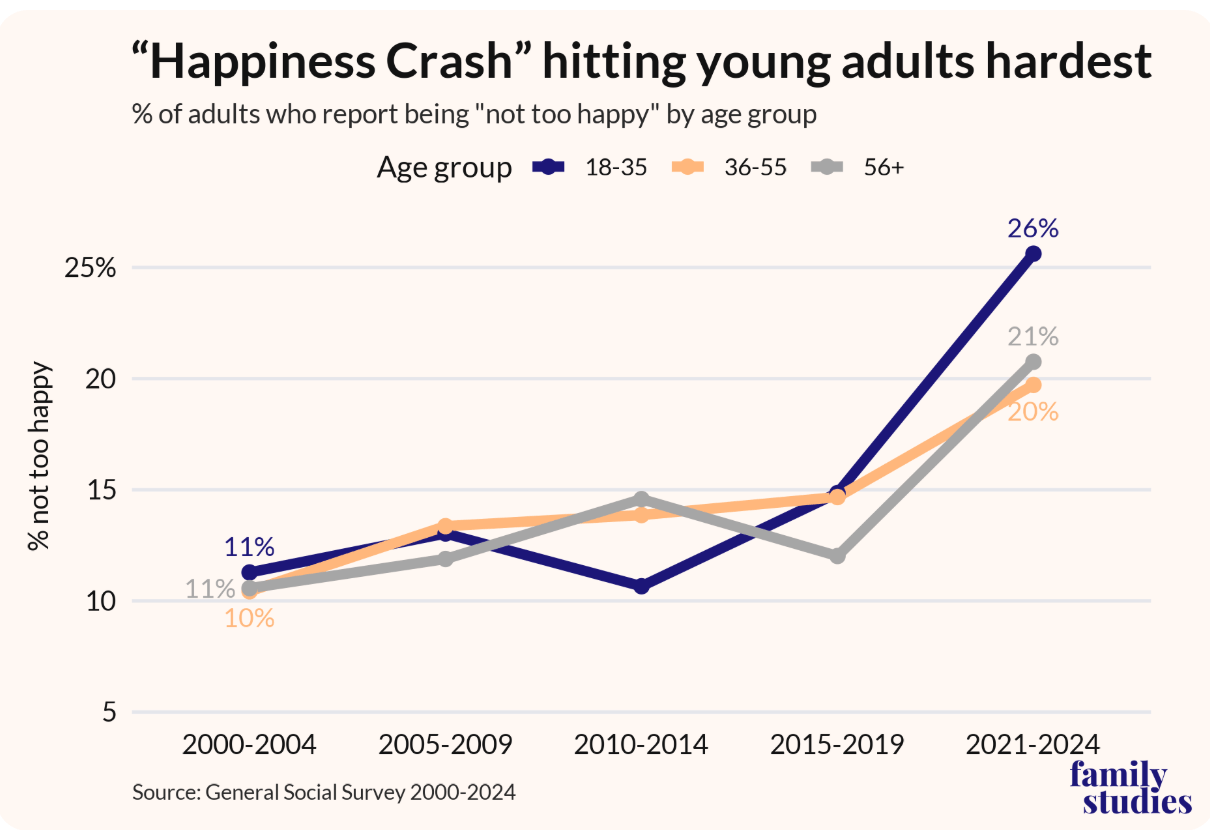
Multiple outlets report that overall happiness in the United States remains low after a “happiness crash” in the period following the pandemic. They describe evidence that the downward trend is not fully reversed for many people, with married adults showing a comparatively stronger recovery than those who are not married.
The coverage frames a possible explanation in social terms: the idea of a “happiness-segregated society by marriage,” in which marital status correlates with day-to-day well-being. One outlet emphasizes that the gap between married and unmarried people persists even as some aspects of life normalize, suggesting marriage may provide stabilizing social or economic support. Other reporting notes that the pattern does not necessarily imply a direct causal effect; it highlights correlation-based observations and the need for further research to determine what drives the differences.
Overall, the sources converge on the main point that U.S. happiness has not bounced back uniformly since the pandemic, and that marital status appears to track with who recovers more fully.