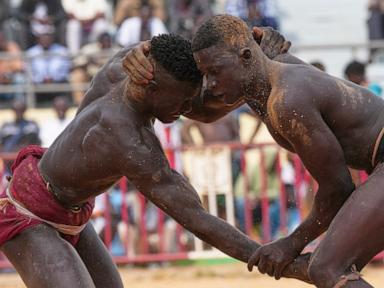
In Senegal, laamb—wrestling known in Wolof—remains a national sport closely tied to village life. Top performers compete in major arenas, where the winner is often called “King of the Arenas.” The events draw large in-person crowds and television audiences.
Laamb matches are marked by a highly ceremonial pre-fight and in-arena spectacle alongside the physical bout. Wrestlers wear elaborate costumes and use protective charms that many participants believe help ward off injury and allow spiritual power to be “channelled.” They also take part in ritualized performances timed to the rhythm of sabar drums, underscoring the view held by many fighters that spirituality and tradition are central to the sport, not separate from the contest.
While the practice is rooted in long-standing custom, laamb has also developed into a more professionalized sport, with sponsorship and prize money becoming increasingly visible. For some young men, including amateur wrestlers featured in coverage, laamb offers a pathway to wealth and fame that can appear more promising than other local options. At the same time, financial pressures remain common among many competitors.