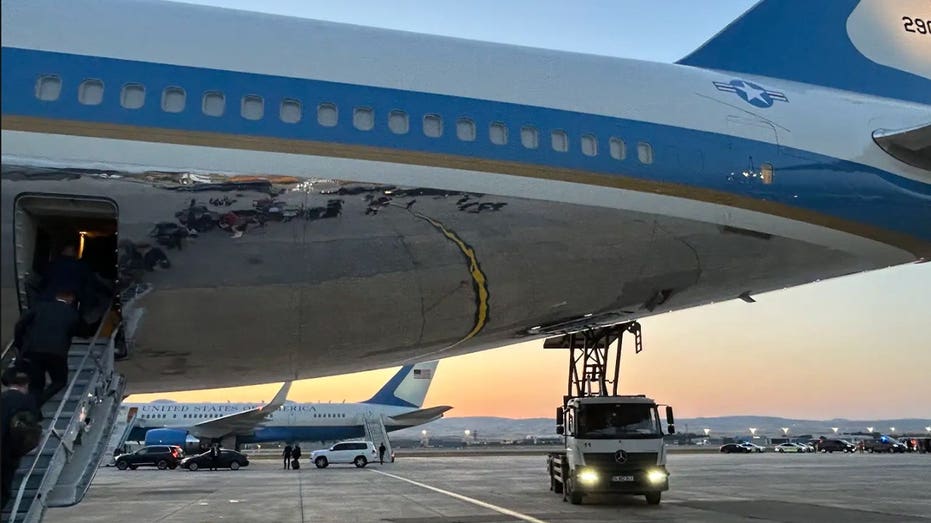
President Donald Trump secretly leaves one version of Air Force One during a reported Iran assassination threat and instead travels to England on a different aircraft, according to reports cited by multiple outlets. While Trump is publicly believed to be on the main Air Force One, he is reportedly moved off the plane out of view and later returns after arriving in Britain.
The Washington Post and The New York Times report that, in response to intelligence about a credible threat, senior officials use a decoy plan: some staff and journalists remain on the plane and are not told the president has departed. The Guardian and New Republic both describe Democrats and critics calling for scrutiny, including a request for a congressional briefing. The New Republic adds detail on who was briefed, citing top officials including Defense Secretary Pete Hegseth and Gen. Dan Caine, and notes prior White House messaging about using “distraction and misdirection” that was later revised.
Across outlets, the central point is consistent: the administration’s handling of the threat involves misdirection so the public and press believed Trump was still aboard, even as he traveled separately. The disagreement is mainly in emphasis—some reporting focuses on the decoy operation itself, while other coverage highlights the political and oversight reaction to journalists being kept on the plane despite the threat.