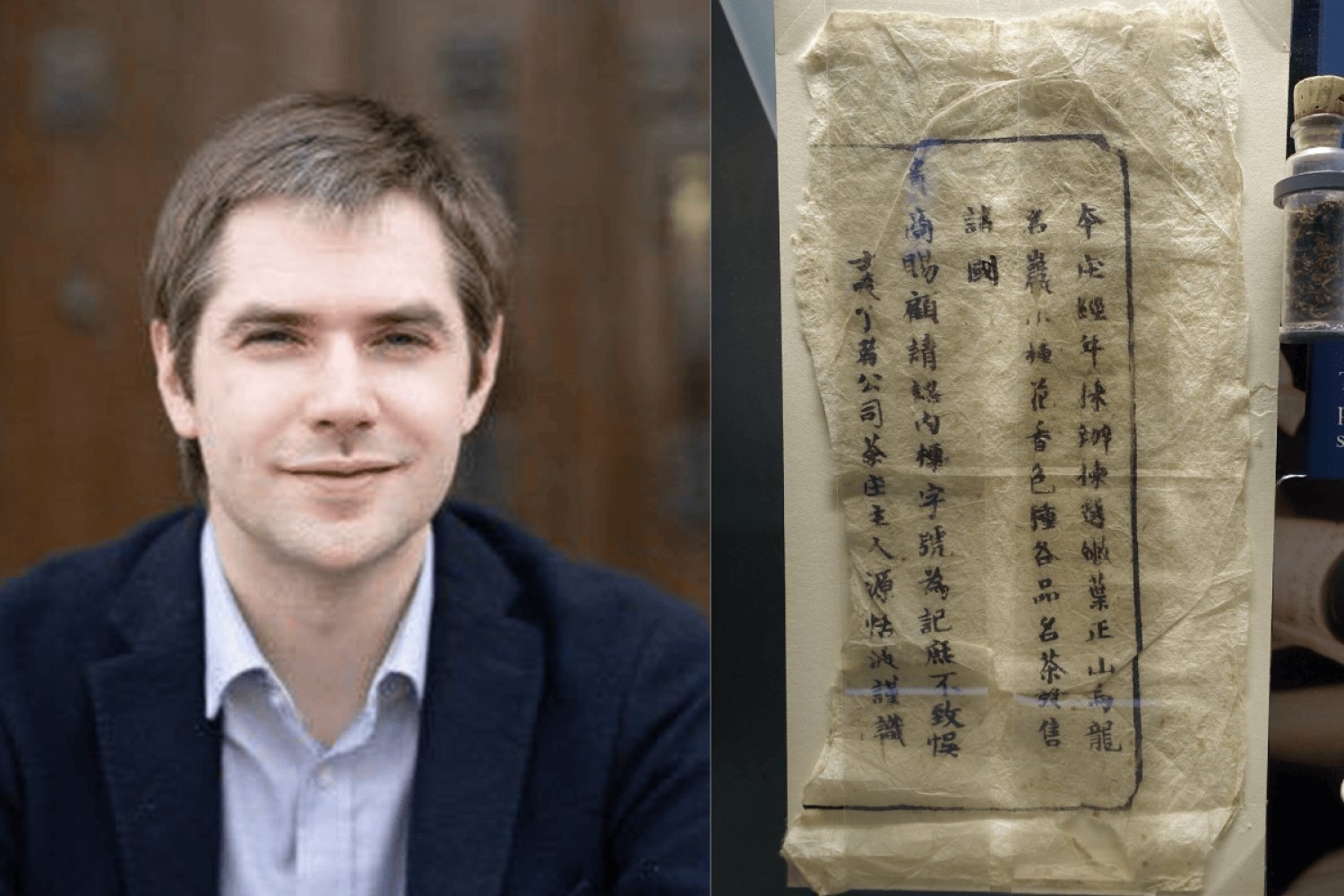
A label on a Chinese tea chest that some people have treated as a relic of the Boston Tea Party is instead linked to later 19th-century trade in the Pacific, according to MIT historian Tristan Brown and related reporting. The label has been displayed or described as evidence of tea-era events, but Brown’s investigation reexamines its origins and historical context.
The MIT piece and Phys.org both describe Brown’s initial assumption that the label’s Boston Tea Party connection might be accurate, followed by research that points elsewhere. They report that the physical and historical evidence places the artifact within the broader movement of goods between China and Pacific trading routes during the 1800s rather than during the late 1770s.
Together, the sources emphasize the shift from a popular or museum-associated narrative to a trade-based explanation. While both accounts center on Brown’s findings, they differ in framing: MIT presents the discovery in the context of historical inquiry, and Phys.org summarizes how the label’s attribution changes once its likely timeframe and trading background are considered.