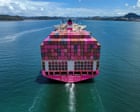
Commercial ships transiting the Panama Canal face sharply higher costs as the canal’s operating environment tightens amid El Niño-linked water levels and broader disruption linked to the Iran war. Several outlets report that reduced water availability is expected to limit the number of ship slots available to cross the canal, raising congestion and the price of gaining timely passage.
One report describes a container ship paying about $4 million to move ahead of other vessels waiting their turn, illustrating the scale of queue pressure in the canal’s bottleneck. Another outlet says the resulting fees reach record levels, tying the increase to both the water-level constraint and geopolitical disruption affecting shipping patterns. Together, the coverage emphasizes how meteorological and conflict-related factors combine to strain logistics through a key global trade route.
While the outlets differ in emphasis—some focusing on the headline fee increase and others on examples of queue-jumping payments—they converge on the same underlying drivers: limited transit capacity due to falling water levels and heightened strain on maritime traffic linked to the Iran war.