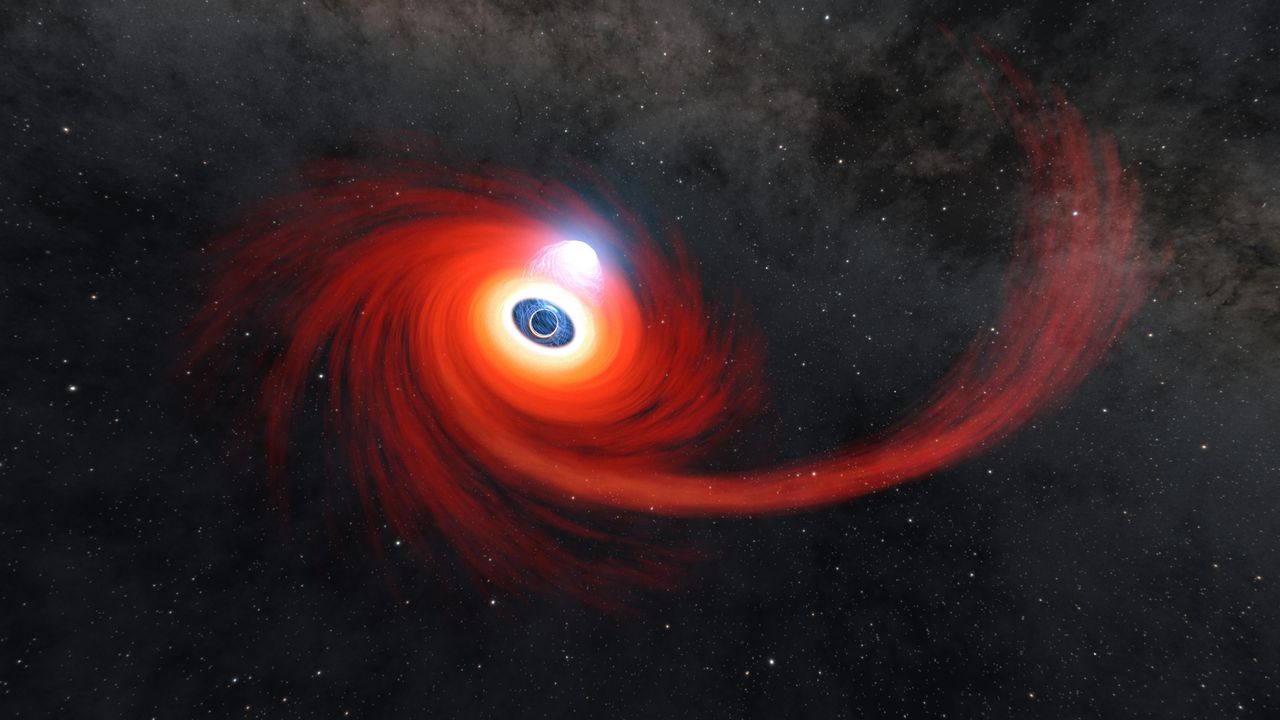
Astronomers using the James Webb Space Telescope spot a very distant black hole “star” dating to about 660 million years after the Big Bang. Multiple outlets report the finding comes from a US-led research effort and is presented as evidence that certain early-universe sources—dubbed “little red dots”—may be linked to such black hole–powered systems.
The “little red dots” are faint, reddish objects observed in the early Universe by James Webb. Space.com frames the newly observed black hole object as particularly strong support for the explanation that these dots originate from black holes at or near galactic centers. Mint similarly highlights the timing and detection of the distant black hole “star,” presenting it as a potential clue to resolving the mystery.
While both sources agree on the core observation and its proposed relevance to the “little red dot” question, they differ slightly in emphasis: Space.com focuses on strengthening the specific black hole explanation, whereas Mint highlights the discovery and its connection to the unresolved early-Universe puzzle.