


A Daily Mail report describes findings suggesting that the timing of when a partner comes to bed can affect how quickly people fall asleep. The outlet says that when one person goes to bed and their partner arrives later, the disruption of that delayed arrival can delay sleep onset. According to the report, the additional time to fall asleep can be substantial—nearly 40 minutes longer—compared with scenarios where both people are in bed at the same time. The article frames the effect as coming from interruption of the bedtime routine and the resulting disturbance in the sleep environment. It does not provide detailed methodology, sample size, or the full statistical context in the excerpt provided, and it focuses primarily on the duration of time taken to fall asleep after a partner’s later arrival. Overall, the report indicates that synchronizing bedtimes may help reduce disruptions that can slow the transition from wakefulness to sleep.
Study links late partner arrival to longer time to fall asleep
A Daily Mail report describes findings suggesting that the timing of when a partner comes to bed can affect how quickly people fall asleep. The outlet says that when one person goes to bed and their p...

- The report says a partner arriving later disrupts the bedtime routine.
- It states the disruption can increase how long it takes to fall asleep.
- The outlet reports the delay can be nearly 40 minutes.
- The claim is specifically tied to partners not going to bed at the same time.
- The summary is based on information presented by the Daily Mail and does not include full study details in the provided text.
When your partner comes to bed after you, the disruption means it can take almost 40 minutes longer to fall asleep.
3 months agoWhen your partner comes to bed after you, the disruption means it can take almost 40 minutes longer to fall asleep.
3 months ago
Blue Jays unveil Hall of Excellence, honour inaugural inductee Buck Martinez
The Toronto Blue Jays open their new Hall of Excellence at Rogers Centre and honour Buck Martinez as the inaugural induc...
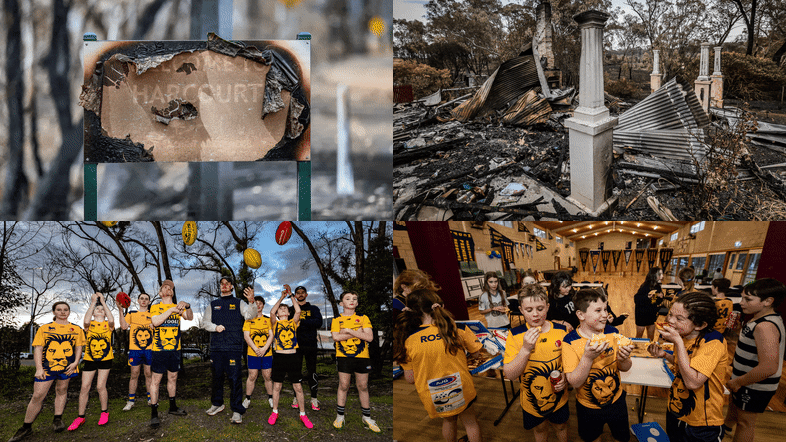
Harcourt Lions club supports bushfire-affected families while teams play finals
Families in Harcourt are recovering after losing homes and possessions when a bushfire hits the town, and a local footba...

Royal Lodge at Windsor listed for rent after Andrew Mountbatten-Windsor vacates
Andrew Mountbatten-Windsor’s former residence, Royal Lodge in Windsor, is set to come up for rent when his lease ends in...