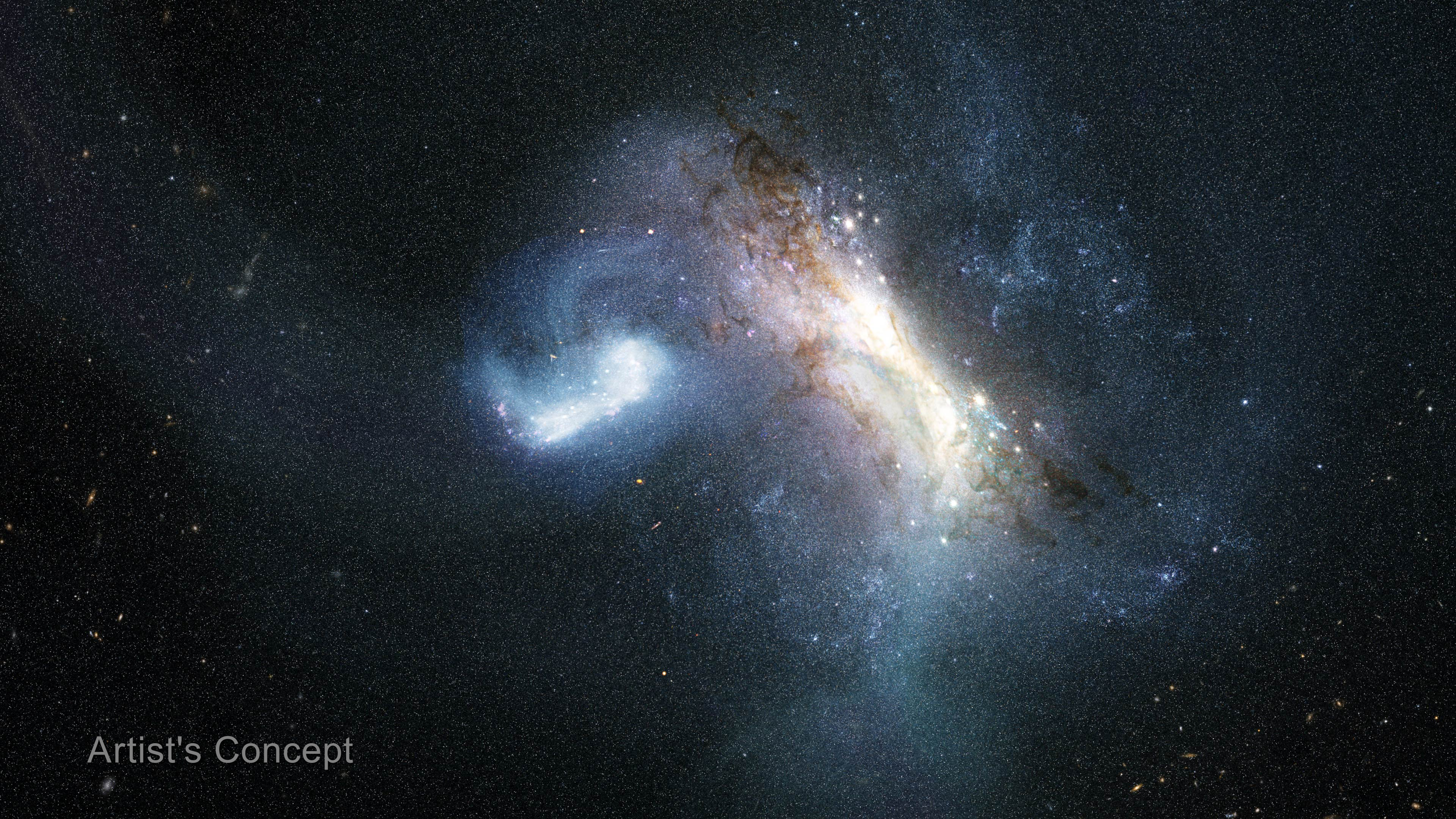
NASA’s Hubble Space Telescope provides new observations showing clear evidence that a dwarf galaxy merges with the young Milky Way during the earliest stages of its formation. The study presents signatures consistent with an actual merger event rather than earlier, less certain hints.
The findings extend estimates of when the Milky Way’s growth began. According to both outlets, the new data push the timeline about 1.8 billion years farther back than prior work, reaching deeper into the galaxy’s early era. Both sources also note that the results help explain how the Milky Way builds up mass over time by consuming smaller galaxies.
The outlets largely align on the core claim: Hubble detects a merger in the Milky Way’s infancy, and the work is published in *Nature Astronomy*. Differences in coverage are limited, with NASA emphasizing the “merger mystery” being solved and Phys.org framing the result in the broader context of galaxy growth through accretion.