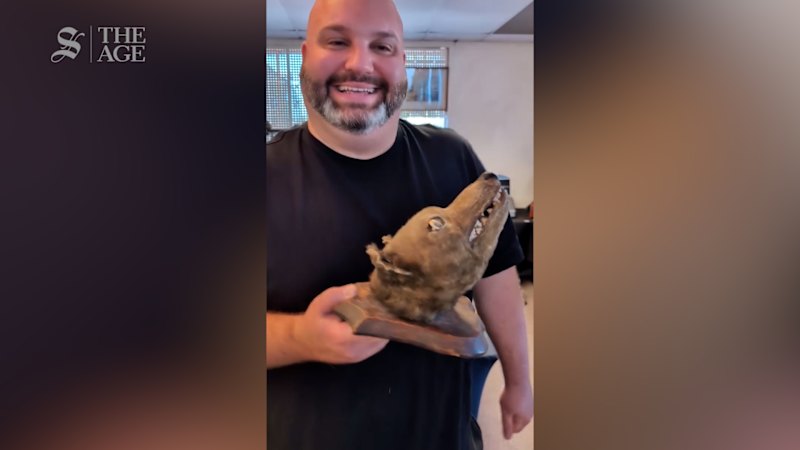
A man buys an unusually rare Tasmanian tiger (thylacine) head at an auction after it is first advertised under an incorrect description as a “fox mask.” The successful bidder is taxidermy enthusiast James Cranfield.
Cranfield says he notices signs that the item is not a fox when he sees the listing and decides to bid. After obtaining the head, he keeps it as part of his taxidermy collection, described in reporting as “Cranfield’s Curiosity Cabinet.”
Across the outlets, the central details match: the thylacine head is sold at auction, the buyer is Cranfield, and the surprise comes from the initial listing being inaccurate. The coverage differs mainly in the framing—some describe the find as “incredibly rare”—but all present the same basic sequence of events and outcome: an auction purchase of a rare thylacine specimen initially marketed under a different animal identification.