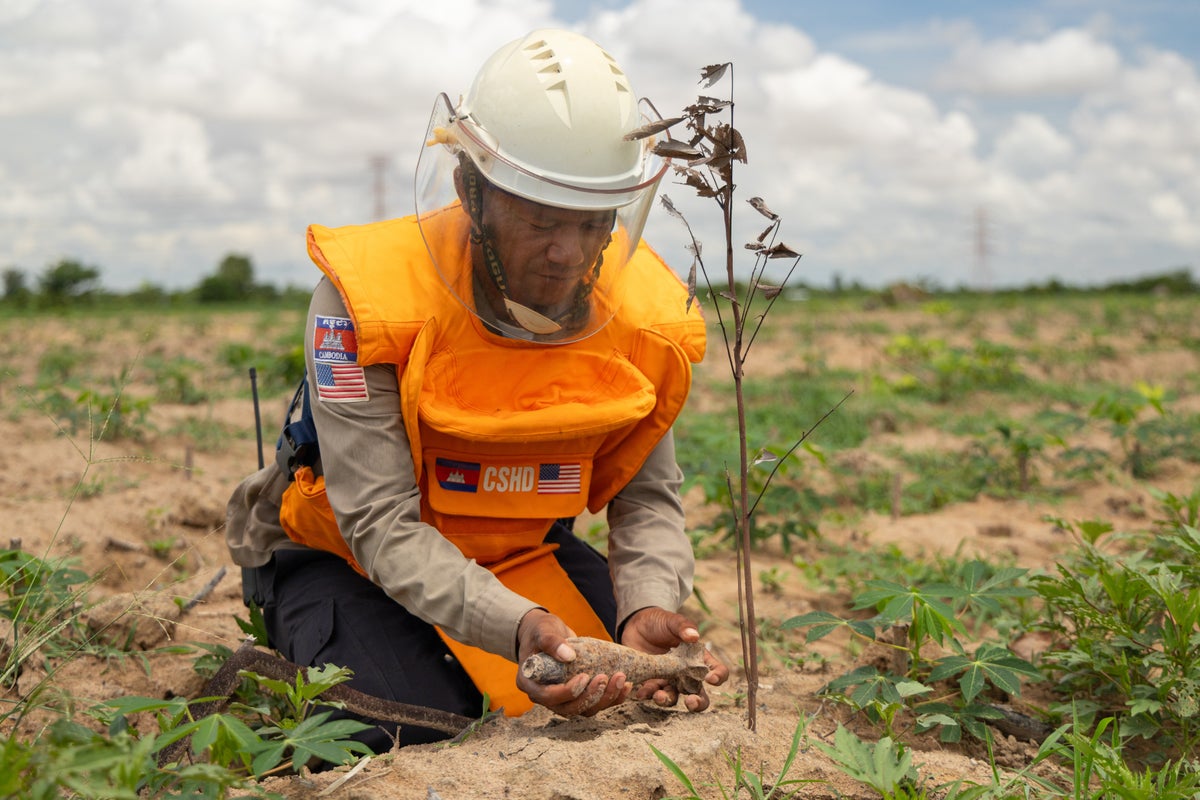
Land mines and unexploded ordnance from past conflicts continue to harm people in parts of Southeast Asia, with casualties reported each year. At the same time, demining operations are being scaled back as funding falls, according to reports that cite the impact of “donor fatigue” and shifting priorities.
The accounts describe how resources are diverted when more immediate crises emerge, leaving fewer funds available for clearance work in countries affected by contamination from earlier wars. Both outlets frame the funding squeeze as a major challenge for organizations working to remove mines and unexploded bombs, which they say remain a persistent threat to civilians. The reporting highlights that the demining shortfall affects the pace and scope of clearance efforts.
While the outlets do not present sharply conflicting details, they emphasize the same broad drivers—declining donor willingness and competition with current emergencies—rather than differences in casualty figures or specific project outcomes. The shared focus is on the ongoing humanitarian burden in the region and the constraints on efforts to reduce it.