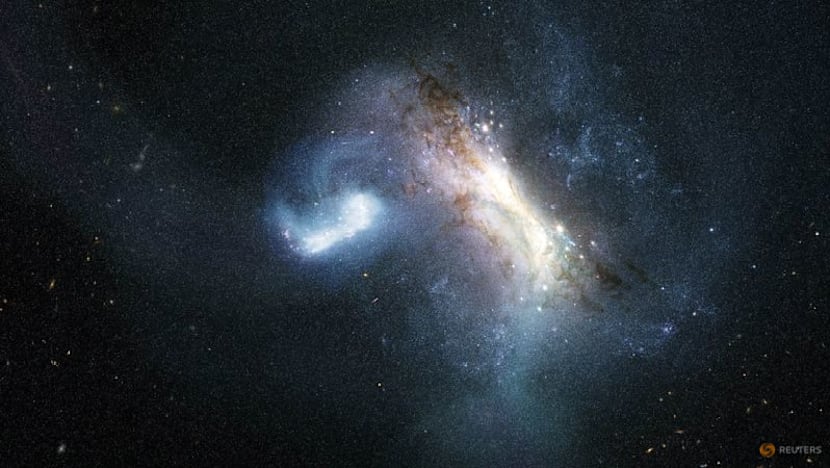
The Milky Way consumed a smaller galaxy roughly 11.8 billion years ago, according to findings reported by multiple outlets. The event is described as an ancient galactic merger, in which material from the smaller galaxy becomes incorporated into the Milky Way’s halo.
The reports cite evidence from the composition and distribution of stars, which can preserve signatures of past accretion events. This approach is used to infer when the smaller system was disrupted and how its stellar debris is now arranged within the Milky Way. While the outlets focus on the age and nature of the collision, they broadly agree on the timing and that the smaller galaxy’s stars are absorbed into the larger one.
Overall, the differing coverage is mainly in phrasing—describing the process as “devouring,” “swallowing,” or a “cosmic collision”—rather than in conflicting scientific conclusions. The common takeaway is that the Milky Way’s current structure includes remnants of an early accretion event dating to about 11.8 billion years ago.