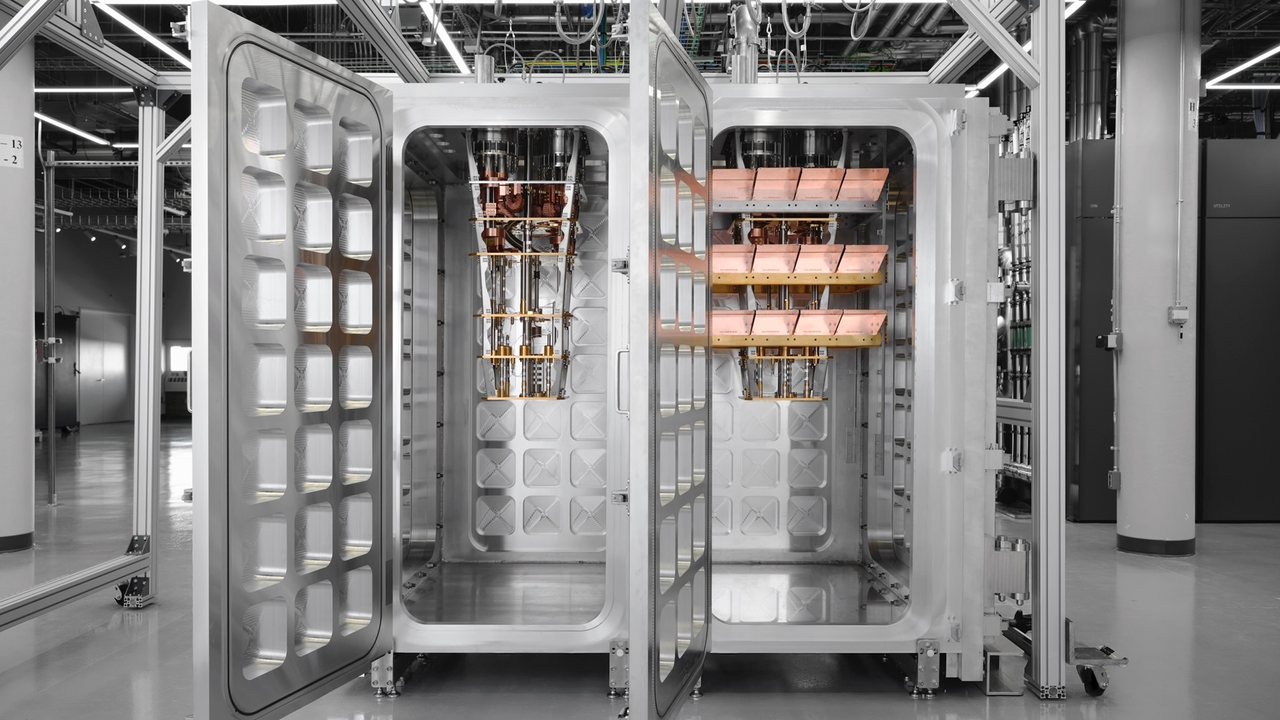
IBM introduces its first modular cryogenic systems—described as “quantum fridges”—designed to cool and connect large numbers of quantum chips. The company says the systems reach temperatures below 15 millikelvin, which it characterizes as nearly 200 times colder than deep space. The milestone is framed as progress toward the engineering needed for fault-tolerant quantum computing.
Both outlets describe the modular approach as a way to link hundreds of quantum chips, aiming to address infrastructure and scaling challenges rather than focusing on a single chip performance breakthrough. Live Science adds that the design could help enable a more powerful system targeted by 2029, while emphasizing the role of cryogenic engineering in future architectures. PR Newswire similarly positions the deployment within IBM’s broader quantum roadmap, highlighting that connecting many chips is a key step toward larger, more reliable quantum computers.
While the sources align on the temperature, modular cooling concept, and the scaling goal, they differ mainly in emphasis: PR Newswire stresses the milestone as part of fault-tolerant readiness, whereas Live Science foregrounds the near–200-times-deep-space comparison and the longer-term 2029 system outlook.