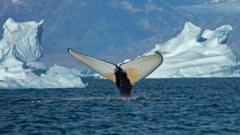
Giant whales move into Greenland waters as sea ice and glaciers retreat, allowing more marine life to enter the region during the summer. Reports say humpback, minke and fin whales are among those appearing as ocean conditions warm.
Across outlets, the change is linked to rising temperatures and the loss of ice. As the water opens up, whales are able to feed in areas that were previously constrained by colder conditions. BBC Sport describes this as leading to “feeding frenzies,” while other coverage highlights that warmer waters support larger fish populations, which in turn attracts the whales.
While both accounts focus on the immediate presence of whales, one outlet also emphasizes longer-term ecological effects. It notes that increased prey availability can heighten competition with native Arctic species such as narwhals and belugas, suggesting broader shifts in the local marine ecosystem as conditions continue to change.