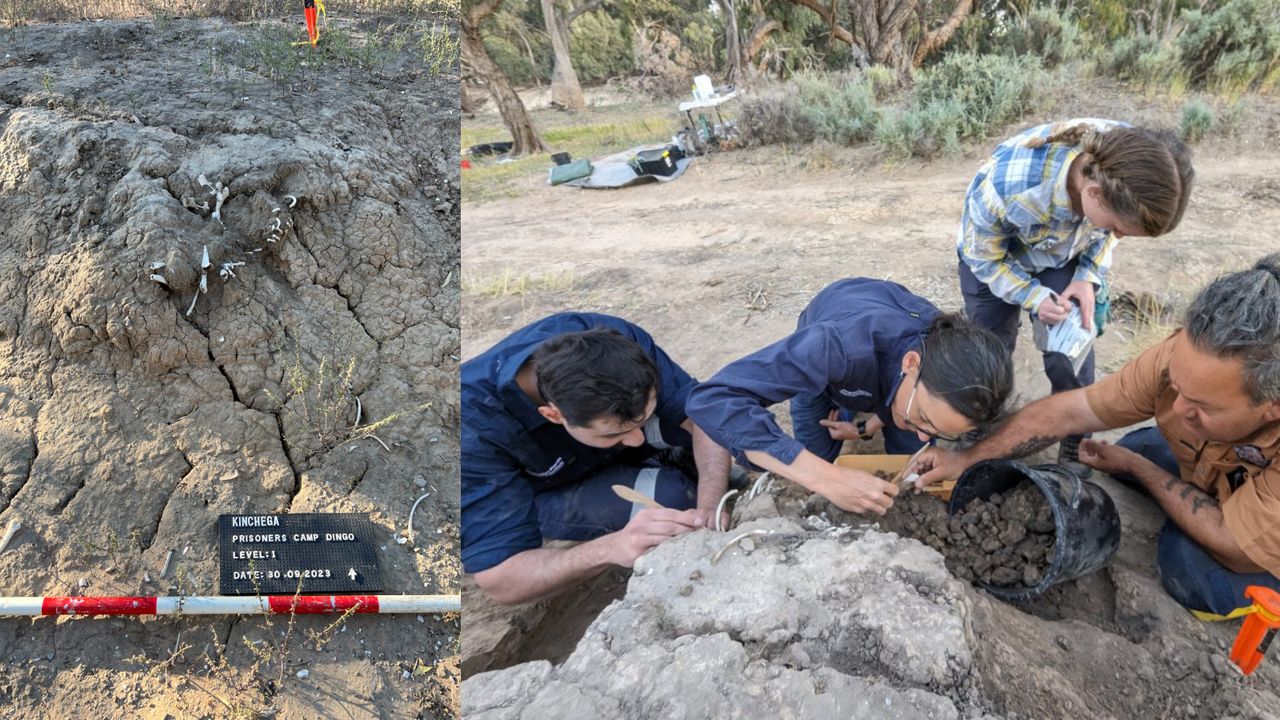
Archaeologists report the discovery of a roughly 950-year-old burial of a dingo by ancestors of the Australian Aboriginal Barkindji people along the Baaka, or Darling River, in western New South Wales. The team says the find is the first clear archaeological evidence anywhere in the world of humans deliberately “feeding” a grave. After the dingo is interred, evidence indicates it is repeatedly attended to over an extended period—estimated at about 500 years—with river mussels placed near the burial.
Both reports describe the burial as intentional and tied to long-term care, indicating more than standard disposal. The researchers interpret the practice as ritual, reflecting sustained relationships between First Nations communities and dingoes rather than incidental animal remains. The findings add rare archaeological detail on how dingoes are treated in cultural contexts, supporting the idea that the animal had lasting significance to the people who buried and maintained the grave. The discovery is presented as shedding light on the depth and longevity of human–dingo bonds in the region.