


Researchers reporting across multiple outlets say excavations at Laos’ “Plain of Jars”—a landscape in the north-central uplands dotted with thousands of large stone urns—now provide stronger evidence about how at least some of the vessels were used. For nearly a century, the jars’ purpose has been debated, with earlier explanations including folklore about giants carving the megaliths for communal activities. Recent findings, published in the journal Antiquity and highlighted by Nature and other science outlets, indicate the stone containers functioned in funerary mortuary rituals and served as repositories for human bones. Live Science and Vice describe one large vessel reportedly holding remains of dozens of people, with researchers estimating the burial practice occurred about 1,200 years ago. The Nature piece also frames the jars as being used for storing human remains over generations. While sources differ in emphasis and the specific details of individual vessels, they broadly agree that the jars were not ceremonial objects unrelated to death, and instead were used for communal interment, though uncertainties remain about who made them, the full range of dates, and the exact burial procedures.
Study finds some Plain of Jars stone vessels were used for communal burials in Laos
Researchers reporting across multiple outlets say excavations at Laos’ “Plain of Jars”—a landscape in the north-central uplands dotted with thousands of large stone urns—now provide stronger evidence...
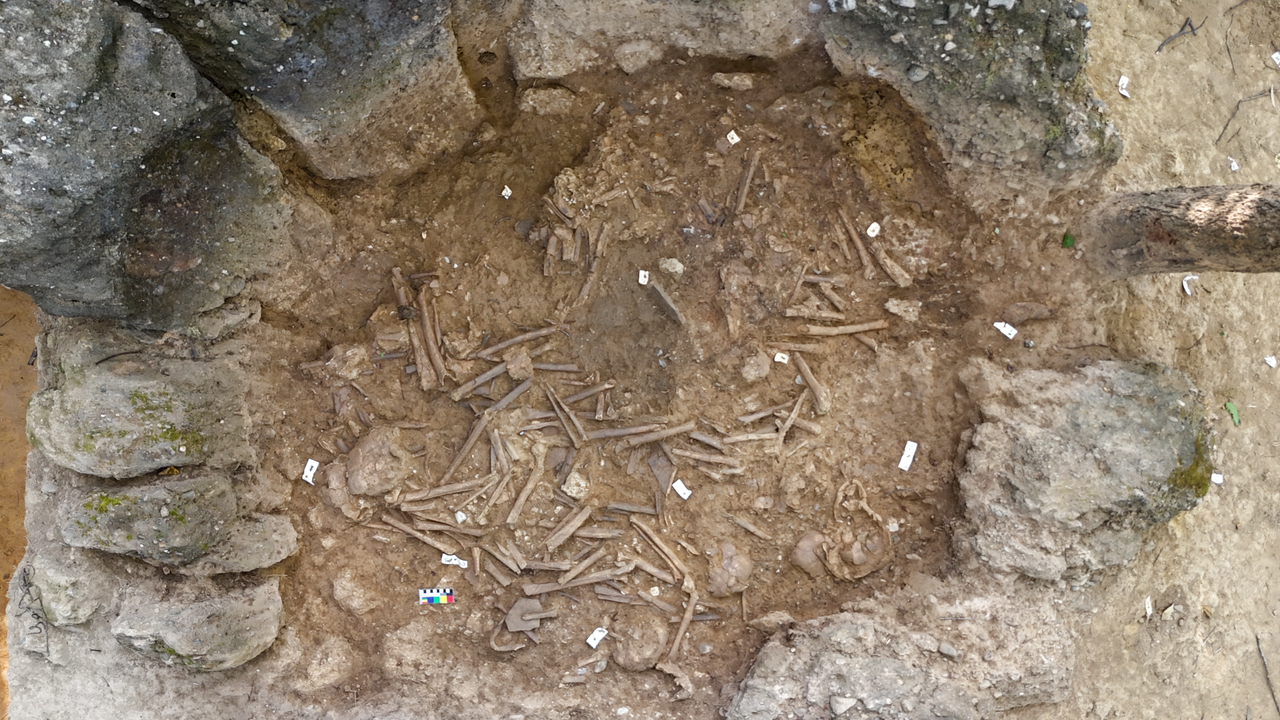
- The Plain of Jars site in northern Laos contains thousands of large stone vessels of uncertain original purpose.
- Recent research concludes at least some jars were used for funerary mortuary practices and storing human bones.
- A large excavated jar is described as containing remains of multiple individuals, suggesting communal burial.
- Sources describe the use as spanning generations for at least some vessels.
- Researchers say key questions remain about the creators, precise chronology, and exact methods of use.
For nearly a century, thousands of massive stone urns scattered across north-central Laos have stood as one of archaeology’s most baffling enigmas. Local folklore said ancient giants had carved the hollowed-out megaliths to brew celebratory rice wine.
2 months agoThousands of mysterious stone jars are scattered across northern Laos, and archaeologists now report that these may have been used for communal burial
2 months agoThousands of mysterious containers lie scattered across northern Laos. These “death jars” may have provided a form of communal interment, archaeologists reported.
2 months agoA thousand years ago, in northern Laos, someone tossed 37 people into a massive stone “jar” measuring more than two meters across in what appears to be a gigantic communal coffin for an entire extended family. According to research published in Antiquity, archaeologists now believe the huge vessel was used for burying several in one […] The post Archaeologists Made a Disturbing Discovery Inside These Massive Stone Jars appeared first on VICE.
3 months agoIn central Laos, the landscape is littered with enormous stone jars, some 3 metres high, and we may be closer to understanding how and when they were used
3 months agoExcavation of a large stone vessel from the mysterious Laos Plain of Jars has confirmed its use in an ancient funerary tradition.
3 months ago
Investigators search burned Montana home after eight family members killed at dinner
Investigators are sifting through the charred remains of a home in Montana after eight family members are killed while g...

General Mills ends artificial colors in U.S. cereal lineup, targets full removal by 2027
General Mills says it stops using artificial coloring in its U.S. cereal portfolio. The company says it has moved all U....

US Army awards contracts to five firms for on-base microreactors under Janus
The US Army selects five firms for agreements to build on-base microreactors, part of a broader push to provide nuclear-...