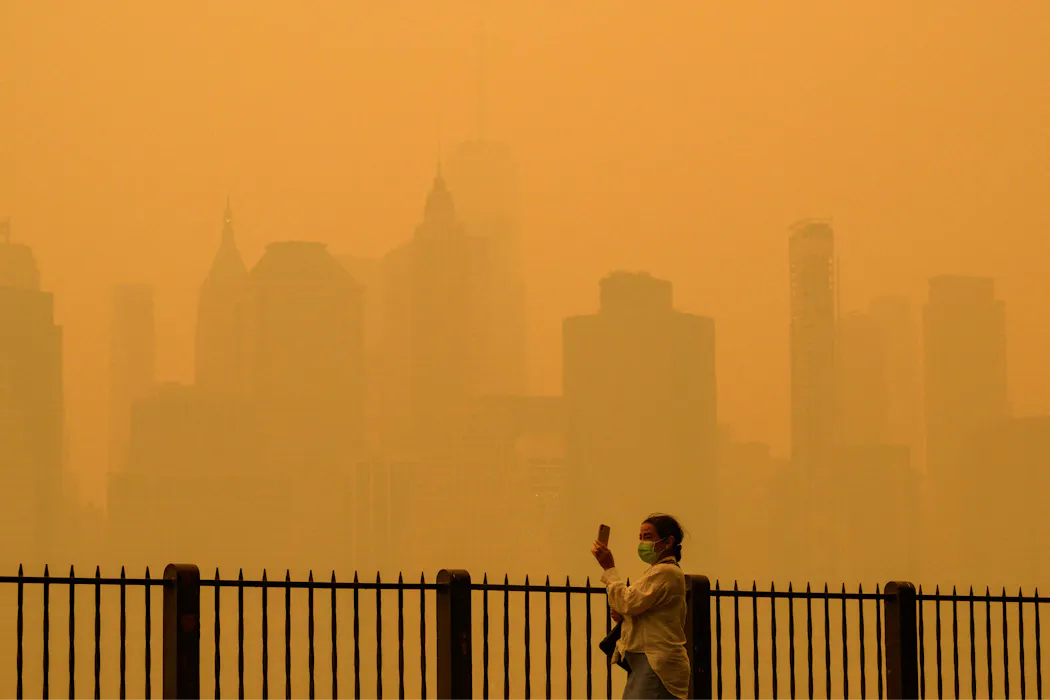
Wildfire smoke transforms as it moves away from burning areas, shifting from visible flames and haze into airborne mixtures that can affect people’s health in different ways. Multiple outlets explain that understanding the health risk depends on what chemicals and particle types are present, which change during transport.
Phys.org describes how traveling smoke plumes can be altered by sunlight and atmospheric chemistry. These processes can change the smoke’s appearance, reduce recognizable campfire odors, and make it more similar to urban air pollution as it mixes with other atmospheric components. The Conversation US similarly emphasizes that the smoke’s contents depend on its journey—what it picks up, how it reacts in the air, and how it evolves chemically over distance.
Across the coverage, the shared focus is that long-range smoke cannot be treated as one uniform substance. Instead, its composition evolves, and consequently the potential health effects may vary depending on where the smoke goes, how it ages in the atmosphere, and what it mixes with along the way.