


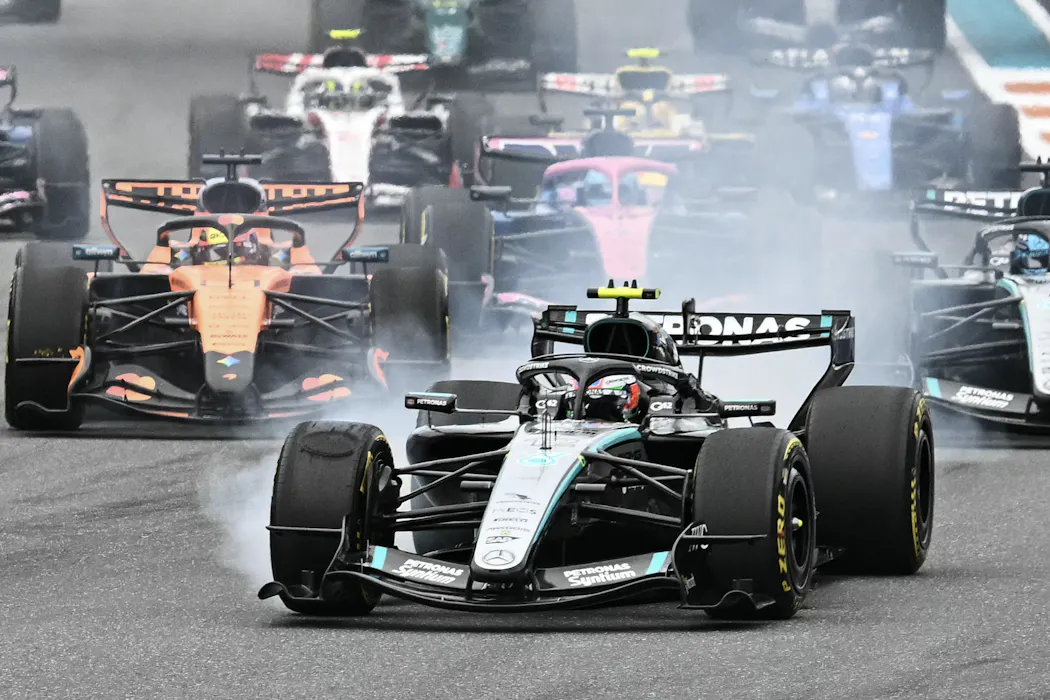
Formula 1 is often seen as a testing ground for low-carbon ideas, and many technologies developed for racing have later found use in road vehicles. However, recent coverage emphasizes that cutting greenhouse gas emissions is not only an engineering challenge. While advances in car design and efficiency can reduce emissions from the vehicles themselves, the overall climate impact of the sport remains dominated by broader systems.
Both sources describe Formula 1 as highly energy-intensive and logistically complex. Beyond the races, events require substantial supporting activity, including long-distance freight to move cars, parts, and equipment, international travel for teams and personnel, and the use of temporary infrastructure at each venue. With a global schedule that requires near-continuous movement of people and goods, the sport’s emissions profile is shaped by operations as much as by technology.
Taken together, the articles argue that reaching net-zero emissions requires addressing supply chains, transport, and event logistics alongside engineering improvements, because technology changes alone do not fully resolve the emissions from the sport’s day-to-day running.


