


Bolivia is in a deepening political and social crisis as sustained protests and road blockades leave La Paz effectively “under siege,” less than six months after President Rodrigo Paz took office. Multiple outlets report that demonstrators—linked to organizations such as the Bolivian Workers’ Central (COB), peasant unions and miners—lead widespread closures that disrupt transport and empty markets. As the standoff continues, reports describe shortages affecting hospitals, including depleted oxygen supplies, and say emergency vehicles are blocked from reaching medical centres. Clashes between demonstrators and police occur in La Paz and extend into a second week, with violence reported during the road-blocking campaign. Several sources also note that protesters demand Paz’s resignation and that the unrest has intensified political pressure on the centre-right leader, whose election followed years of left-wing rule under MAS. The government frames the unrest as reaching a “breaking point” and, in some coverage, attributes elements of the crisis to causes beyond the protests themselves. International reporting also includes mention of a warning from the United States about the risk of a “coup d’état,” highlighting growing regional concern about the escalating turmoil.
Bolivia protests and blockades besiege La Paz as President Rodrigo Paz faces resignation calls
Bolivia is in a deepening political and social crisis as sustained protests and road blockades leave La Paz effectively “under siege,” less than six months after President Rodrigo Paz took office. Mul...
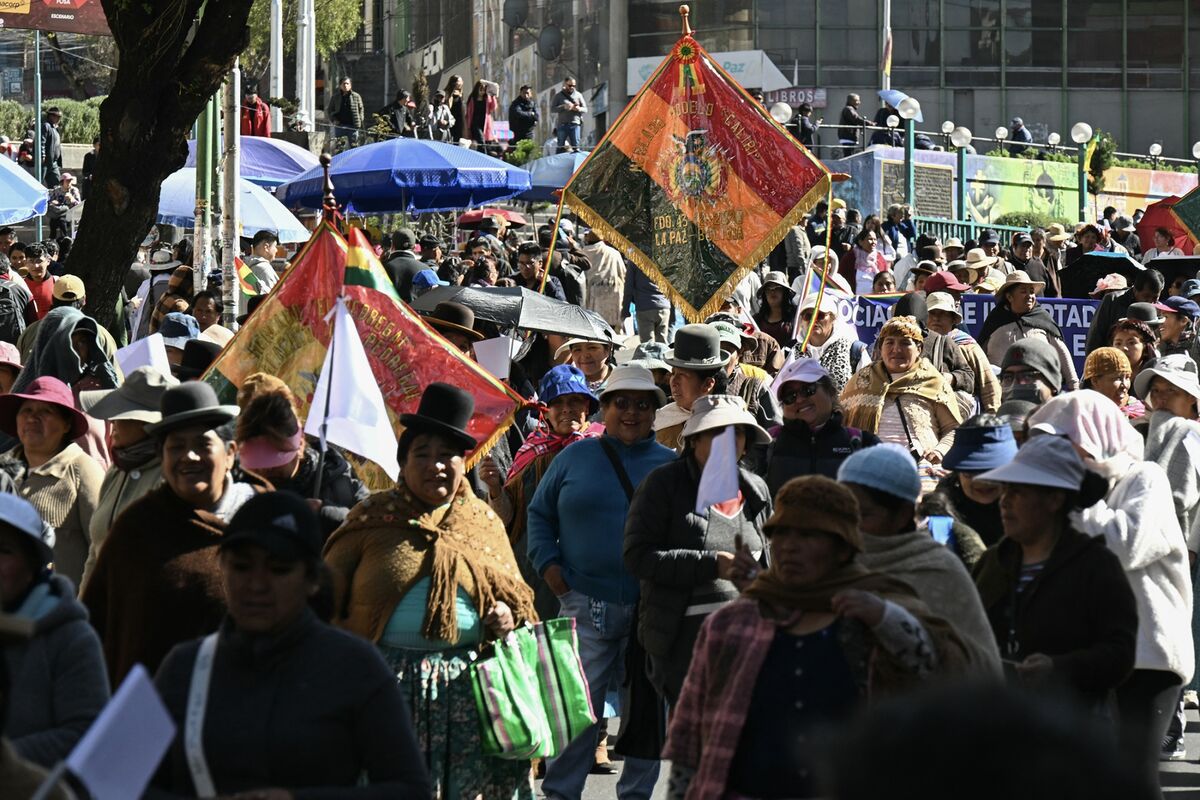
- Road blockades and protests heavily disrupt La Paz, leaving the political capital effectively under siege.
- Protests are led or backed by unions and groups including the Bolivian Workers’ Central (COB), peasant unions and miners.
- Closures interfere with daily supplies and restrict access to hospitals, with reports of depleted oxygen reserves and ambulance delays.
- Clashes between demonstrators and police in La Paz continue for at least a second week, with violence reported.
- Protesters call for President Rodrigo Paz to resign, escalating pressure on the government that took office about six months earlier.
The highland Indigenous and rural workers' groups — who helped vault Rodrigo Paz to power last year — have led the protests.
2 months agoDemonstrators have called for an end to the centre-right president's economic reforms and demanded his resignation.
2 months agoProtesters call for resignation of President Rodrigo Paz, just six months after his election shifted nation rightward
2 months agoProtestors are demanding that US-backed President Rodrigo Paz's fledgling government tackle a deep economic crisis, others are demanding he step down. Leer más
2 months agoTurning to Bolivia now, where conservative President Rodrigo Paz has moved closer to enacting a state of emergency that would allow the military to intervene in demonstrations. For weeks, protesters have constructed roadblocks and taken to the streets demanding the government to tackle Bolivia's worst economic crisis in decades. Some are urging Paz to step down. The unrest has driven up food and fuel prices, and resulted in a lack of basic goods.
2 months agoBolivia’s embattled President Rodrigo Paz signed a measure that clears the way for a more aggressive crackdown on anti-government protests that have rocked the South American country for more than five weeks.
2 months ago
Trump to award Congressional Space Medal of Honor to Artemis II crew Aug. 28
President Donald Trump will award the Congressional Space Medal of Honor to the Artemis II crew in a ceremony on Aug. 28...

Penguin India drops Sonia Gandhi memoir after dispute over editorial changes
Penguin Random House India (PRHI) reportedly backs out of publishing Sonia Gandhi’s memoir *Belonging: A Journey of Love...

Tunji-Ojo rejects Atiku’s claim that Nigeria’s land borders are closed
Nigeria’s Minister of Interior, Olubunmi Tunji-Ojo, rejects former vice president Atiku Abubakar’s assertion that Nigeri...