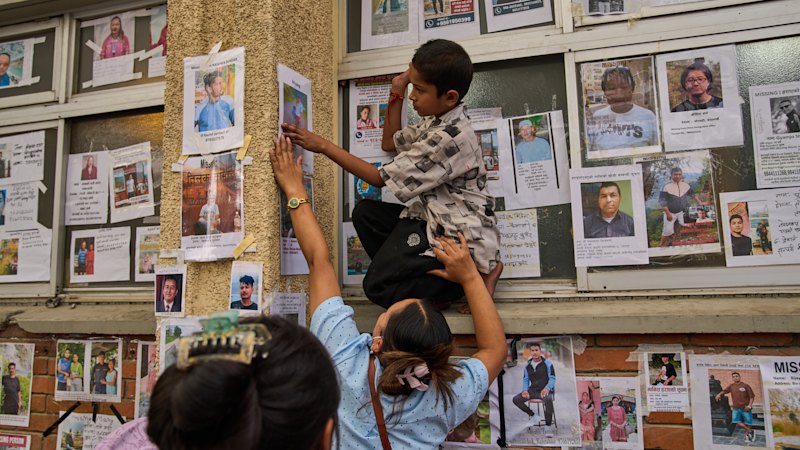
Families of people missing after the Nepal earthquake post photos and messages outside hospitals in Kathmandu, hoping someone will recognise their loved ones and confirm whether they are alive. The accounts describe a daily stream of visitors placing images at the same locations, reflecting sustained uncertainty and distress.
The three outlets focus on the same image of a “wall of the missing,” which acts as an informal clearing point for information when official processes and contact details are disrupted. Brisbane Times and The Age describe the practice as a desperate effort to locate victims, while the Sydney Morning Herald similarly frames it as a race against time. Across coverage, the emphasis is on the human impact and the mechanics of search efforts—relatives circulating faces in a public place rather than waiting for direct contact.
While all sources align on the core activity and setting in Kathmandu, they vary mainly in narrative tone. One outlet foregrounds the emotional language of families, but none disputes the central claim that photo postings outside hospitals are used to seek information about missing people.