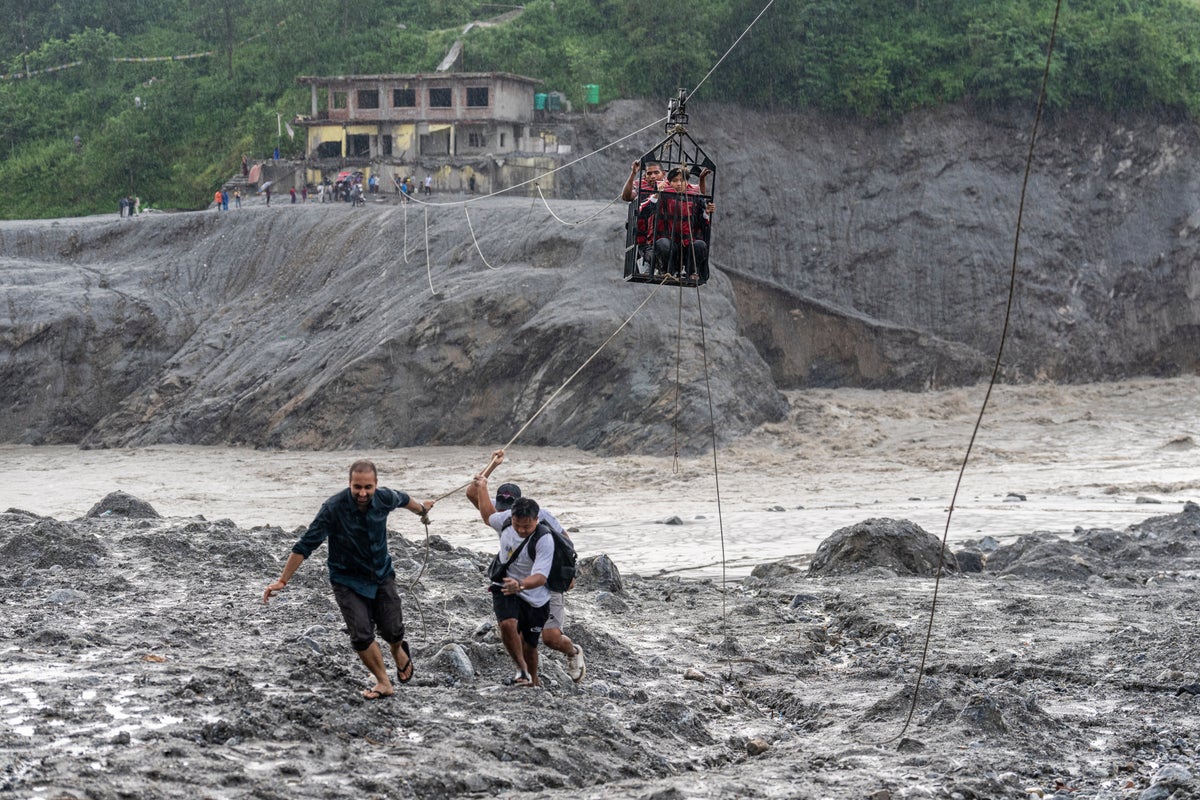
Deadly floods in Nepal leave many survivors in relief camps struggling to obtain essentials, including medicines and cash. Reports describe people in flood-affected areas continuing to meet basic needs by swapping food for other supplies and finding ways to move through damaged or dangerous routes.
Accounts from different outlets portray daily survival in the flood zone. Some residents rely on improvised arrangements for transportation and access, including using zip lines to cross parts of the river where bridges are not available or are unsafe. While the outlets focus on household-level challenges, they converge on the same themes: limited access to medicines, difficulties obtaining cash, and ongoing disruptions to movement and services.
Both reports describe conditions in and around relief settings, emphasizing that the problems extend beyond immediate shelter. Instead, survivors’ coping strategies—such as trading food for medicine—reflect continued shortages and the practical barriers that prevent timely recovery and access to healthcare in the weeks following the floods.