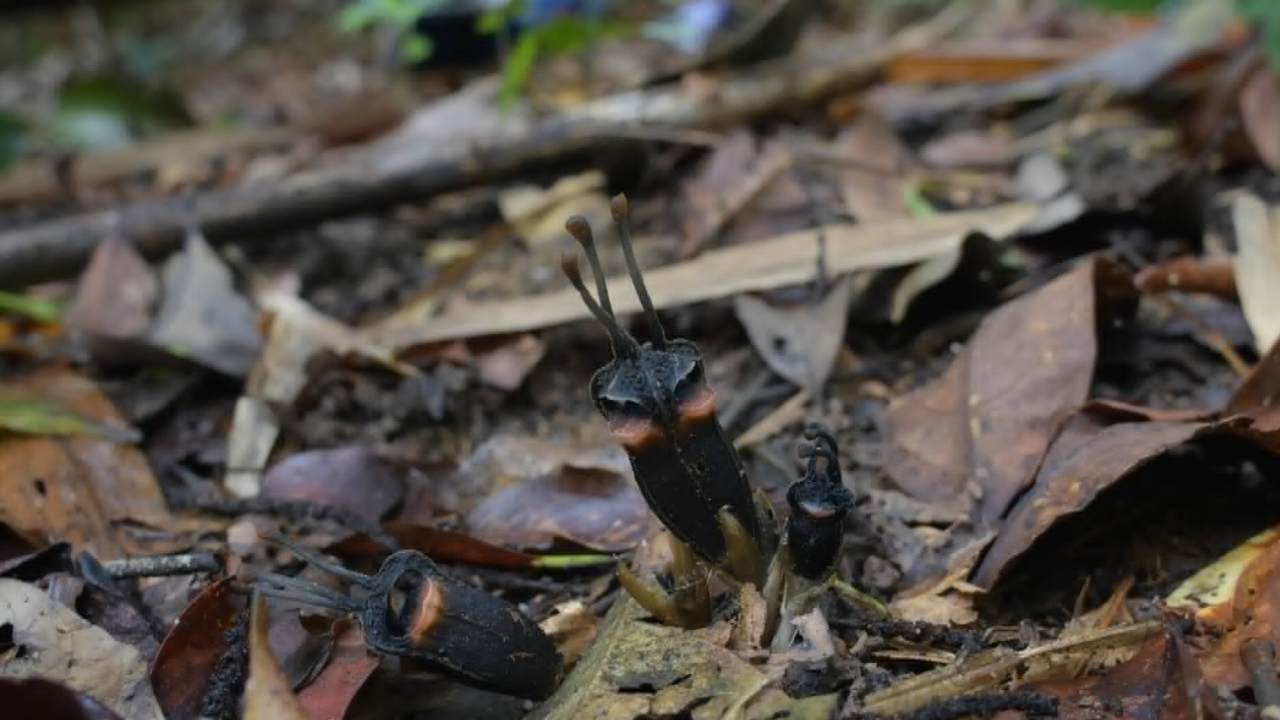
Scientists report the discovery of a rare, leafless flowering plant in Thailand’s Thong Pha Phum National Park. The species, named Thismia daemona, has an unusual dark, horn-like appearance and lacks typical green plant structures. Researchers say it lives mostly underground and does not photosynthesize, instead obtaining nutrients through a symbiotic relationship with fungi.
Both outlets describe the plant as extremely uncommon. Science Daily adds that fewer than 50 individuals are known and suggests the species may already be critically endangered, while Times of India emphasizes the significance of the find for understanding this rare group of plants and its fungal-based nutrition. The reporting focuses on the plant’s distinctive form and biology—its resemblance to a “devil flower” in researchers’ descriptions—while providing limited additional context on how the discovery affects broader conservation assessments.
Overall, the sources agree on the core details: a newly identified Thai species, a leafless, mostly underground lifestyle, and nutrient uptake from subterranean fungi, alongside the concern that the plant’s limited known population could put it at high risk.